A Story Begins

Story ideas come from all kinds of sources. I use a small Moleskine notebook to jot most of these down.

On another message board I read a great post that said keeping a notebook was good for creative people because you can only keep so many ideas in your head at one time. So, if you put them in a notebook, you free up space for more. I thought that was brilliant insight into the creative process.

But what’s to be done with these ideas? Well, once I settle in to write a book, I crack open a new, larger sized notebook like this one:
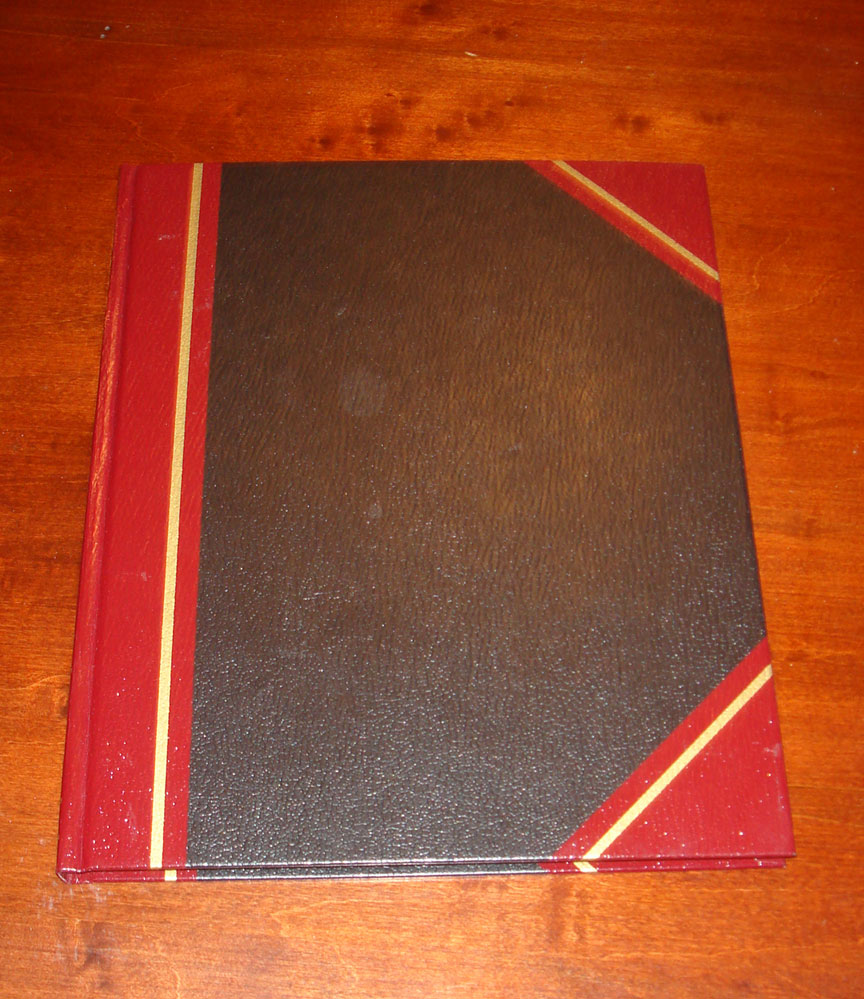
Inside, I write a rambling description of the story that is basically a collection of the embellished ideas from the small Moleskine. I cross reference this first description with the Moleskines so that if I ever want to go back to the original source, I can find it. This gets to be a difficult problem when the story ideas show up in several of the Moleskines. When the general description is finished, I’ll start sketching major scenes, characters, and locations. From these blocks I start building up the story with outlines. Sometimes an outline is unnecessary, especially when the characters are at critical moments. Still, an outline keeps the writing on track and the writer out of trouble. If you don’t know where you’re going in the story, you’re stuck. Some people call this writer’s block and perhaps they’re right. However, with a decent outline, there’s always work to be done.

And that’s how I start a story. Finishing it is another matter. People often ask me if it’s difficult to write a book. My answer is this: It’s easy to start a book. It’s tremendously difficult to finish one. But we’ll talk about that later.


Published in: on June 13, 2008 at 4:49 pm  Comments (1)  
Tags:

One Tough School Teacher

I just finished reading The Collaborator of Bethlehem by Matt Beynon Rees. I don’t read much detective or mystery fiction these days but this one caught my eye. It’s set in present day Palestine and the protagonist is a hard-luck school teacher named Omar Yussef. One of his former students from years ago is accused of collaboration and Yussef sets off to clear his name. There are very few good guys in this book, only people with more or less evil in their hearts. Yussef is much better drawn than any of the Marlowe-type characters I’ve read. The bad guys don’t have much good in them but they have complicated motives that keeps them interesting and multi-dimensional.

The best part about this book is the way Rees weaves the plot through the looming presence of the Israeli-Palestinian conflict. His character Yussef is not so much stuck on one side or the other as he is caught in the middle. The book never preaches, nor does it come down against anything but the debilitating violence that never lets up.

The book also peers into the darker side of the various factions, how they operate businesses Mafia-style, how they intimidate everyone. Yussef sticks up for himself and others when he can. Sometimes he succeeds, most times he does not. And that brings me to the toughest part, there is no happy ending as much as there is a bit of justice.

Rees deserves all the accolades he received for this book. He writes better than the top-sellers in the genre. I only wish the book was a little longer with a bit more detail.

Published in: on June 9, 2008 at 10:39 pm  Leave a Comment  
Tags:

A Sunset To Remember

People love to watch the sunset. My friend Bob never tires of this. He lives in Aruba, down the road from my place, and as often as possible, sometimes seven days a week, he sits on his deck with a cold beer and toasts the end of a fine day. Here’s an example.

I took this one looking northwest from Savaneta, the little fishing village where we live. The colors were spectacular. It was possible to watch them change as the sun dropped. At the lower latitudes, the sun descends rapidly. Actually the earth turns; the sun stays where it is. But you think the sun is descending. Anyway, you can’t beat the view from here. The stuff of legend and romance.

Published in: on June 9, 2008 at 7:55 pm  Leave a Comment  
Tags:

The Brevity Cult

I first learned the term “brevity cult” from author Neal Stephenson. He writes long books with enough detail to not only put you in the scene but to saturate every one of the five senses. Then he interlinks historical context with story elements. If that’s not enough he gets into all types of other factors from the hard sciences to sociology. These are the types of books I like to read and they are the type of books I write. (The first draft of my novel, An Island Away, was 1200 pages.) Ken Follet’s Pillars of the Earth is another example of a long book that is stunningly good. There are plenty more examples to be found, just search the shelves of your local bookstore.

The brevity cult, on the other hand, prefers short novels. There are plenty of these out there, too. I’ve read a few. They’re all broth, no meat, no vegetables, no flavor. Someone went somewhere, something happened, it’s over. The sentence structures are pared down to the bare bones with no variety, no winding paths, nothing to tickle the brain. They feature tons of dialog, as if a book and a play are the same thing. If I only want to hear people talk, I’ll go to the local bar and eavesdrop.

I’m not sure what publishers see in these short books. The public buys them in some numbers but they also rave about plenty of long books. I’m a bit insulted by a 197 page novel. That’s a short story where I come from. If three of them were put together in a collection it would be worth the cover price. However, I’m not plunking down righteous coin for so few pages.

Furthermore, I wonder if some authors are simply lazy. Often enough they don’t even label who’s speaking, which is fine until there are ten pages of dialog or four characters speaking. What’s the point of putting together a story and not fully developing it? If you’re going to ask the reader to spend some time between the covers, make it worth their while. Work hard, spin those plot threads among characters that are loved and hated, cherished or despised. If not, write magazine articles or shopping lists for that matter.

Oh, there is a name for these short books. They’re called “slender gems.” Well, if you think a lump of quartz is the same as a diamond, just try giving it to your wife. No, really honey, I mean it.

Published in: on June 9, 2008 at 7:39 pm  Comments (3)  
Tags: ,