Civil Air Patrol

While at my local small airport doing some writing, I had the pleasure of meeting a couple of pilots who work with the Civil Air Patrol. Here in the United States, the Civil Air Patrol is given the task of inland search and rescue. If a small plane goes down these volunteers head out to find it. They also patrol for other purposes such as firewatches and the like. Here’s a look at one of their planes, a Cessna 182.

Many of these volunteers are former military and commercial pilots, that is people with many years of experience and plenty of training. The guys that I met were among the most competent pilots I had the pleasure of speaking with in recent months. They were also friendly and willing to explain the details of their tasks, equipment, and approach to both. I learned a few good tips this day, all for the price of a handshake. A great deal if ever there was one.

Cruising in the Cirrus

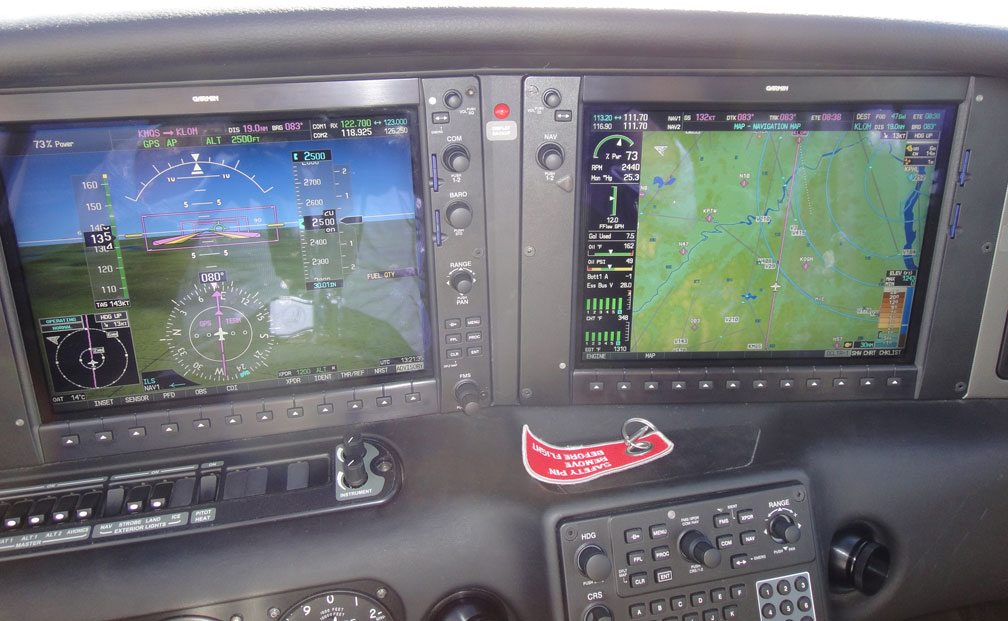
Recently, I had the privilege of getting checked out in a different aircraft, namely the Cirrus G20. This is not your grandfather’s Cessna, but rather a completely different machine. In the first place, it is a composite airplane, made of fiberglass-like materials as opposed to aluminum. Secondly, this one is equipped with a “glass” avionics panel, meaning the instrumentation is presented on display screens as opposed to individual “gauges.” Take a look at the panel during my recent flight.

There’s plenty of eye candy there. The panel on the left is the primary flight display and gives the pilot all the essentials such as airspeed, altitude, heading, and so forth. On the right, is the multi-function display, through which can be accessed engine operational info, a moving map, and much, much more. It takes some practice to make the most of these panels, but once you are familiar, they prove invaluable in terms of situational awareness, ease of navigation, and generally enhance the flying experience. So, let’s take a look out the window.

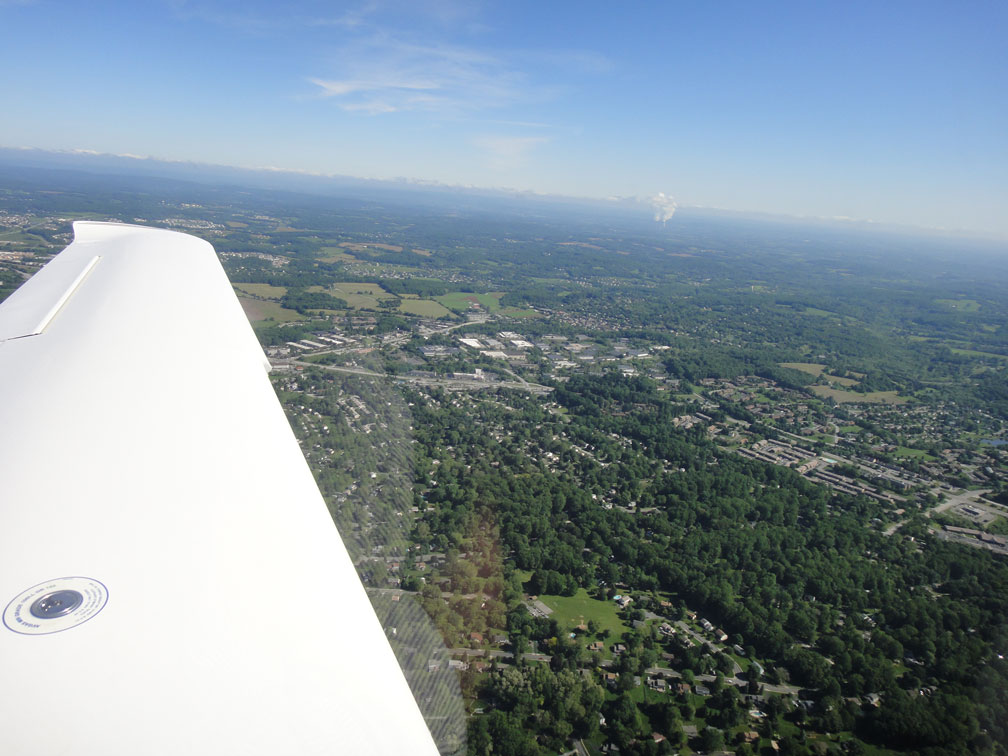
You can see this is a low-wing aircraft. Beyond the leading edge, looking generally north, are the rolling green hills of Pennsylvania, which are quite nice to fly over during much of the year, especially in autumn. Naturally, I’m looking forward to continued improvement in my flying skills and stretching out my cross-country trips to new and farther destinations. The Cirrus makes that a more comfortable and enjoyable proposition.

Flying Over Water

My latest flight took me over some old stomping grounds along the coast of Delaware and over the Delaware Bay. My first stop was Ocean City, Maryland, where there is an excellent airport for small planes like the Cessna 172 that I enjoy flying about. Here’s a look down at the field.

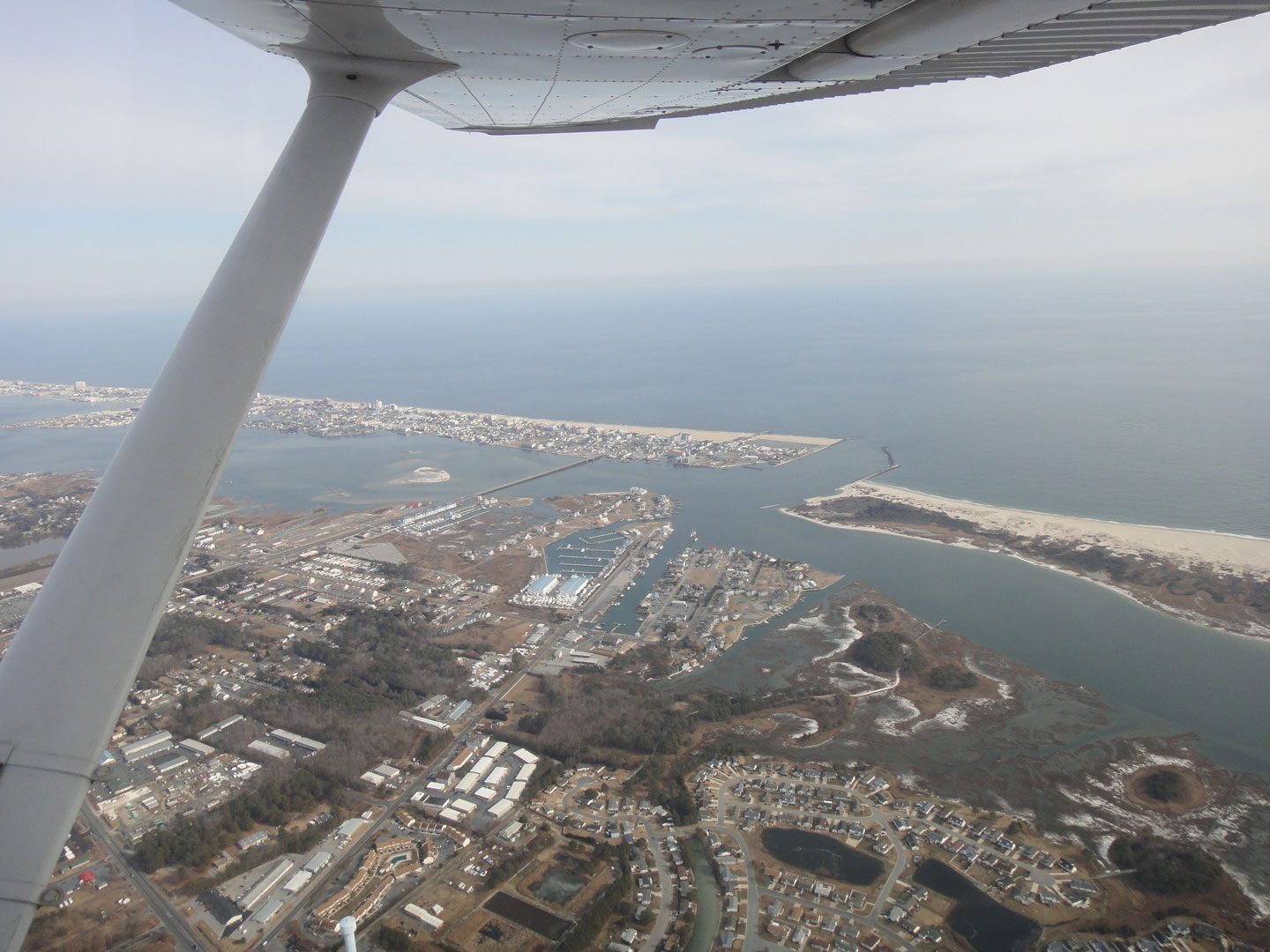
You can see there are two runways, which makes landing easier when the winds shift. You’ll find friendly faces there, too, and fuel if you need it. Nearby, is Ocean City itself as you can see from the next photo.

I followed the coast north to Cape Henlopen, climbed to a higher altitude, then crossed the Delaware Bay. You always want to be high enough to have enough vertical distance to glide to terra firma should your single engine decide to quit. Hopefully, I’ll never have this experience. Looking down at the anchorage you can barely make out a few ships between the strut and the end of the wing. See if you can spot them here among the smudges on the window.

The bay and ocean were flat calm, the kind of day when I used to build reefs in these waters. Now I fly over top wondering what the fish are up to. To complete this trip, I made a stop at Cape May Airport then headed back to my home base.

Published in: on January 25, 2011 at 1:04 pm  Leave a Comment  
Tags: , , , , ,

Diversion Flying

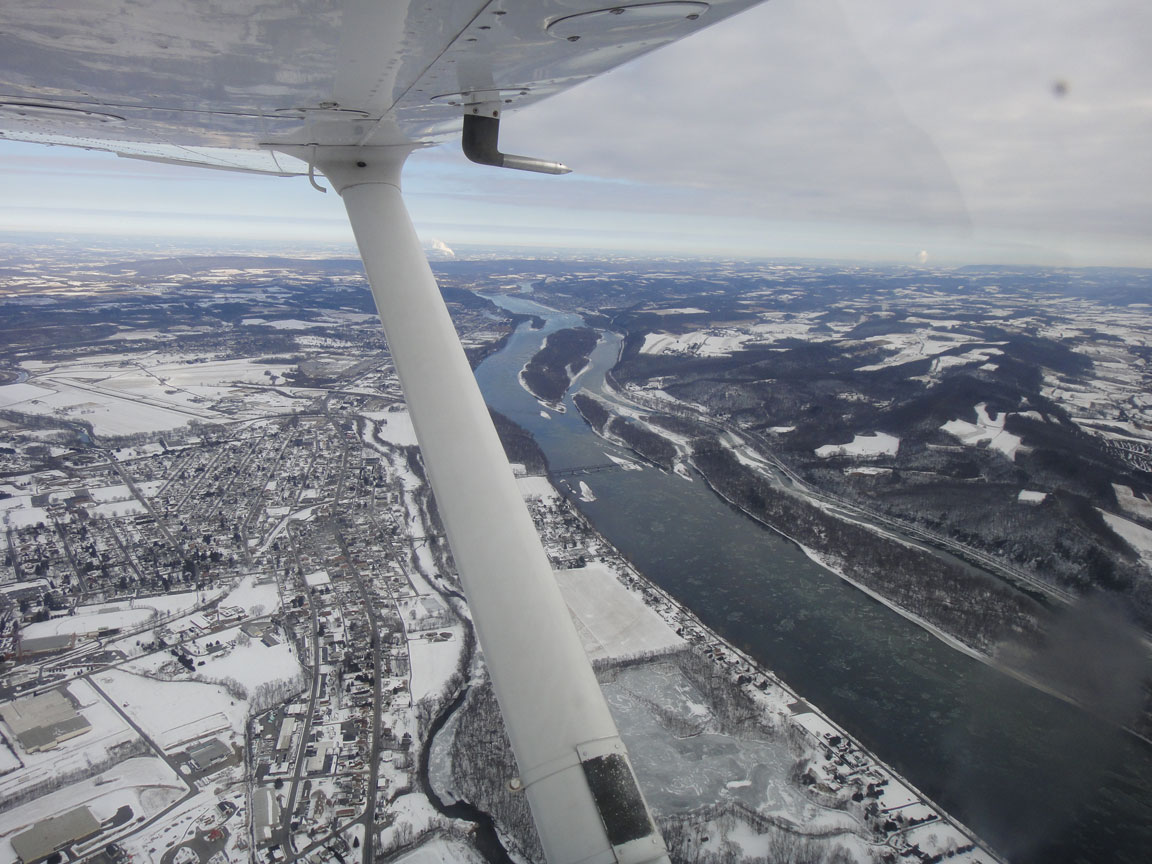
No, I wasn’t flying to divert my attention from a writing project. My flying was diverted because the weather at the intended destination deteriorated and the wise thing to do was return to home base. As you can see from the photo above, the Susquehanna River has some ice and nearby Penn Valley Airport (Selinsgrove, PA) is surrounded by snow.

The airport is the dark strip of asphalt in the left side of the frame. Here’s a closer shot.

I landed there for a little break then took off, heading west for State College, but the ceiling got low. Hence, the diversion. I turned around and headed to Schuylkill County’s Joe Zerby Field. There I took another break before flying further south. On the way, I passed Reading’s Airport. It’s plenty big to accommodate all manner of flying machines. Take a look.

Reading is a controlled field, which means they have a tower with controllers directing traffic. I had no need to trouble them as I had plenty of fuel, knew where I was and where I was going. Hence, back to home base. Better to be on the ground wishing you were in the air then in the air wishing you were on the ground.