Let’s have a word about piracy. As readers of this blog know, I’ve been researching a novel titled MacMillan Judge, Privateer. In the course of Mr. Judge’s adventure, he must face rogue Barbary Pirates who hold a Philadelphia merchant’s daughter for ransom. All is not as it appears, except for the fact that pirates are the embodiment of evil. Since MacMillan Judge sails in the year 1816, let’s move forward to 2009, when pirates are once again a serious issue.
Piracy is more than a simple criminal enterprise. It is an abomination, perpetuated against innocent victims. Any talk of economic necessity as a justification for piracy is absolute nonsense spouted by fools and idiots. Imagine you’re aboard a ship, cruising through international waters, when suddenly you are under attack by machine gun wielding savages. You are unarmed, virtually defenseless against this onslaught. You are actually forbidden in some cases from having weapons other than your bare hands. Sound frightening? It should. The pirates who attack you know that your are a member of the civilized portion of the human species as much as they are members of the savage class. Hence they prey upon your willingness to follow the rules even as they do not.
Please don’t listen to the pablum foisted by popular media and silly political types that declare these pirates to be poor members of the down trodden class with no employment options. Pirates are not cute and cuddly movie stars brought to you by the Disney Company. Pirates are killers, thieves, rapists, enslavers, and a menace to any civilized society. To treat them as anything less than vermin is to elevate them beyond their actual state.
And what to do about pirates? Take a look at the Caribbean of the 1700’s. The British Navy was quite tired of the pirates of Jamaica and elsewhere. Hence the British sent squadrons with specific orders to eliminate the pirates. Let’s be clear. Eliminate meant to destroy the pirate outposts, vessels, and either kill the pirates in combat or return them to England for trial and subsequent hanging. Today’s genteel world erroneously believes that pirates can be “talked to.” Really? People who attack unarmed vessels, steal cargo, ransom hostages, kill crew members, rape, and pillage are the type of people you can trust in the course of a parlay? Anyone who believes that is a mindless dolt not worthy of the air he breathes.
Let’s take a look at another example. After the young United States attacked and partially subdued the Barbary Pirates of the Mediterranean, the British and the Dutch sailed into the area to settle the matter for their own nations. The combined fleet shelled the city of Algiers, ultimately pounding the local pirate king (or dey as they were called) into submission.
The lesson here is that negotiating with pirates like negotiating with cockroaches. You stamp them out or suffer their infestation. To do any less is to sacrifice yourself at the altar of evil.

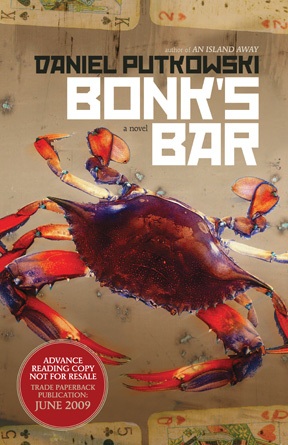 It’s amazing how well the designer captured many of the elements of the story in such a small place. Yes, there are spicy crabs and poker games in the story, not to mention Russian mobsters, live music, and a brawl or two. I love this cover. Let me know what you think. See my website for the first chapter. More info about the release of the book is coming soon.
 Note the clear handwriting of this man, something that always impresses me about previous generations. (My own left-handed scrawl is barely legible, sometimes only to myself and perhaps one other person). Also, he describes the action clearly and almost detachedly, simply related the facts of the situation without much embellishment or exaggeration. I’ve seen log books from previous centuries which include similar writings. It is literally amazing the records that still remain. We can learn plenty of these first hand accounts, which I dare to say are better than what passes for journalism in the current age.
 The Bent Page
You must be logged in to post a comment.