Pete Hamill’s North River

North River is not only about the loves of the main character, Dr. Delaney, it is about Pete Hamill’s love of New York City. The book follows Delaney from the time he discovers his grandchild on his front step through a series of hard knocks and helping hands. Set during the Depression, Hamill imbues this book with all the sensitivity of people in need and people willing to help. 

The center piece of the novel is the evolving relationship between Delaney and Rosa, a woman sent to help him raise his grandchild. As they find each other, the people of the neighborhood show themselves to be as human as the two main characters, complete with all the nuances one would expect from a melting pot of immigrants. At times the plot stutters but it’s no bother. The characters carry you through this world that Hamill renders so clearly.

I spoke with Pete Hamill shortly after this book came out. It was a pleasure conversing with someone who not only knows his subject matter, but has great affection for it. I’ve met other writers who seem to be more akin to snipers than loving members of the family. They hit their target and move on. Not Pete Hamill. He’s always been a New Yorker and he makes no bones about it. I’ve read a few of his other novels and each of them shows his understanding of the city and its people.

North River is best read in a couple of sittings, preferably in the winter, when you can gaze out the window and see the characters alive and well.

Published in: on September 5, 2008 at 6:53 pm  Leave a Comment  
Tags: , , , , , , , , ,

MacMillan Judge and Fort Zoutman

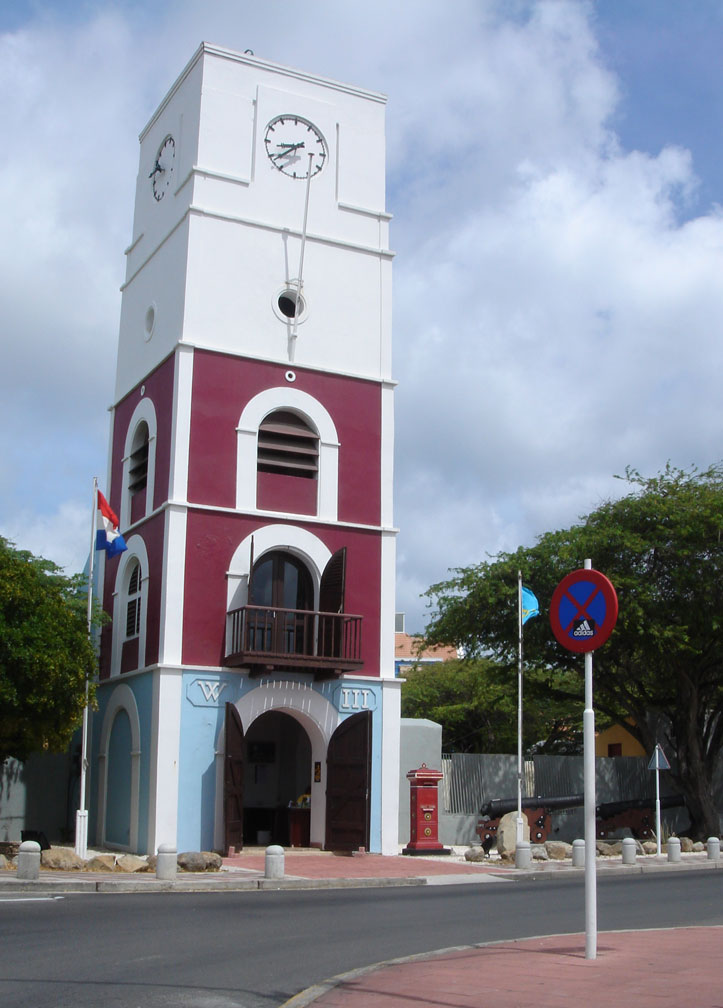
Going back through my story notes this morning, I stumbled on some scenes for the end of a novel I mentioned earlier, MacMillan Judge, Privateer. Without ruining the story, I can tell you that our man, Captain MacMillan Judge, ends up heading to that favorite island of mine, namely Aruba. (Don’t worry, this story will be a long time coming. It’s third in line right now.) Well, in Oranjestaad there is Fort Zoutman, which today is more or less dwarfed by nearby commercial structures. However, back in the day, it was enough to keep the island under control.

The photo to the right is of the Willem III tower. It served as a general lookout for the soldiers in the fort that sits below and behind it. Judge spots this tower as he cruises the coast in search of a decent anchorage. In case I forgot to mention it, MacMillan Judge, Privateer is set in 1815-1816. I’ve been brushing up on my history of this period, not only of Aruba, but also the Mediterranean area around southern Spain and the so-called Barbary Coast. This was a wild time in the history of the known world. The United States was a new country. Britain and France had been at war (yes, again) for quite a while. Spain, although not a superpower, still had some fangs. Through these tricky times MacMillan Judge and his crew of the privateer-built, topsail schooner Fletcher pick their way to fortune and glory. Actually that makes light of the serious themes in the story, but it sounded like the blurb you might find on the back of a sailing novel and I’m a firm believer in some excitement now and then.

It’s had to imagine a time when the canon pictured below was a key component to military domination.

Nonetheless, they did the job. In the course of the story, MacMillan Judge receives two long guns from Don Francisco, a Spanish aristocrat whose family has been harassed by the Barbary Pirates for generations. Those two long guns figure into MacMillan’s strategy as he beats back an attack by two corsairs. There I go again, telling too much of the story. Well, let’s leave it at that. For now.

Published in: on September 5, 2008 at 11:10 am  Leave a Comment  
Tags: , , , , , , , ,

Pisa, Italy, Way Back When

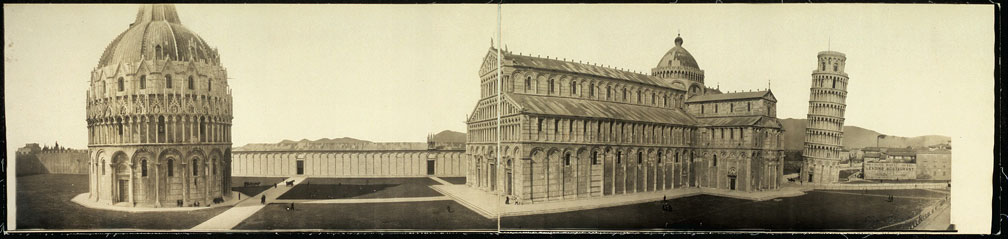
Looking through those old photos at the United States Library of Congress, I came across this one from Pisa, Italy. At first, I thought it was of a scale model. On closer inspection, I realized it was the real thing. Look closely at the buildings and people in the frame.

This is one of those large format, panoramic photos that are a joy to look at. It would most likely be impossible to make this image today. The crowds and the new buildings would all be in the way.

I haven’t been to Italy in many years, and the last time I was there, did not get south of Bologna. I’d like to see Pisa as well as the rest of the country. Of course, Italy is one of those places like Spain; you could spend a lifetime and still not absorb it all. Fortunately we have archives like the Library of Congress where you can see such sights without even leaving your desk. This is not a substitute for the real thing. However, it does satisfy a certain need to see what’s there.

I have a bad habit of writing two or three stories at one time. I bounce between them when the mood strikes. After looking at photos like this, I’m inspired to write episodes for my historical novels (such as MacMillan Judge, Privateer). It’s fun to play in the past where you know how things turned out. The future is a bit more difficult. It leaves you worried that when the future becomes the present, your interpretations will be judged. Maybe that’s the fun of it: putting yourself out there, asking other people to give their opinion on your work. You can’t please all of the people all of the time. I’d venture to say you can only please a few people once in a while. So long as you’re happy with what you’ve done, well, you’re on the right track.

Published in: on September 3, 2008 at 2:32 pm  Leave a Comment  
Tags: , , , , , ,

Details from the Cemetery

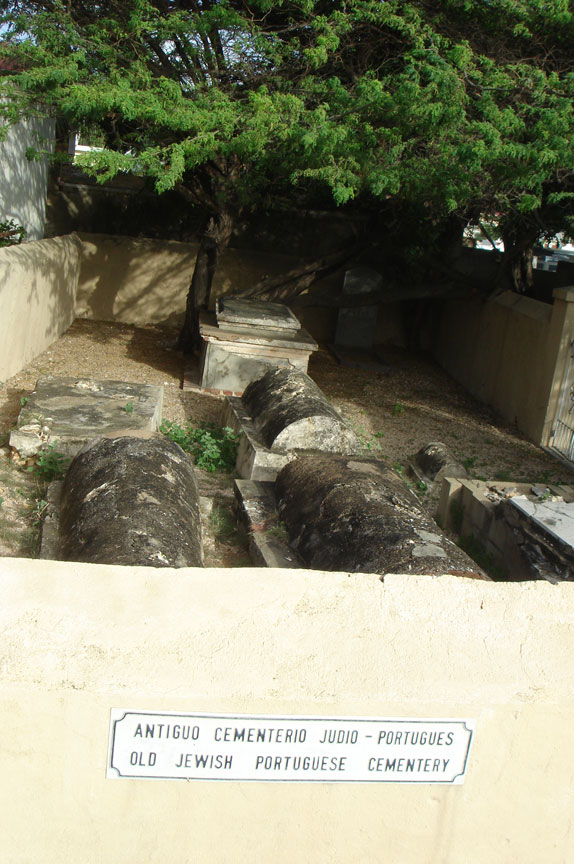
My writing is heavy on details. I put my words together with a fine brush, filling in all the nooks and crannies. (My editor constantly reminds me not to tell EVERYTHING.) This is a strange phenomenon for me because when I was heavy into photography, my images were large, sweeping vistas taken with wide angle lenses. This may go back to film school, where they taught me always to have an establishing shot to place the viewer in the location. Then, go in close for the minutia that is relevant to the story. Well, here in Aruba, I came across this old cemetery, which as the sign says, was for Jewish Portuguese people. Have a look.

The place is quite old by any standard, especially for the Caribbean whose history is often swept away by hurricanes and changes in government. By my count, there were only seven graves inside the walls. The largest one in the rear features a Divi tree growing up through it.

However, the detail that struck me most was among the arch-covered graves in the center row. It’s the small one on the right. Someone’s child didn’t survive and ended up here next to his elders. Wow, that’s all the detail I need to make this place interesting and the stuff of a story. Of course, graveyards are a no-brainer, and not just for mysteries. You’ll find all kinds of things that represent both the living and the dead, the beliefs or lack there-of held by those interred as well as the visitors still alive.

It strikes me when I see people leaving things behind for those who’ve passed away. I suppose it’s a soothing notion, a comfort to remember and contemplate. It must be part of the human condition because the activity goes back into pre-history. Certainly the Egyptians reached an all-time high with their temples to the dead that were staffed by priests and kept flourishing for years after a Pharaoh or other significant person died. Then again, details can be striking and a single person with a single flower is more powerful than a priestly retinue in a smoky temple. At least, in my way of telling stories it is.

Published in: on August 10, 2008 at 10:56 am  Leave a Comment  
Tags: , , , , , , ,