Aruba, Island Approach

Here is a photo taken from American Airlines flight 1047, MIA to AUA:
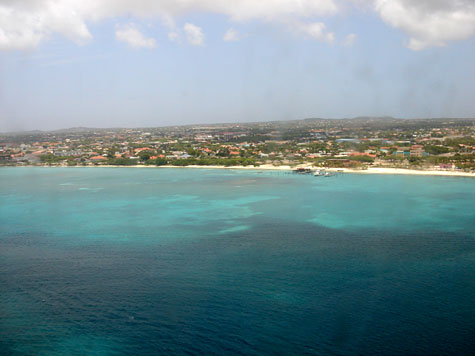
How about those blue waters below? Actually, I think they’re more turquoise than blue, but who’s keeping track of the colors. I’m on final approach to my favorite island, one that I’ve been visiting for about 15 years. It all started when a friend of mine invited me to Aruba to take a look at a business idea. From there, it become a regular pilgrimage to this place in the Caribbean.

Aruba is one of those mixed up places in the world. It maintains “status aparte” from Holland but is nominally a Dutch island. The people speak several languages, including Papiamento which is a combination of several others. The island is close enough to South America for there to be a large Spanish-speaking population, yet there are a number of Europeans in residence as well. And then there are the Americans, everything from expats who grew up there during the boom years of the Esso refinery to vacationers and pensioners simply looking for reliable sunshine.

Either way, Aruba offers the visitor fabulous beaches, excellent dining options, plenty of opportunity to do nothing or stay out all day and night. Thanks to its friendly people and the aforementioned activities, it has the highest number of repeat visitors in the Caribbean. And it should. I’ve been many places in this world, but few are as welcoming as Aruba.

Published in: on July 7, 2008 at 11:30 pm  Leave a Comment  
Tags: , , , , , , , ,

Hurricane Season

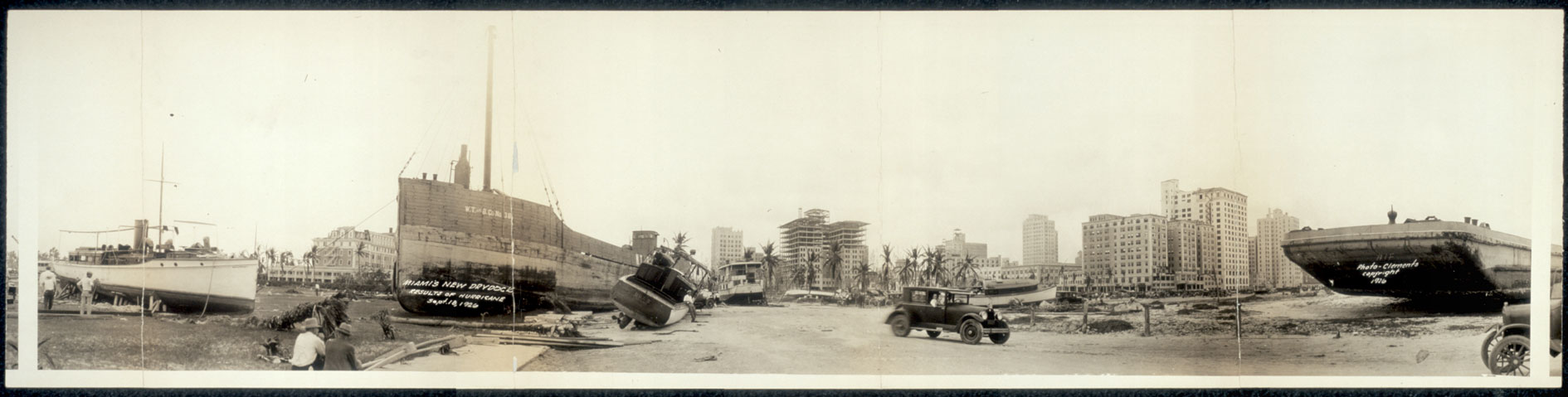
Hurrican Season is off to a good start with two named storms already. Bertha is plunging across the Atlantic in search of a target. One of the reasons I like Aruba so much is that the island is south of the hurricane track. In a worst case, it receives the back spin of a storm passing to the north, as is illustrated in my novel, An Island Away. Even that is a rarity. Miami, on the other hand, gets hit on a regular basis, although not lately. Below is a photo from a hurricane that struck the city in September of 1926. The photographer jokingly calls the beach the new “drydock.”

That’s a decent size ship there on the left and a barge on the right. The motor launch at the far left does have the look of a rum runner, doesn’t it? I could see Hemingway on her, or maybe a bunch of guys steaming up from Cuba with cigars, bootleg booze, and a story to tell. Those were the days. And to think the smugglers of today think they invented something new. The only difference is they use airplanes.

Anyway, calm weather gives the good sailor a chance to repair. So be sure to keep an eye on the weather. Don’t ignore hurricane warnings. These storms are among the most powerful on earth and once they are upon you it is too late. There’s no place to hide. As far as smuggling goes, well, if it’s material for a good story, I might be inclined to listen. Send me a note about what you’ve been up to. Thanks.

Published in: on July 7, 2008 at 7:10 pm  Comments (2)  
Tags: , , , , , , , , , ,

A View of the Battery and Beyond

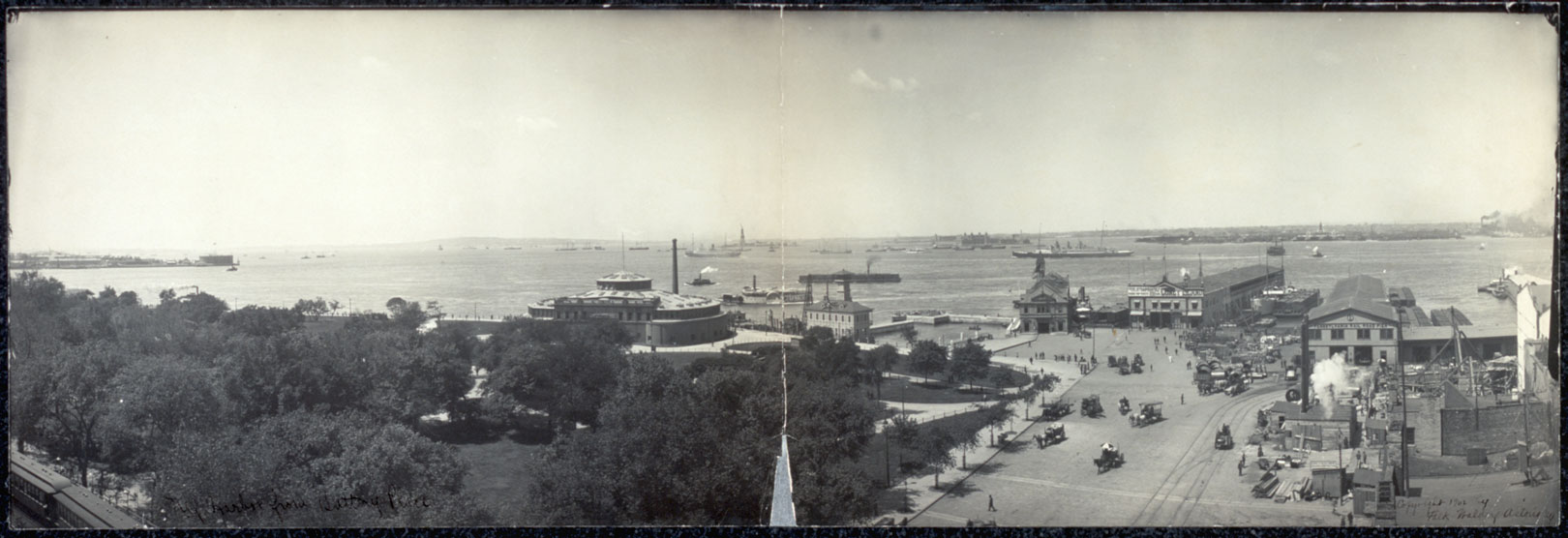
I posted those other photos of New York City, the ones of Grand Central and such. I couldn’t resist this one, taken in 1902 looking at New York Harbor from the end of Manhattan. There are so many details in this photo that it would take hours to catalog them all. First, take a look at the image.

Of course the Battery, is just left of center. Beyond the Battery is the Statue of Liberty. Turning to the right, you’ll see Ellis Island. Between the Battery and the Statue of Liberty, note the tugboat steaming along, towing a barge just behind it. In the foreground you see terminals for ferries going to Coney Island and Staten Island. Then there is the warehouse-like structure for the Pennsylvania Railroad. The park leading up to the Battery looks immaculate, as do those carriages on the wide boulevard that fronts it.

This must have been quite a time in New York. Things have changed but the Battery is still there. Ellis Island is now a tourist attraction. The Statue of Liberty is ringed with security.

I remember during my first few weeks of film school at New York University, I was given an assignment to take documentary photographs of a permanent structure. I trotted from Washington Square to the World Trade Center, camera and tripod in tow. I set up at the edge of the plaza and took a 360 degree panorama of the scene. I didn’t realize it at the time but I captured the completion of the World Financial Center, which is built on land that did not exist when the photo above was taken. The trailers from the construction companies were still there but this was the very end of the job. After the events of that fateful September, I found this series of photos on my shelves. The negatives (this was in the days of film) are in good condition. I’ll have to find a lab to make the prints and stitch that photo together again. It’ll feel the same as looking at the above photo, and yet it’s only twenty two years later.

Panama Canal, Work in Progress

Cruise ship travelers may enjoy these photos of the Panama Canal in various stages of construction. I tried to select the most interesting ones from the United States Library of Congress archive. Building the canal was no easy project, which is probably the second greatest understatement of this blog. Oh, well, a trench was dug, locks built, equipment installed, and today millions of tons of cargo pass through along with pleasure vessels. The photos in the post were taken in 1913 and 1914.

Below is the Culebra Cut. Check out those steam shoves digging away:

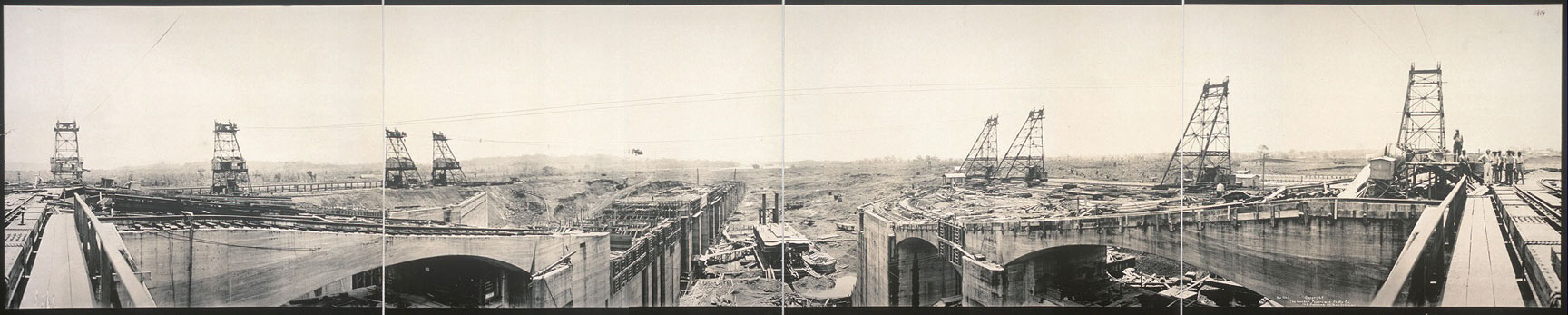
If you look along the top edge of the photo, you can almost see how unstable the soil is. There were numerous landslides that ruined equipment and killed workers as the project progressed. The next photo is a look down at the Gatun Locks, north approach.

That’s a massive set of concrete walls in there. If you look carefully on the far right side of the photo, you’ll see a knot of men, probably curious as to how the photographer was creating this picture. To get a sense of scale for these locks, take a look at the Miraflores Locks at the lower level below:

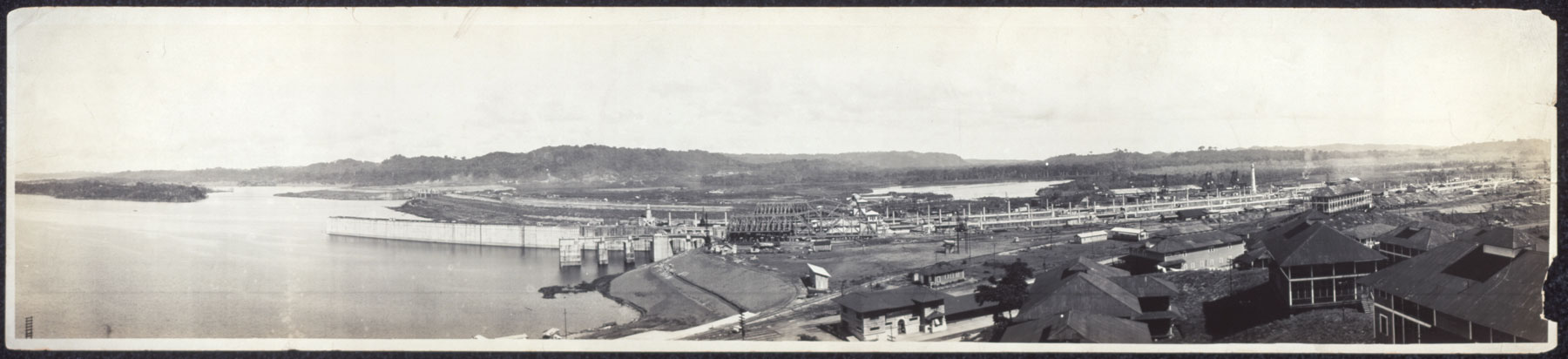
The locks seem to go on forever. Note the railcars on the left, with tracks built right to the job site. Another point to remember is that the size of battleships was limited to the width of the locks in the Panama Canal. This way, they would be able to go from the Atlantic to the Pacific in the event they were needed in one hemisphere or the other.

Finally, here is a look at the approach to the first lock.

I have yet to traverse the Panama Canal. I missed a chance some years ago. A friend was relocating a tugboat from the West Coast of the United States to Philadelphia. I wish I would have made that journey.  Given the international traffic through Panama, it is the type of place (as Casablanca used to be) that is the perfect setting for intriguing stories. Plus, there is the possibility of escape or capture aboard a departing vessel, exciting chases through jungles, along rail lines, and through crowded towns. Then there is the climate, raining, tropical, vibrant. You never know. I’ve added Panama to my list of locations for the future.

I’d like to hear from cruise ship passengers who have been through recently. It would be something to notice the differences in things. Don’t hesitate to post comments. Thanks!

Published in: on July 6, 2008 at 3:08 pm  Comments (3)  
Tags: , , , , , , ,