Túnel de Hada, Hotel and Spa

Previously, I posted about the restaurant at the Hotel and Spa known as Túnel de Hada. Now, let’s focus on the hotel. (Sadly, I did not avail myself of any spa treatments. An error I will have to correct some day.) Jerte is where this hotel is located, a small town in the middle of a green valley loaded with cherry orchards. There’s a small river running through it. More on that later. Here’s a view of the hotel from the rear. The front is on a very narrow street in town.

The building fits in the with the ancient town’s architecture. Here you see the entrance on the ground floor.

Through that glass door you go, into a reception area with a very competent desk staff. My reservation was ready and in a few moments I had the key to my room. At this point I inquired about laundry service and in another few moments, the clothing was on its way to being washed, dried, folded, and pressed, and delivered to me before the evening set in. That’s excellent, especially for a guy who needed some clean shirts. The rooms are slightly dark, but once you pull open the curtains things brighten up. Here’s the sleeping arrangement.

And opposite it was a comfortable area to sit, relax, read, or watch TV.

No, I wasn’t doing any TV watching. I was gallivanting about the town. Take a look at the view into the greenery from the room’s window.
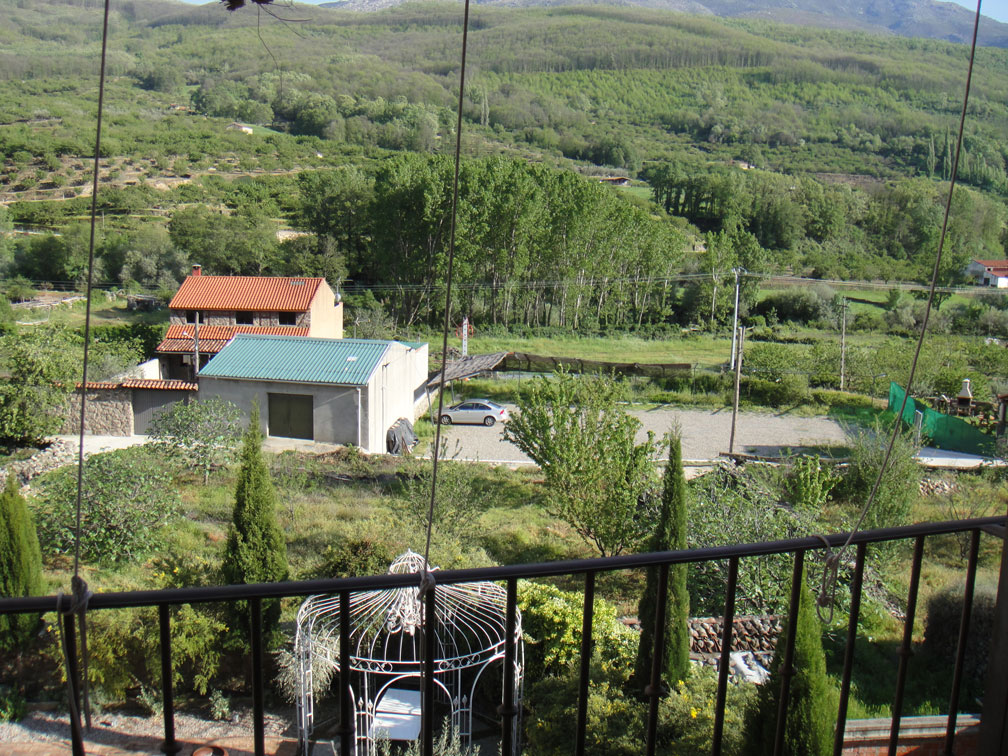
The photo above doesn’t really do the view justice. It was a menagerie of green with the steady mumble of the river for a soundtrack. Lulls you right to sleep, especially as the cool air settles into the valley. Overall, Túnel de Hada was a comfortable and welcoming place to stay, one I would recommend to those looking for an upscale experience in both accommodations and food. Don’t forget to try the spa and let me know how it was!

Published in: on May 31, 2011 at 3:05 pm  Leave a Comment  
Tags: , , , , , , ,

Restaurante Túnel de Hada, Spain

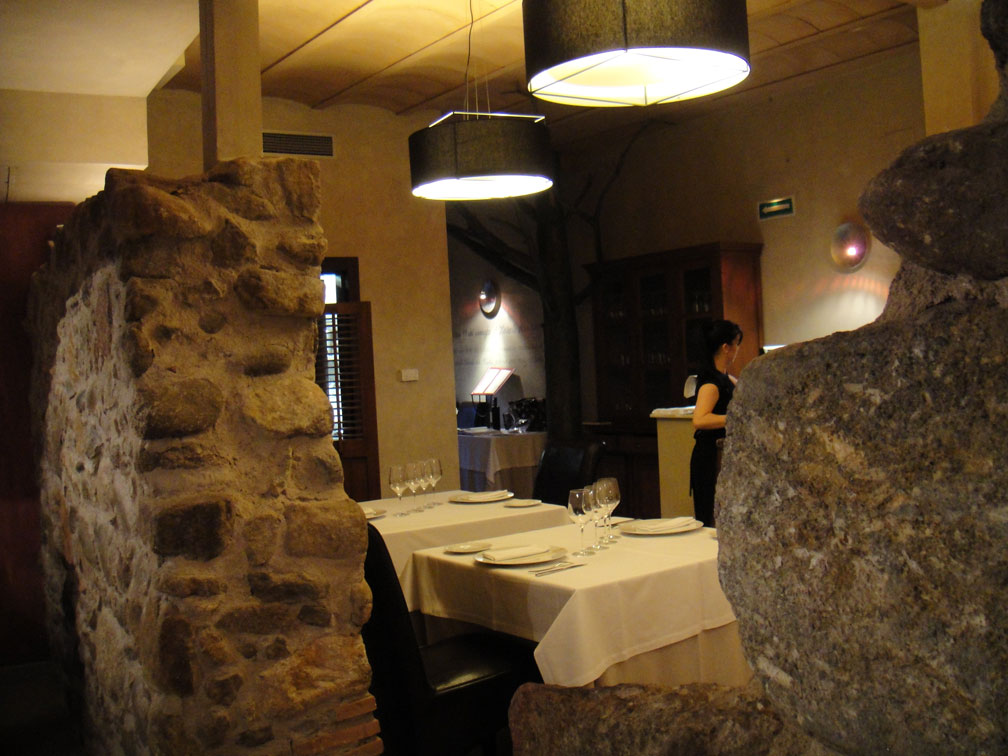
Restaurante Túnel de Hada is located in the hotel and spa of the same name, in Jerte, Spain. The Jerte Valley itself is famous for its cherry trees and you’ll find that influence in the food prepared for you at the restaurant. Seating is divided into several areas which offers a bit of privacy/romance, which was much appreciated during my stay. Here’s a view into the spot where our table was situated.

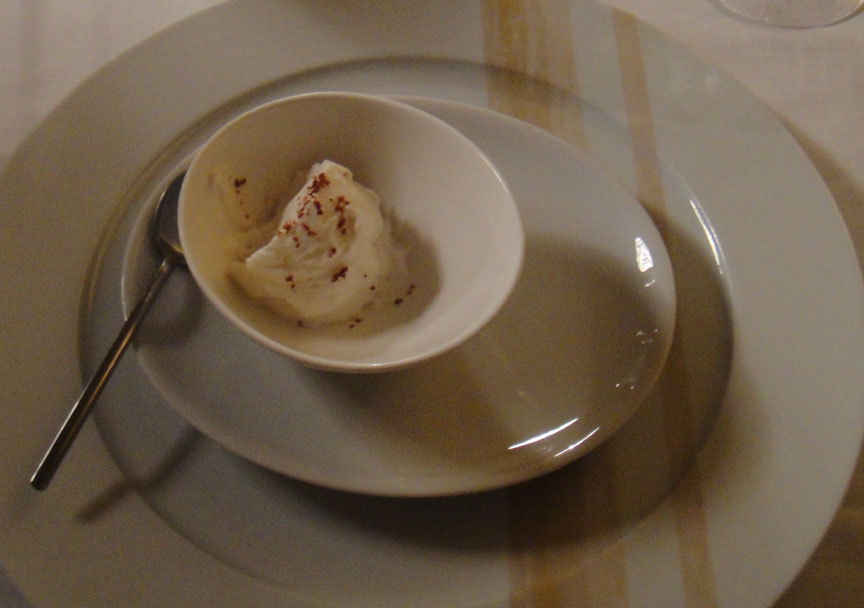
Those ancient walls lend ambiance and gravitas to the setting. The meal began with a sort of palette cleanser, a sorbet of sorts that I find very difficult to describe. It was tasty and functional and here’s a look at the presentation.

Note the flat and hollow-ware. Very tasteful, understated, and always set upon the table with grace and care. Staff here are top notch. Well, the next course was a single, large ravioli-type pocket of pasta which was served in a bowl and then the waitress poured over a warm, creamy garlic soup. A truly simple, yet striking combination of flavors. Here it is in the combined state.

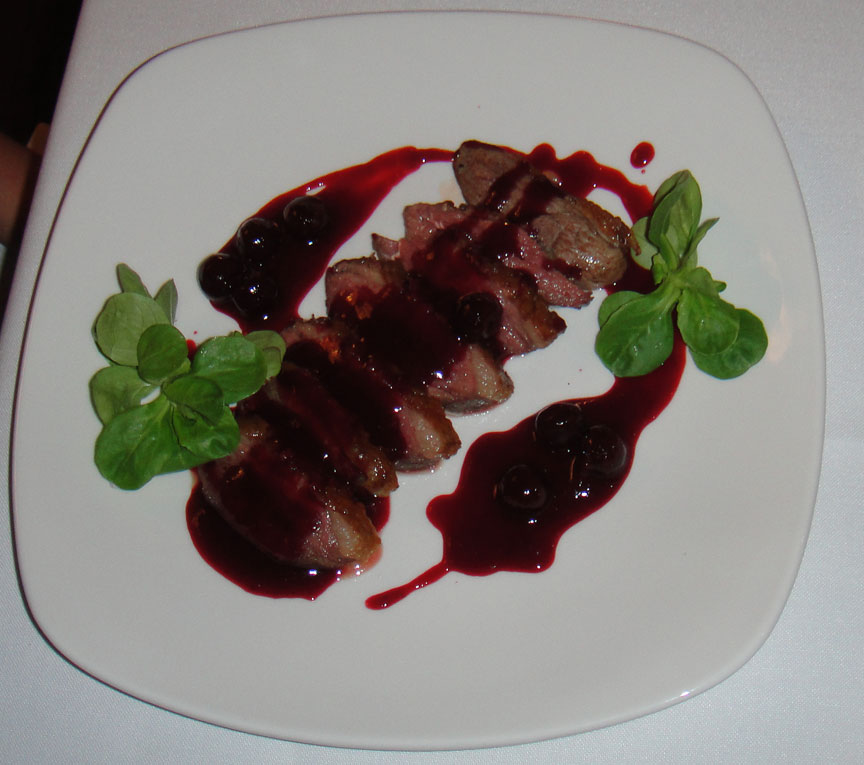
Then came the main courses. One was duck with a dense cherry sauce seen here.

Very vibrant that dish! The other was pork with the thinest slices of potato layered in, as seen next.

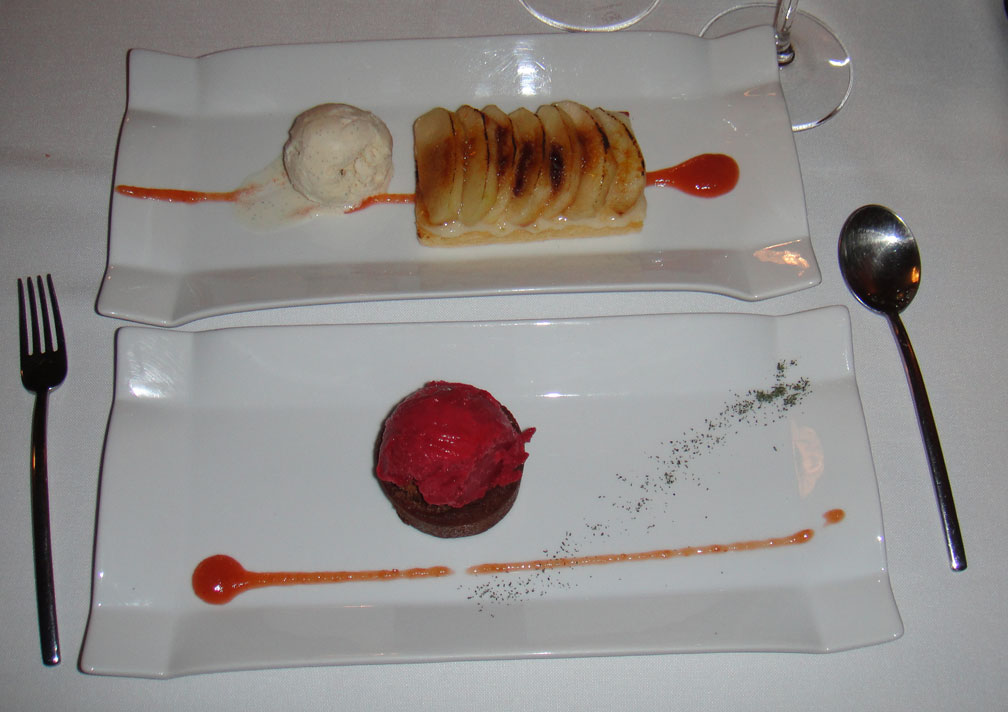
Both of these dishes were superb. The cherries are the most local ingredient and were integrated nicely without being overbearing. This is something I like very much about Spain. Each region, even within a region, you find specific foods that are native and used creatively. Thus, while traveling along you experience a great many treats as opposed to one long, homogenized theme. Back to Túnel de Hada. It was time for dessert. We opted for the cherry sorbet and apple tort.

Again, check out that presentation. These people work hard at getting everything right, every detail, only to have me mow it down. Respectfully, of course. If you find yourself traversing the Jerte Valley, you would be well served to enjoy a meal here. (Please note, these photos were from a visit conducted during April 2010. I only recently realized I had not previously posted them. In other words, the menu may have changed.)

Published in: on May 30, 2011 at 10:05 pm  Leave a Comment  
Tags: , , , , , , ,

Civil Air Patrol

While at my local small airport doing some writing, I had the pleasure of meeting a couple of pilots who work with the Civil Air Patrol. Here in the United States, the Civil Air Patrol is given the task of inland search and rescue. If a small plane goes down these volunteers head out to find it. They also patrol for other purposes such as firewatches and the like. Here’s a look at one of their planes, a Cessna 182.

Many of these volunteers are former military and commercial pilots, that is people with many years of experience and plenty of training. The guys that I met were among the most competent pilots I had the pleasure of speaking with in recent months. They were also friendly and willing to explain the details of their tasks, equipment, and approach to both. I learned a few good tips this day, all for the price of a handshake. A great deal if ever there was one.

Cruising in the Cirrus

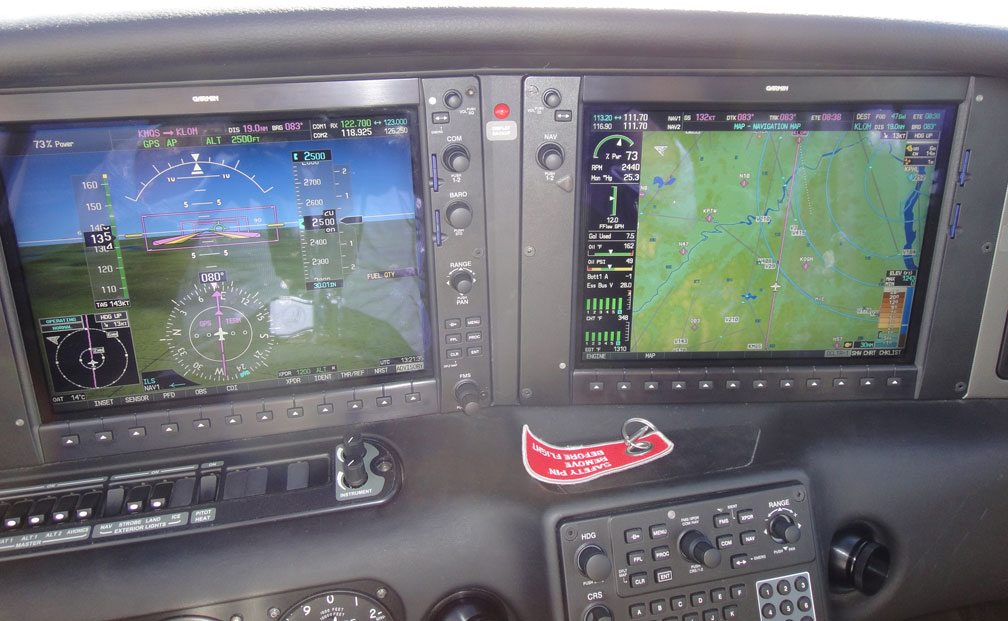
Recently, I had the privilege of getting checked out in a different aircraft, namely the Cirrus G20. This is not your grandfather’s Cessna, but rather a completely different machine. In the first place, it is a composite airplane, made of fiberglass-like materials as opposed to aluminum. Secondly, this one is equipped with a “glass” avionics panel, meaning the instrumentation is presented on display screens as opposed to individual “gauges.” Take a look at the panel during my recent flight.

There’s plenty of eye candy there. The panel on the left is the primary flight display and gives the pilot all the essentials such as airspeed, altitude, heading, and so forth. On the right, is the multi-function display, through which can be accessed engine operational info, a moving map, and much, much more. It takes some practice to make the most of these panels, but once you are familiar, they prove invaluable in terms of situational awareness, ease of navigation, and generally enhance the flying experience. So, let’s take a look out the window.

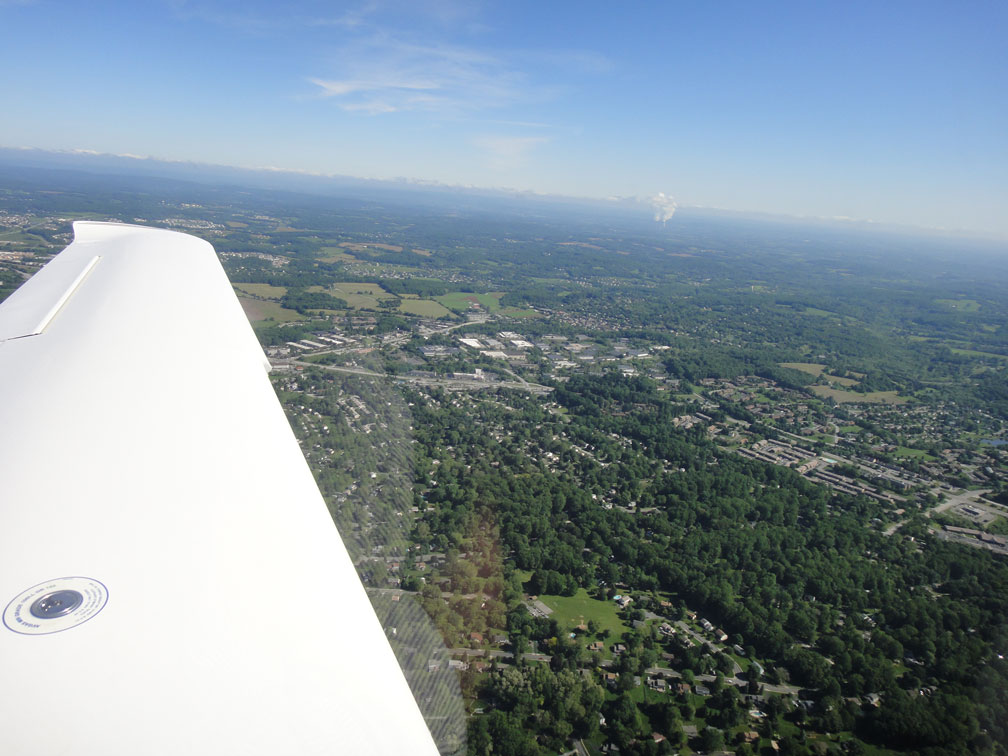
You can see this is a low-wing aircraft. Beyond the leading edge, looking generally north, are the rolling green hills of Pennsylvania, which are quite nice to fly over during much of the year, especially in autumn. Naturally, I’m looking forward to continued improvement in my flying skills and stretching out my cross-country trips to new and farther destinations. The Cirrus makes that a more comfortable and enjoyable proposition.