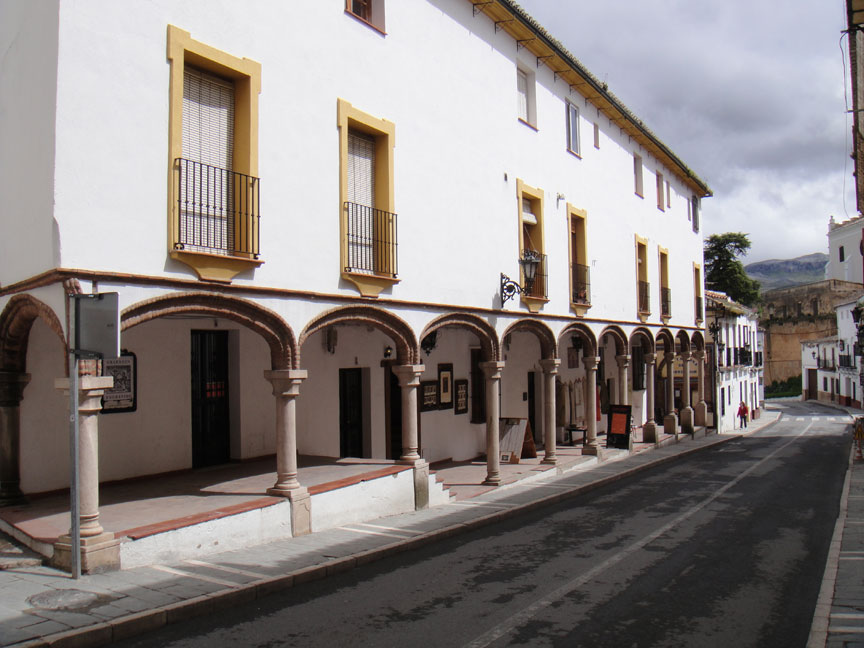
Ronda, Spain, offers those who like to walk a compact experience. This photo essay shows several streets that exemplify what the pedestrian would encounter while traversing this interesting city. Actually, Ronda is more like a big town that has been split into several parts, each with a slightly different character. My hotel was located not far from the main route out of town. There I found many arcaded buildings with shops on the ground floor as seen below.
 Walking toward the gorge spanned by the famous bridges (which I covered in a video some posts back), I passed by this tower, which was built as a minaret and then later converted to other purposes. There are a number of buildings like this, which is to be expected in an area that has seen several different ruling cultures over the years.

Moving along, I encountered a smart district of boutiques and restaurants where the avenues were mostly closed to auto traffic.
 Certain times of the day you will see delivery vehicles there, but only a few. By comparison, there are other streets which combine small businesses and residential structures as seen below.
 In areas like this you have to be careful as cars come dodging around those blind corners. Keep your ears tuned for the sound of whining engines, but also you eyes for sweeping vistas like the next one.
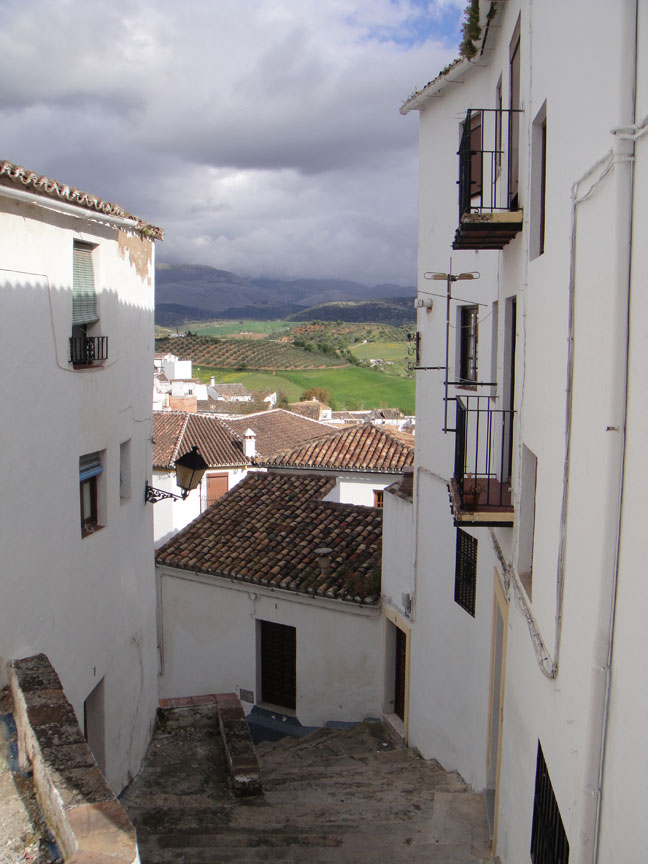 Due to the geography of Ronda’s position, there are plenty of views lurking between the buildings. At the time of this writing there were only a few small suburbs developed outside the main part of the city. Therefore, the surrounding countryside remains dedicated to farm and pasture, making for beautiful sights even while you’re in the middle of town. And don’t miss those mountains in the distance! Its easy to become overstimulated in places like Ronda. However, if you slow down, stop for a snack, pause for a photo, chat with your pals or a stranger, you’ll enhance your visit by a factor of ten.


 The Bent Page
You must be logged in to post a comment.