Cuenca’s Gorge

No doubt you’ve seen many great photos of the “hanging houses” of Cuenca, Spain. Here is a look into the gorge above which those famous houses hang.

It’s a long way down; that’s for sure. What’s interesting is the way the land on that narrow valley floor is being used. Not one square inch is wasted. After touring about town, we went down there. The patchwork fields were more like large gardens, the soil black and lush. No crops were in season, but you can bet that whatever was planted was sure to yield a bountiful harvest. There was also the church on the bluff to the right side of the frame. It was another imposing structure, standing out to the very edge, it’s walls rising up from the rock below.

Landscapes and structures like these are one of the things I like about Spain. Each one is a series of surprises and unexpected revelations. At times it is hard to grasp all of them. It takes practice to seek them out and not be overwhelmed by the major attractions. We were driving from Cuenca to Granada and along the way came to a small town. After filling the tank at a gas station, I noticed a series of walls about five or six blocks away. I motored over only to discover the remains of what must have been a small cathedral. No one was around, not even a stray dog. We walked among the ruins, undisturbed for the better part of an hour. There was no roof and several walls appeared to be only half their original height. And yet the feeling of what had been there remained.

I imagine there are many such places not only in Spain but around the world. There are too many for all of them to be restored or even preserved as they are. I was thrilled to take my own little tour through the past, now wishing I had taken some photos to have for the future. Given the very good digital cameras today and the low prices of memory cards, I won’t make that mistake again.

Published in: on June 19, 2008 at 9:47 am  Comments (2)  
Tags: , , ,

All That Junk

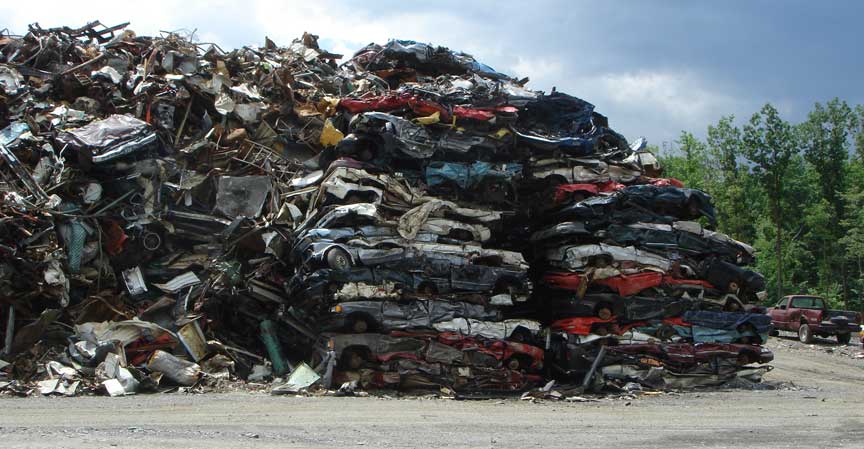
Did you ever wonder what happens to all that junk? Your old car, broken appliances, maybe an ancient lawn mower? Well here’s what happens to the vast majority of it. Actually this is Phase 2. Phase 1 is the local scrap metal hauler, be it the trash collector or another individual, picks it up from you or your recycling center or some such place. Then it travels to a place where it ends up looking like this:

You can see flattened cars in the pile as well as a jumble of other things. From this pile, the material is fed into what is known as a “shredder.” This machine is technically a hammer mill. Just imagine a long shaft with huge hammers hanging from it. Now spin that shaft with a 2,000 horsepower electric motor. Whatever those hammers strike is shattered into little pieces. Below is a photo of your junk being fed into the machine.

Here’s another one. This time the claw of the machine is beside the throat of the shredder.

Notice the steam coming off the shredder. Plenty of heat is generated by those hammers pulverizing all that material. Water is sprayed in to keep things cool. The pieces fall onto a conveyor belt system. These belts pass through various sorting devices including magnets to separate the ferrous (iron) from the non-ferrous (copper, aluminum, etc.). That system looks like this:

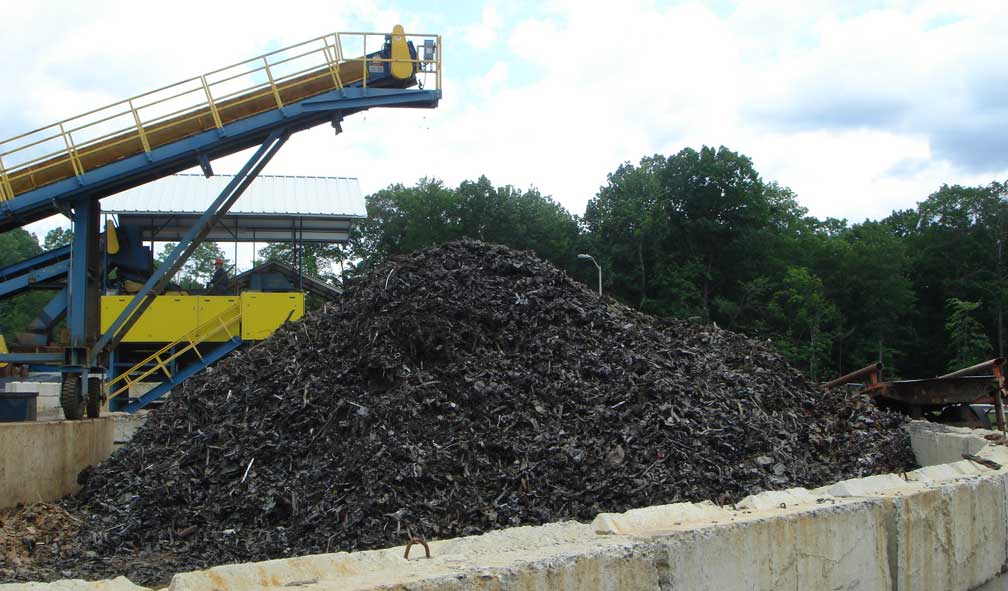
Ultimately some of the material is separated by hand. At the end of the line, there are individual piles of ferrous scrap, non-ferrous, and “fluff.” Fluff is all the plastic, foam rubber, paper, and miscellaneous garbage that is not metallic. Believe it or not, fluff has many uses including landfill cover and fuel stock. This pile is of the ferrous scrap or “frag” as it is called.

In Phase 3, this will be sent to a steel mill and converted into new steel. Scrap iron is the most recycled commodity in the United States. Every year, millions of tons of junk are converted into new products. There is also a massive export market for this and the non-ferrous scrap.

So what’s this got to do with a guy who writes books and travels? Well, a friend of mine owns the plant shown above. He’s quite the entrepreneur. It’s people like him and the guys who work in scrap yards that sometimes form the basis of the characters in my books. Besides, there’s never a dull moment around this kind of action. It sure beats the office.

Published in: on June 18, 2008 at 7:42 pm  Leave a Comment  
Tags: , , ,

A Long Goodbye

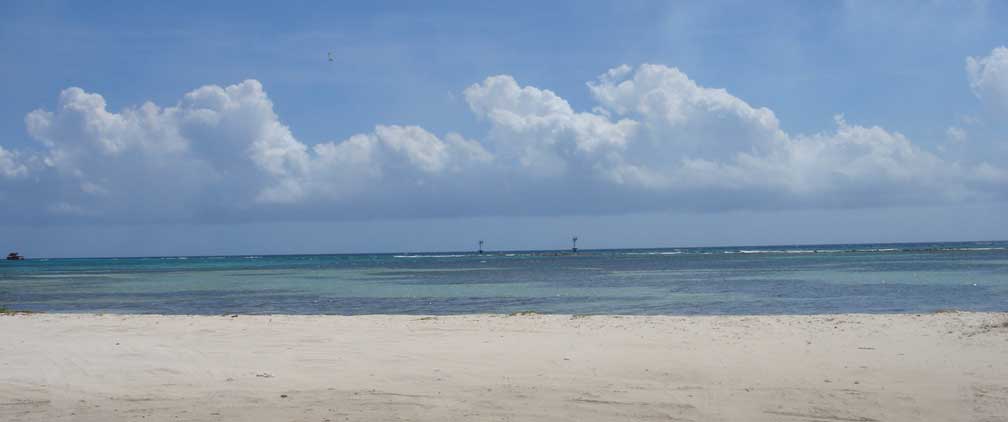
On the southern edge of Aruba, beyond the famous Baby Beach, is an area where pets are buried. We all love our pets, think of them as members of the family, and treat them better than ourselves at times. It’s only appropriate they are buried respectfully. Here’s a view of the way it’s done on the island.

This is a solemn place. You can’t look at the makeshift crosses without thinking about your own pets, both past and present. I’ve seen people come here to place flowers and other offerings, which only proves how beloved these animals were. Some day I want to incorporate this scene into a story.

And yet only a quarter mile away you’ll find families frolicking in the water, people snorkeling, and others just working on their tans. In the distance, beyond that clear blue water, you’ll see super tankers and cargo ships passing by.

Life goes on, but it’s only right to pause once in a while to remember the ones we loved, especially our pets.

Published in: on June 17, 2008 at 4:26 pm  Leave a Comment  
Tags: , ,

A Beach of Your Own?

Have you ever wanted a beach of your own? Or maybe just a beach all to yourself for a day? Well, take a look at the photo below. Can you see yourself there?

If you look carefully, you can see a small structure at the very edge of the left side of the frame. This is a little pavilion constructed on the bit of land that is only two feet above the ocean’s surface. Think about yourself and a few close friends having a small party out there. Simple, beautiful, perfect. This is the beach in Savaneta, Aruba. Most weekdays, you might find a few people here during the day. A fisherman or two pass by with hand nets, catching bait fish that the pelicans don’t scoop up. On weekends, the Arubans camp out with their families.

There are actually two beaches, each of them framed by mangroves. They aren’t very big, maybe a hundred yards long. The nearby ocean is quite shallow, perhaps 15 feet at its deepest, all the way to reef. After the reef, the topography drops off to deeper water.

From here you can watch the ships pass by. Once in a while a tugboat sails from San Nicolaas on the southeast end of the island, where the refinery is, to the harbor at Oranjestaad, which is more centrally located. These tugboats assist the cruise ships and cargo vessels calling there. You can wave to them and sometimes they’ll give you a whistle back.

I came to this place in 1995. I pulled over, looked at the beach and surrounding area. I thought, “I could live here.” It was a goal that took me a long time to accomplish. But all that hard work was worth it. The good things in life are worth waiting for. (You’ve heard that one before, I know, but it is true.) Don’t rush it. Don’t get discouraged. Stay the course, weather the storm, and get where you want to go and take the ones you love with you. One of my characters in An Island Away sets out to do this. Sorry, I can’t reveal what happens without ruining the story.

After a brief interlude to talk about some other things, I’ll post a few more views of the interior of the island that are just as appealing this one, as well as some more beautiful sunsets.

Published in: on June 16, 2008 at 11:39 pm  Comments (1)  
Tags: , ,