Creating Atmosphere, Part 1

In the course of writing a book, one of the challenges is to create the atmosphere in which the story unfolds. The setting could be the frozen tundra or the tropics but simply stating where a character is doesn’t do the job. There are elements that have to be added to give a sense of the place, a mood, a feeling in the readers mind. The greatest writers do this without the reader realizing it.

I’ve always enjoyed visiting old churches be they big or small. Of course a cathedral is the epitome of the form and I’ve visited them in England, France, Spain, and the United States. Talk about atmosphere, these places are loaded with it. For example, while in Seville, Spain, I spotted this delivery of candles.
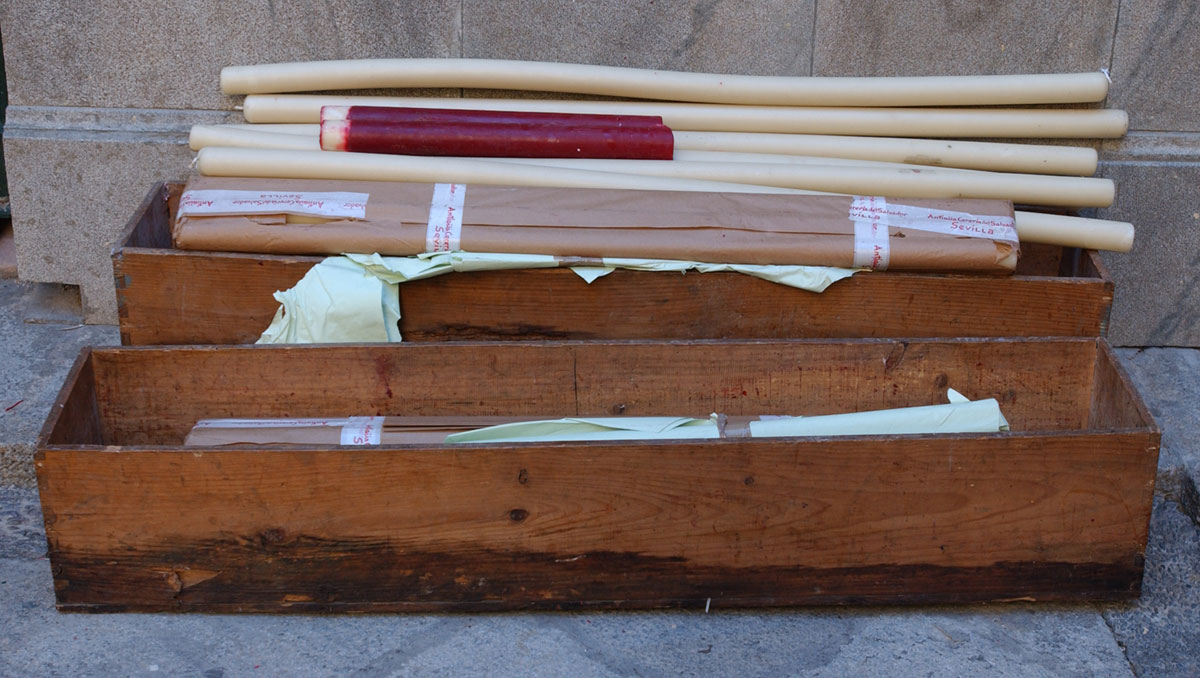
They weren’t going to the massive cathedral there, but rather to a much smaller church in another neighborhood. However, the size of these candles is impressive. Their light is more than the average taper. They will certainly cast shadows among the old stones, worn wooden pews, and gazing icons inside. The faint scent of burning wax, mixed with incense and old dust, will lurk in the sanctuary. Interiors like that are enough to make the goose-bumps pop. See Creating Atmosphere, Part 2 for a look at this first hand.

And that’s part of the fun of writing a story. The writer has the pleasure of creating the world. Of course, he also has to take responsibility for it and that can be a daunting challenge.

Published in: on July 3, 2008 at 9:07 am  Leave a Comment  
Tags: , , , , , , , , ,

Church of the Vera Cruz, Segovia

Just down the hill from the center of Segovia, Spain, you will find the Church of the Vera Cruz. This twelve-sided church was built by that zany bunch known as the Knights Templar. To say they got around back in the day is perhaps the understatement of this blog to date. Whatever their secrets, causes, or acts, the Knights Templar built quite a few structures. Here is a view looking down at the chruch:

The church sits there on the hill, by its lonesome. It was alleged to have a piece of the true cross, hence the name. It is a Romanesque structure with heavy walls, small windows, and regular arches. The tower stands to the south.

What impresses me about this building and many others like it, is the durability of it. It is more than 800 years old and there have been quite a few wars, disasters, and plain old decay over the centuries. Yet the building remains. Surely it has been repaired along the way, but for the most part, it looks as it would have to the people who built it. They modeled it after the Church of the Holy Sepulcher in Jerusalem, which speaks to a certain continuity of thought that spans the extremes of the Mediterranean.

How many things are built in our time that will last this long? I understand the need to make improvements. However, once in a while I find myself wondering if constant architectural regurgitation doesn’t detract from a sense of community and permanence. Just one of the things I ponder now and then. Maybe you do the same.

Published in: on July 2, 2008 at 12:42 pm  Comments (2)  
Tags: , , , , , , , , , ,

Belmonte Castle, Spain

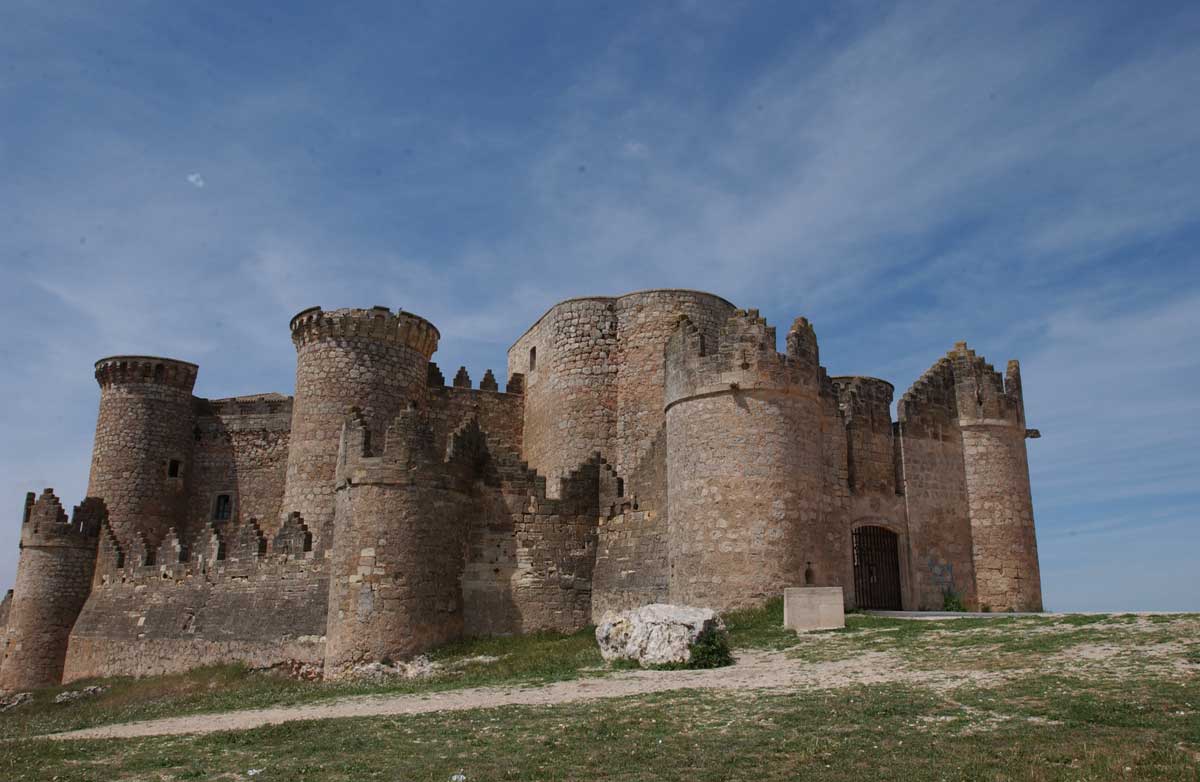
Belmonte Castle (Spain) might have been taken from a story book. Or, perhaps it is the other way around. Whatever the case, this place gives the impression that the middle ages are not yet over. Here’s a first look:

The crenelated ramparts, the towers, the long walls down to the village, all lend themselves to medieval impressions. The best part is, you can walk right to the base of those walls, stare up, and wonder what kind of nerve it took to attack such a place. Madness perhaps?

I’ve never been inclined to write about this era. There are plenty of novels set in these times in various locations. Most of them don’t interest me. I’d like to read a book about building castles the way Ken Follet wrote about building a cathedral in Pillars of the Earth. That would be an interesting story. Here’s another look that shows most of Belmonte:

As you can see, there are multiple layers of defense, a gatehouse, a keep, all the trappings of a well designed fortress. It is compact, making it easier to defend with a smaller force. This castle, like so many of them, sits at the top of a hill and overlooks the town and surrounding plain. It would be a challenge to sneak up on this place. Again, I’m not interested in someone pouring boiling oil down on me. I’ll hold off until the battles over and the celebration begins.

In another post I’ll show the castle at Ballesteros de Calatrava. Stay tuned.

Published in: on July 1, 2008 at 3:30 pm  Comments (2)  
Tags: , , , , , , , , , , , ,

The Way to Go

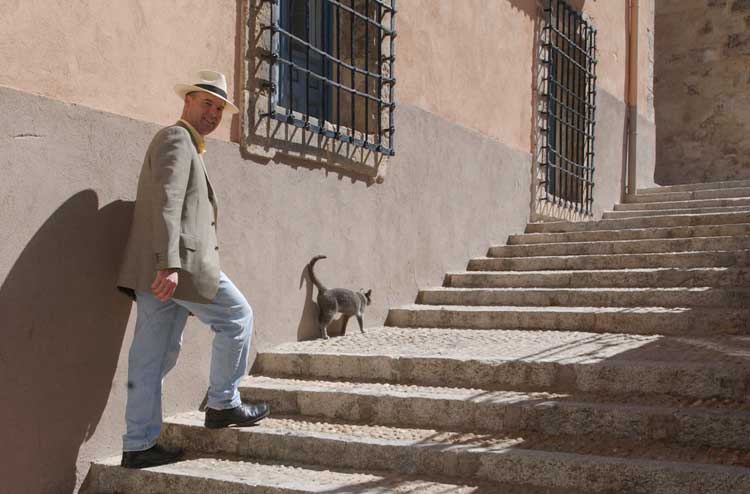
The cleverness of cats should never be underestimated. As the old joke goes, the ancient Egyptians worships cats, and cats have never forgotten it. I’m not sure what other animal can make this claim to fame. There I was in Cuenca, Spain, looking for a little place to eat, when I spotted this cat. I figured he was on his way to a snack or a nap. (Two things I also happen to enjoy, usually in that order.)

My gray and white short haired friend got to the top of the stairs, hung a left, and leaped into an open window! Brilliant for him but I was clearly not invited. As for me, well, I was on my own. Luckily, just down the lane was a narrow restaurant I might never have found. (You see, that was the cat’s plan, to show me the way and leave the bill to my account.) It turned out to be a good place to practice Spanish for this native English speaker. The waiter asked me a dozen questions, everything from where I was from to why had I come to Cuenca to where I was going next. He was an affable fellow. Like so many Spaniards I meet in my travels, he was intensely proud of his culture and immediate family.

After the meal I was back on the streets, looking for more interesting things, keeping a sharp eye for cats and other sneaky creatures.

Published in: on June 27, 2008 at 11:54 am  Comments (1)  
Tags: , , , , , , ,