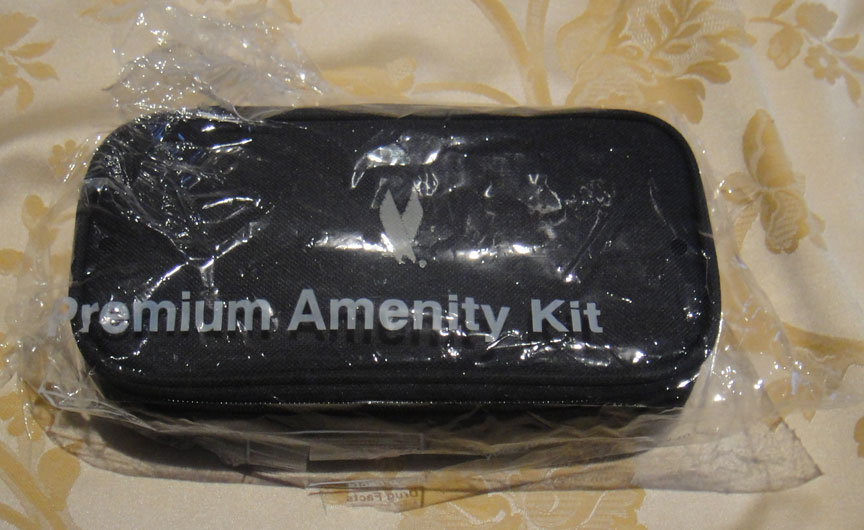
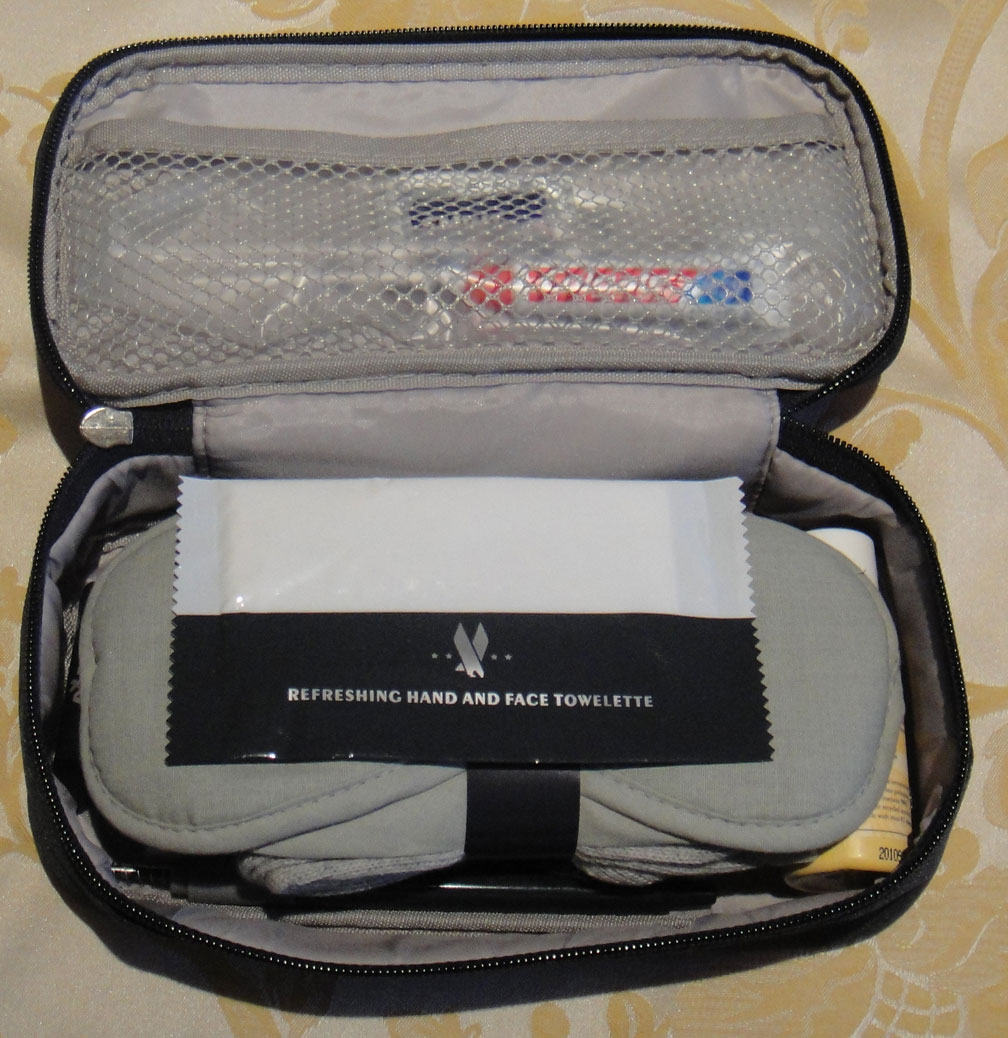
No doubt about it, commercial air travel can be uncomfortable these days. You’re packed into an aluminum tube with a couple hundred other souls, anxious to get somewhere, hoping to avoid delays. The air gets dry. Your stomach rumbles. Maybe you’re nervous about flying in the first place. Let’s take a look a few small things that can make the trip just a little better. After all, there’s always room for improvement. American Airlines hands out the following kit to their business and first class passengers. However, there’s no reason why you can’t make up a crafty unit like this for yourself. It starts with a neat pouch to contain your amenities.
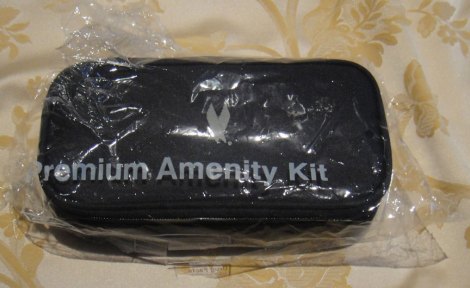 Not bad, but the one shown above is a little large. I’d scale it down if I was putting my own together, perhaps to about half that size. Opening up, take a look at how neatly things are packed.
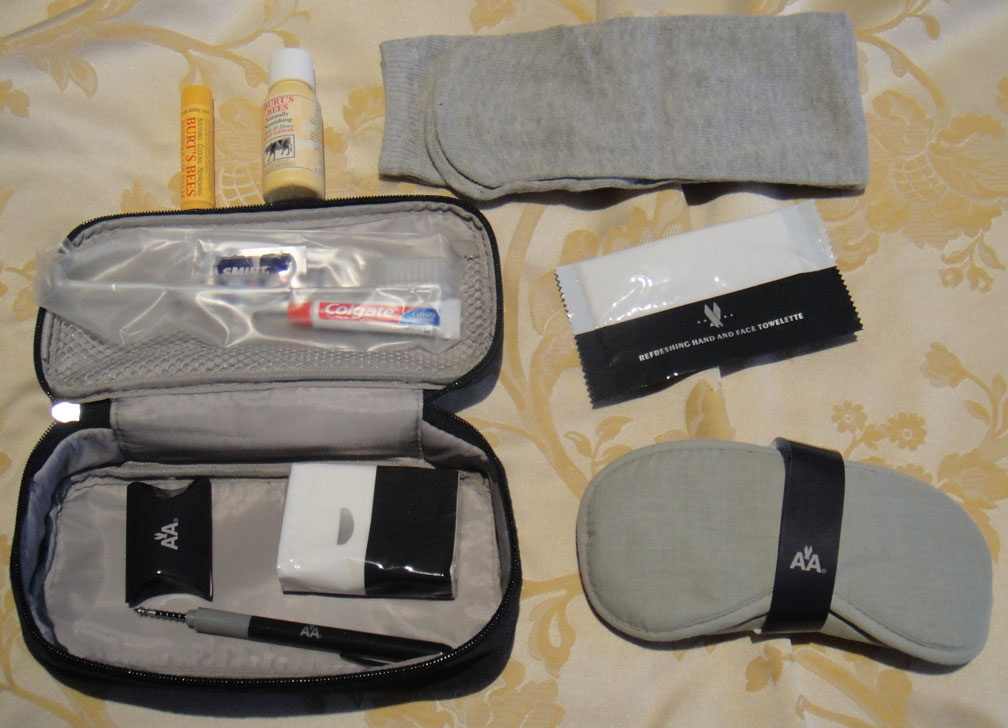
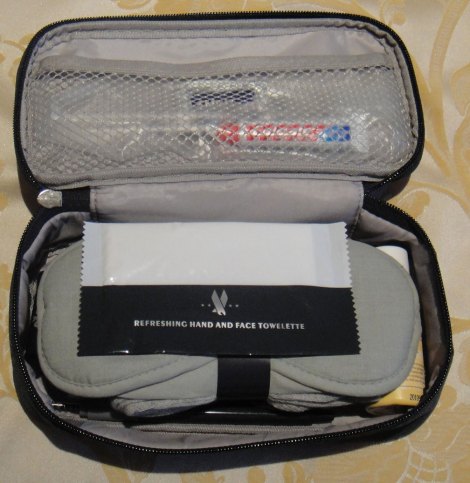 Things are pretty well stowed inside there. I give them an A for packability, if that’s a term. Removing the items you can take stock of what’s all in this unit.
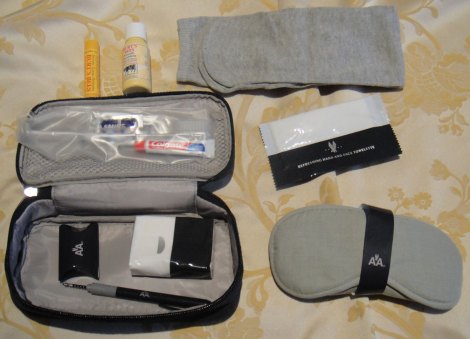 Check that out. You have socks to keep your feet warm and comfortable. Eyeshades if you’d like to sleep while the lights are on. Lip balm and moisturizing cream to protect you skin form the dry air. Ear plugs in the small blue box and some tissues. A pen to work the crossword puzzle in the magazine (I needed the part from this one, which is why its missing). A toothbrush and some mints because fresh breath is a gift to yourself and everyone around you. A moist towelette to get that funk off your hands and face.
I’d add a few things. How about some snacks, like dried fruit and nuts in small packs. A couple 1 oz. bottles of Jack Daniel’s to mix with my free club soda. A device to play my favorite music or audio book. Keep the liquids below the federal limits for security. What else? Let me know.
Flying doesn’t have to be hades at the edge of the stratosphere. Prior preparation prevents poor performance. Take a moment to think about your trip, how you’re going to get there via airplane, and what measures could easily be taken to make it more enjoyable. You’ll be glad you did. The poor guy next to you will be jealous.



 The Bent Page
You must be logged in to post a comment.