Here it began all those years ago…
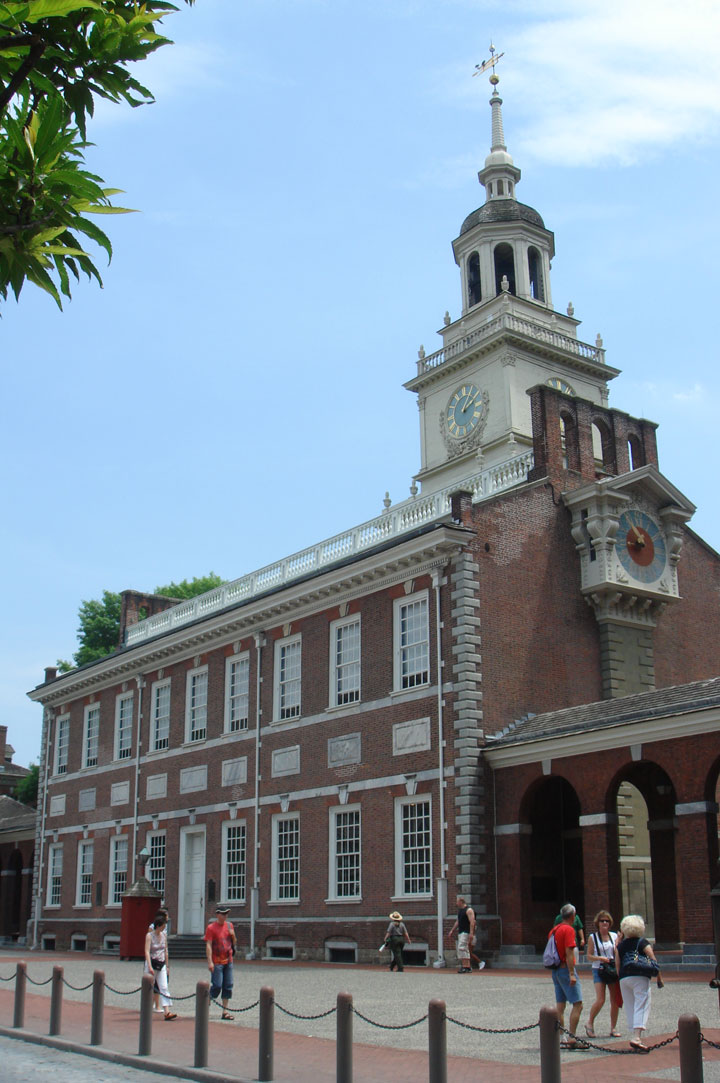
“Talk not to me of your rights until you have first demonstrated your worthiness through great acts of virtuous responsibility,” Preston Sinclair, American.
Here it began all those years ago…
“Talk not to me of your rights until you have first demonstrated your worthiness through great acts of virtuous responsibility,” Preston Sinclair, American.

Here are two more of those panoramic photos, this time from Nome, Alaska, when it was only two months old. They built fast back in those days. I suspect it had something to do with gold. The photos were taken in September of 1899, so the town only started construction in July.

Notice that the saloon is one of the first wooden structures while the living quarters remain tents. Goes to show what was really important and what wasn’t. To think what these people went through is incredible. So many hoped to get rich; so many returned poor. Probably the saloon owners made the most money. It must have been a rambunctious time.
Here’s a look at the waterfront.
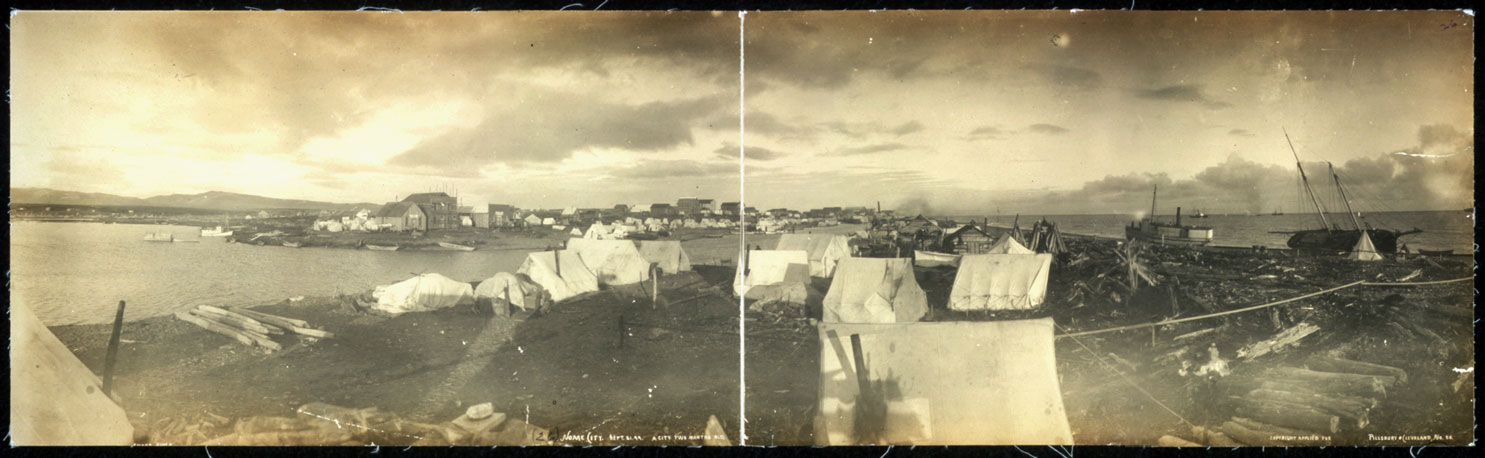
There is a twin masted schooner there on the beach. Maybe she’s up for repairs or just lying there until her owners want to make the next voyage. Sailing her down through the Pacific must have been quite an adventure. Behind her lies a small steam boat. Again, I note the tents. Must have been a muddy mess.
Photos like these bring ideas for stories. Whenever I travel, I look for flea markets, yard sales, things like that, in hopes of finding old photographs. Each one has a story of its own and sometimes the best one is the one not told, that of the person who took the picture. What did they have in mind when they released the shutter? What was their purpose? Why did they find it necessary to take a picture at that moment? Of course, you can never really know. However, you can create answers of your own to those questions. It’s good exercise for the imagination.
These are the kinds of things history shows us. I only hope we learn something from it.
Here’s a photo from a corner in Slatington, Pennsylvania, USA. I’m not sure what the name of this place is, either Kurt’s Korner or Homeslate Sports Bar. Kurt’s has the sign above, but Homeslate shows up on the Coca-Cola painting on the wall.
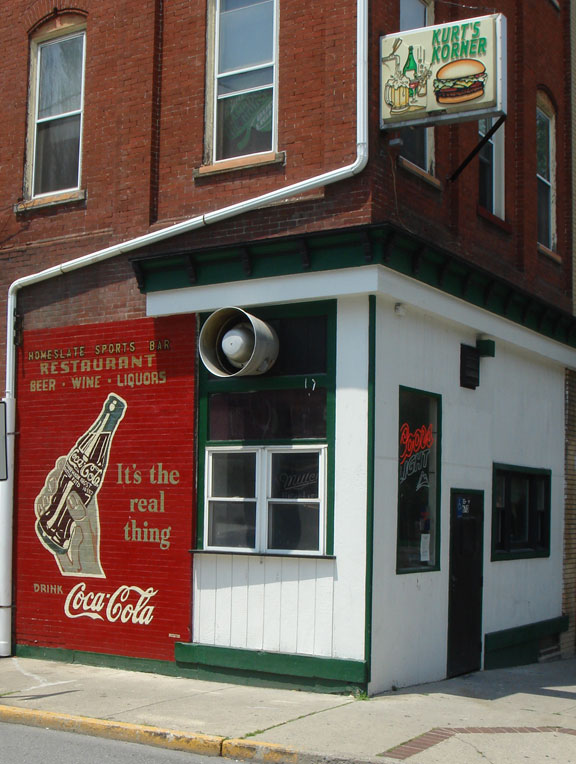
Doesn’t matter. I’ve driven past this place about three hundred thousand times in my life. Okay, not that many but I grew up a couple of towns away and this place was frequently on my route to somewhere else, especially when fuel was cheap. Ah, those were the days, sometimes.
As might be gleaned from the name of the town, Slatington was once surrounded by slate quarries. It was a prosperous business for a while, especially before the advent of asphalt shingles. All those roofs of a growing America needed something to keep the rain off of our ancestors. Of course, nothing lasts forever. The slate pits filled with water after they were abandoned.
I’ve been known to crisscross the northeast United States in search of such places. Sometimes I find people who were alive during the glory days of these old-time industries. They love to chat about the past. Often times they explain unique solutions to everyday living that were actually commonplace in an age before computers and modern appliances.
As mentioned before, I’m going to start photographing these people and writing down as much of what I learn from them as is practical. At the moment, I can’t remember where, but various historians are taking oral histories from people in order to build a record of the past that is from many more first-hand sources. It seems like I’m duplicating their efforts. Nonetheless, why not? In the first place, those who have gone before me deserve a record of their accomplishments. Second, who knows what comes of such writing? I remember my early days in Aruba. Plenty of people told me stories about the island and their lives. Then, some years later, I was writing An Island Away. If not for the people I met there, the story would never have come about.
Just like the Coca-Cola tagline, my thinking is that life… “It’s the real thing.”
And now we go inside two different cathedrals, each with its own particular atmosphere. The first one is the Cathedral in Seville, Spain. Construction began in 1402. Here Columbus is entombed. From this city sailed the conquistadors to a world unkown to Europeans, and this is a look at the interior of their massive center of worship.

Icons and statues stare down from every ledge. The space is darkened by shadows cast by the massive columns, one of which is under repair as seen on the right side of this photo. The weight of this building presses down relentlessly. The windows are relatively small as is typical of the gothic style, offering little light and no escape.
A much newer cathedral can be found in Madrid. This is the Almudena Cathedral, begun in 1883 and completed in 1993. It has an entirely different atmosphere.

Thanks to more modern building techniques, the windows are much larger, illuminating the entire space more evenly. The eye is drawn upward along columns that seem lighter thanks to the brighter color. Here’s another look.

The windows of the celestory at the top of the frame shine gloriously with the same warm sunlight that brings visitors from darker climes to Spain.
Both of these locations exude their own sense of space, presenting the visitor with two unique experiences. So it is in a good story. What are your favorite spaces? What places leave a dramatic impression on you? Let me know.
 The Bent Page
You must be logged in to post a comment.