Rooi Koochi Residence, Aruba

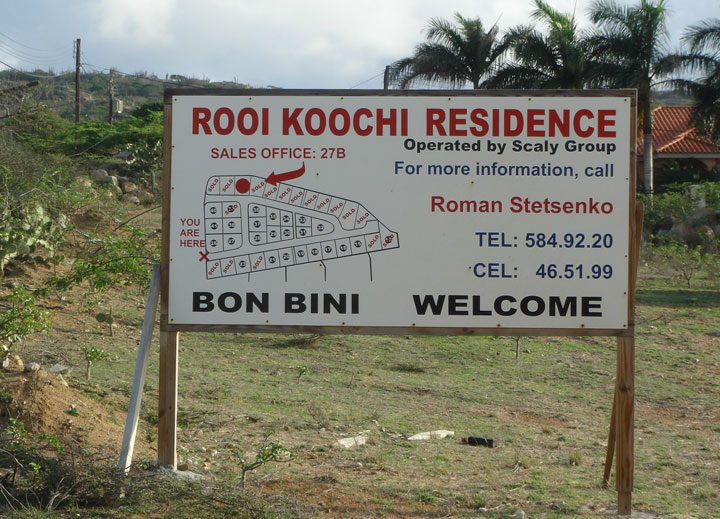
Some regular readers of this blog have asked me to photograph a housing development in Aruba that is more integrated with the island, as opposed to the large timeshare and condo projects. There is a small housing development called Rooi Koochi Residence, which is located about eight miles south of the airport, just past the town of Savaneta. This project is inland. However, from some of the homes on the upper side, it is possible to see down to the ocean.
The homes that are being constructed here are of good quality, at least as far as I can tell. Here is a photo of one under construction.
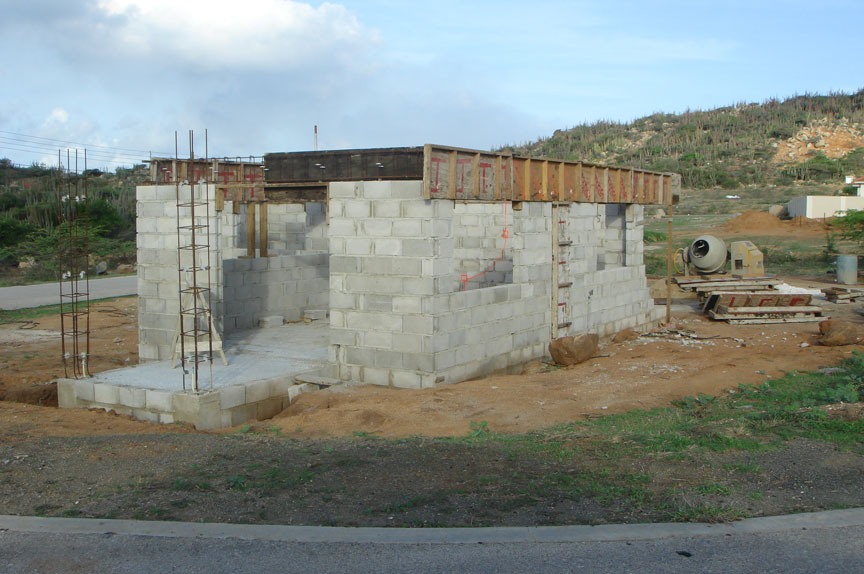
They’re getting ready to pour the ring beam and the front columns that I mentioned in previous posts regarding construction. Let me say here, I do not know the developers of this project, nor do I have any ownership interest in it. I have simply photographed it and placed these pictures on the blog to show a project that I believe is not only typical, but of good quality. The homes along the upper ridge of this development have been there for at least 4 years that I know and are lived in by people who keep them in very good condition. Here’s a look at one of them.

And then, looking down the cross street, you’ll see a home that was only finished about six months ago and beyond it is the ocean.

Whatever your choice for housing in Aruba, always use qualified professionals to help. Talk to as many people as you can, ask every question you can think of, and don’t be afraid to keep looking for what you truly want. There are many nice homes in a wide range of prices. These days there are plenty of real estate agents, most all of them with good reputations. Take your time. Paradise will be here.

Island Bathroom Project

My home in Aruba needed a new bathroom. There was only one bath for the entire house and it worked fine, but I decided to add a second one so that there would be a convenient alternative. Fortunately, the house had a large, walk-in closet off the master bedroom. This became the new bathroom. The tile and fixtures came from a place called BanjoLux, which is located on Schotlandstraat in Oranjestaad. Here’s a photo of their shop.

This place sells tons of beautiful items. Their selection is quite modern but not over the top. They also have qualified staff to help with making your selections. There are other places on the island and in later posts I’ll get to them. So, I took the closet and installed a glass block wall for the shower area as shown here.

 This worked out great, except for one thing: I should have used a darker cement between the blocks. No doubt that white will be difficult to keep clean. Anyway, the wall came out great, as did the glass block in the back, which replaces a window. I like glass block because it lets the light in, keeps the peepers out, and is a higher level of security than a window. The other advantage is that the glass block doesn’t get nasty the way a shower curtain does. You can wipe it down and you’re finished.

For hot water, I installed this simple, point of use hot water heater. The water in Aruba is already warm so you only need to raise the temperature a little to have a nice hot shower. The unit shown below has three settings and I rarely use more than the lowest.

In the middle of the room, I built a sink feature from the ground up. The basin and faucet came from BanjoLux; the granite slab came from Acero, another great store here in Aruba. Acero will cut and drill the granite to your specs. As long as you order by Tuesday afternoon, it’s usually ready by Saturday at noon. So, here’s a look at that sink.

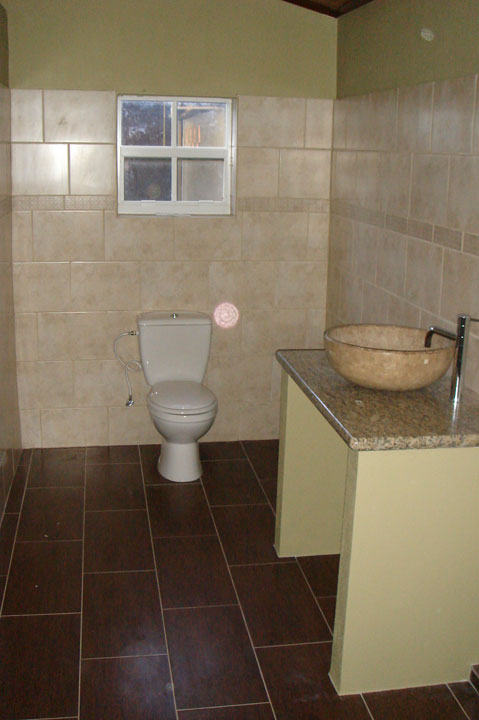
I had to install a temporary plastic drain beneath the basin until I get a chrome one cut to order. No big deal. It works fine. I’ll install a pair of wooden doors beneath the granite, too. On the far wall, closest to the final drain to the septic, sits the toilet as shown here.

 The room does have a bit of the “corridor” feel, but I had to use what was there and did the best I could. Above the toilet I installed a new window to get some more light into the room.

My wife has picked out some great furniture pieces: an armoire-like unit for towels and things, a rack for toilet paper, and some clay pots and such to bring this bathroom up to snuff. Can’t wait to put them into place over the coming weeks.

Well, that’s a look at the finished product. I kept the horror photos out. Actually, there weren’t many problems with this project and I had the help of two very competent guys who can lay tile in surprisingly creative ways along crooked walls. I was impressed with their talent. The results speak for themselves.

Published in: on July 26, 2008 at 12:28 pm  Comments (1)  
Tags: , , , , , ,

Desert Island Water

Aruba’s drinking water is produced by a desalinization plant co-located with the electricity plant in an area known as Balashi. Since Aruba is a desert island, this facility became a necessity once the population grew beyond a certain point. You’ll still see old Cunucu houses with a rooftop collection system that gathered rain water and stored it in a cistern. There are also a few brackish wells left, but used only for small scale irrigation. Thus, water is a precious resource in this environment, and metered and invoiced accordingly. The drinking water in Aruba is completely pure and delicious thanks to the way it is produced. There is absolutely no need to buy bottled drinking water here. That which comes from the tap is fine.

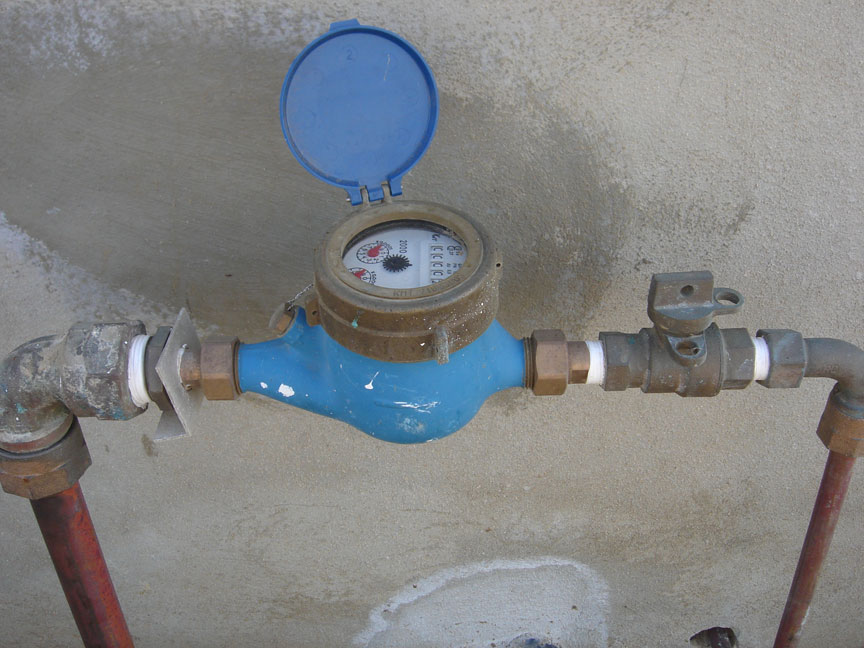
Here’s a photo of a domestic water meter, the one at my home.

Exciting stuff, eh? It can be if you’re not careful. Notice the valve located on the right side. It features a hasp-like function so that you can place a lock on it in the “closed” position. Whenever I leave the island, I lock this meter in the closed position. It’s not that I’m worried about someone stealing the water. It prevents an unexpected leak from spinning the meter for days on end until my pal checks the house or I return. This happened to another friend of mine and he was stuck with a water bill in excess of US$3,000.

So, a word to the wise. If you own a home in Aruba, or are considering it, don’t forget small but important things like this. Inspect the plumbing systems from the meter all the way to the drains and septic. It’s not thrilling stuff like the wind surfing, bar hopping, and shopping, but it will put a damper on your good times if you’re not careful.

Okay, in the next post we’ll take a look at the bathroom I rebuilt, which is a little more interesting than the old water meter.

Published in: on July 26, 2008 at 11:19 am  Leave a Comment  
Tags: , , , , , ,

Roof Tiles and Styles

At last we’re ready to put the roof on a house in Aruba. You have your choice of tiles here. Some are the standard, uniform Spanish clay tiles. Others are the glazed blue “Dutch tiles.” Lately they’ve been importing ones that look rustic. Whatever your choice, tiles are a great way to keep the weather out. Here’s a look at a house that’s going to get those blue tiles.

The above photo is a little difficult to work with. It’s the house in the back of the photo where you see the blue tile on the upper roof and lower roof is ready for installation. The roof in the foreground is sheet metal, which can be a good, economical alternative for this climate. Nothing beats the look and durability of those glazed tiles, however. At least in my humble opinion. The next photo shows some of those rustic tiles, here used on a front wall and entrance gate.


And then there are the flat tiles used below to cover awnings on the side of a house as shown below. This dresses the house up and gives it a classy, totally finished look.

So we’ve gone from the foundation to the roof. Next weekend, I’ll post about some of the internal issues, like water sytems, electrical, and so forth. In the mean time, we’ll stop into some restaurants, a few hotels, and maybe a run to the beach or something. Thanks for stopping by.