Survival!

My earliest exposure to stories of survival was probably Robinson Crusoe. I never planned on writing tales like that, but as fate would have it, I’ve written several. There’s a scene in An Island Away in which Captain Nathan Beck is adrift in the Caribbean for nearly a week. He ultimately comes ashore in Savaneta, Aruba. Another one is in MacMillan Judge, Privateer and will be published in the future. Young Mr. Judge lands in Spain.

In the modern age, it’s hard to imagine being shipwrecked on a desert island, or lost at sea, or abandoned in a jungle somewhere. But it does happen. There was the tragic case of the scuba divers left behind, as well as incidents of plane crashes where a survivor managed to find his way out. I took the opportunity to watch a few episodes of the television programs on this subject. There are a couple of guys who are survival specialists who do everything from build a fire in the rain forrest to ice fish in the arctic. It’s quite impressive and a testament to human ingenuity that they can use their opposable thumbs and brains to come up with food and shelter.

Of course, the real solution is to avoid disaster in the first place. As the old saying goes: prior preparation prevents poor performance. It seems that some people go aboard boats, airplanes, or simply walk into the woods with neither the equipment nor skills to deal with what awaits them. This is simply idiotic. I’m not sure why people volunteer for misery. They apparently can’t get enough. Of course, the resources of the nation are then mobilized to rescue them. I’m short on sympathy in this case, especially when the rescuers have to risk their lives to save someone who did something moronic in the first place. The cost? Forget about it.

Anyway, like I said in an earlier post, fiction is a place where things can be pondered without anyone getting hurt. The real world on the other hand will inevitably teach the lesson you didn’t plan on learning. Be careful out there.

Published in: on September 24, 2008 at 1:33 pm  Leave a Comment  
Tags: , , , , , , ,

Layers of History

I’ve been doing research for various writing projects and couldn’t help but mine through those old photographs again. I found this one of Rome, taken in the early 20th Century. On the far left is the old forum.

There has to be 2000 or more years of history in this image. There are churches, a triumphal arch, remnants of palaces and newer buildings. Amazing. One of the great things about writing stories is doing the research. I always end up learning things I never expected. That’s how I happened upon this photograph. While looking for something else, it popped up. Of course, it’s also why it takes so long to do the research. Inevitably, you get sidetracked into areas where you linger for the sheer pleasure of knowing the details. Anyway… back to work.

Published in: on September 23, 2008 at 5:40 pm  Leave a Comment  
Tags: , , , , , , , , , ,

Ponte Vecchio, Florence, Italy

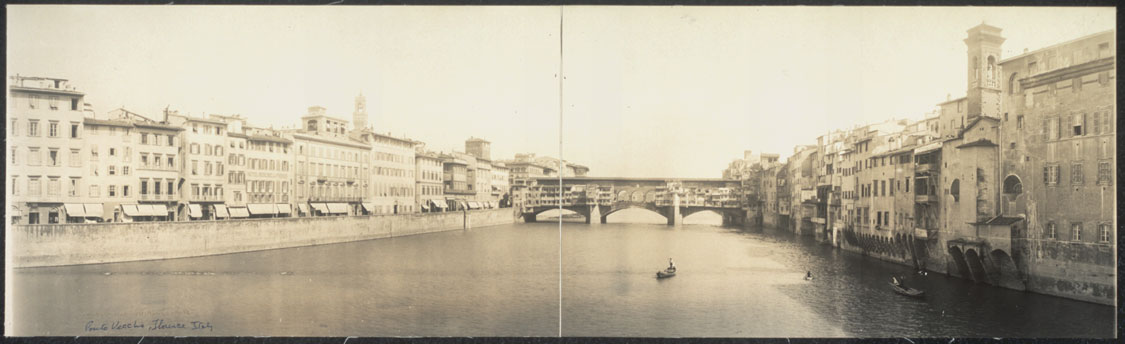
The Ponte Vecchio is probably one of the most photographed sights in Florence. Below is a panoramic shot taken before World War II.

The story goes that the bridge was first built by the Romans, which is probably true. The Romans hardly saw a river they didn’t bridge at least half a dozen times just because they could. Ponte Vecchio was noted in records gleaned from the year 996. Then it was destroyed in 1117 by a flood and again in 1333. So, it’s been a tough go over the centuries for this particular piece of real estate. Fortunately the bridge survived World War II, although buildings on both sides were destroyed to prevent the Allies crossing it easily. Luckily for us, we have photographic records like this to see what was.

I suppose the lesson once again, (and I mentioned this in an earlier post), is that you should print some of your photographs. If for no other reason, they will provide a record of the past for those people who inherit the future. I would recommend writing a few notes on the back of those photographs. A written document produced by contemporary sources is a rare and valuable find for historians. Your scribbling may become the lost link in a chain of events that today seem insignificant. Also, it may provide the context for a bigger issue, the details of which had been lost. Don’t spare the ink!

Published in: on September 15, 2008 at 2:33 pm  Leave a Comment  
Tags: , , , , , , , , , ,

MacMillan Judge and Fort Zoutman

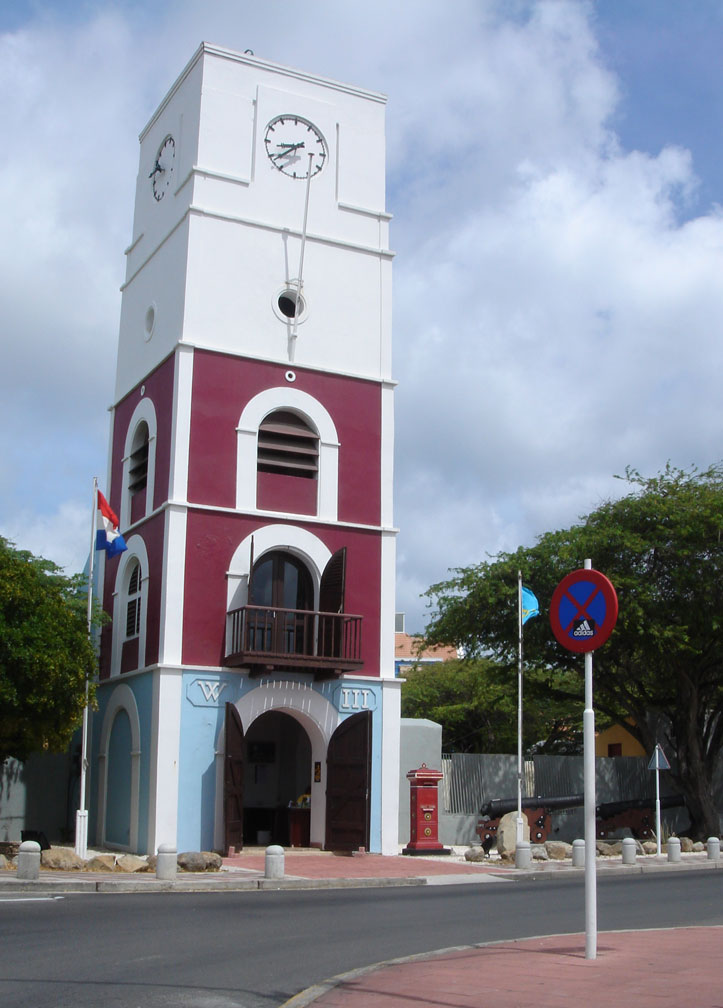
Going back through my story notes this morning, I stumbled on some scenes for the end of a novel I mentioned earlier, MacMillan Judge, Privateer. Without ruining the story, I can tell you that our man, Captain MacMillan Judge, ends up heading to that favorite island of mine, namely Aruba. (Don’t worry, this story will be a long time coming. It’s third in line right now.) Well, in Oranjestaad there is Fort Zoutman, which today is more or less dwarfed by nearby commercial structures. However, back in the day, it was enough to keep the island under control.

The photo to the right is of the Willem III tower. It served as a general lookout for the soldiers in the fort that sits below and behind it. Judge spots this tower as he cruises the coast in search of a decent anchorage. In case I forgot to mention it, MacMillan Judge, Privateer is set in 1815-1816. I’ve been brushing up on my history of this period, not only of Aruba, but also the Mediterranean area around southern Spain and the so-called Barbary Coast. This was a wild time in the history of the known world. The United States was a new country. Britain and France had been at war (yes, again) for quite a while. Spain, although not a superpower, still had some fangs. Through these tricky times MacMillan Judge and his crew of the privateer-built, topsail schooner Fletcher pick their way to fortune and glory. Actually that makes light of the serious themes in the story, but it sounded like the blurb you might find on the back of a sailing novel and I’m a firm believer in some excitement now and then.

It’s had to imagine a time when the canon pictured below was a key component to military domination.

Nonetheless, they did the job. In the course of the story, MacMillan Judge receives two long guns from Don Francisco, a Spanish aristocrat whose family has been harassed by the Barbary Pirates for generations. Those two long guns figure into MacMillan’s strategy as he beats back an attack by two corsairs. There I go again, telling too much of the story. Well, let’s leave it at that. For now.

Published in: on September 5, 2008 at 11:10 am  Leave a Comment  
Tags: , , , , , , , ,