Island Energy (Demand) Calculations

We’ve been having fun, traipsing around Aruba, looking at beaches, checking out the sights, dining at all kinds of restaurants. However, having a house here is like having a house most anywhere else in the sense that utilities are a serious issue. The cost of electricity in Aruba is quite high because they burn oil to make it. (I’m not going to get into the politics of this just now. Suffice it to say that I believe in private solutions.)

My original goal for the house was to power the air conditioning system off the grid. Thus, the question, “How much power do I need to produce to get those airco’s off the grid?” The answer follows:

Last year, I installed two brand new split-type air-conditioners. The larger one uses 14.4 amps of power at 220 volts which means approximately 3168 watts. The smaller one uses 12.6 amps at 220 volts, consuming 2772 watts. Add those two together and you end up with at least 5,940 watts. When it comes to power use, I like to round UP. Therefore, at a minimum, I need to produce 6,000 watts of electricity to run both air conditioners at the same time. But wait a minute! When you first turn the airco on, it draws a bit more power to get started. So, let’s set the minimum at 7,000 watts. To correct myself slightly, I need to DELIVER that many watts to keep these unit cranking.

Okay, how am I going to do this? Production will come from a wind turbine and solar panels (photovoltaic). This power will have to be converted from direct current (DC) to alternating current (AC). How is that going to be done? With an INVERTER. What if the wind isn’t blowing and the sun isn’t shining? Electricity will be stored in a BATTERY BANK. How is the battery bank going to be charged? Through the inverter and a CHARGE CONTROLLER.

Are you still with me? I hope so. None of this is as complicated as it sounds and there are some details that aren’t discussed here. (Please, if i made any mistakes, let me know so I can correct them.) You can purchase entire systems that are basically “plug and play.” A qualified electrician can have you up and running in no time.

Now, the next post is going to look at ENERGY PRODUCTION for this system. There will be pictures, too. Remember one thing: Once the system is operating, you get a return on your investment and protection against future price increases. Every time the price of energy goes up, it’s as if you’re saving more. And you are because you have a fixed cost for your system and a little extra for the maintenance.

Enough for now. Stay tuned. And don’t forget that you can control your energy consumption AND production. Don’t let anyone tell you differently. You have to be willing to change a little or a lot depending on your goals. However, you do not have to live in a cave, eating berries.

Gone Fishing (in Aruba)

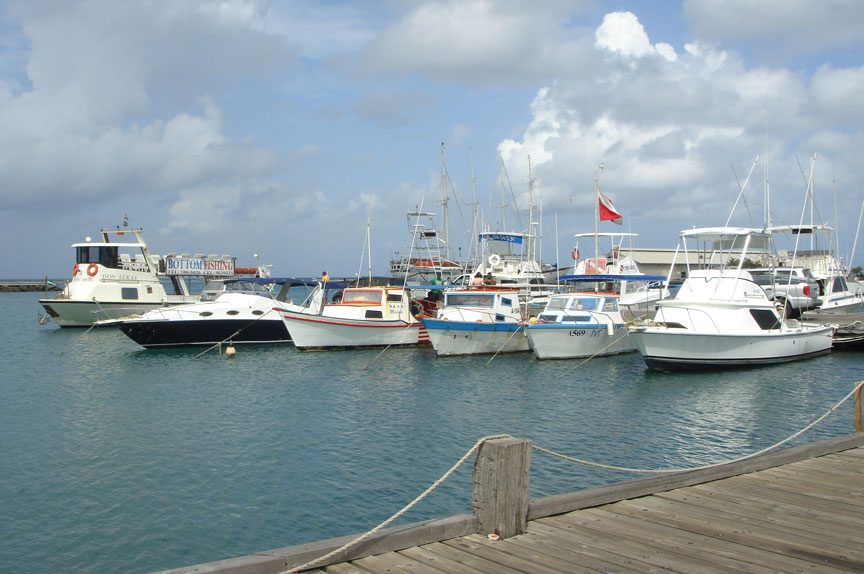
If you like sport fishing, there are plenty of options here in Aruba. For this post, I’m going to show a few photos of boats that are docked in the marina in Oranjestaad. There are other options that we’ll get to in other posts. For now, all you have to do is walk down the dock and strike a deal with the people who operate the boats. Many will take reservations and this is, of course, highly recommended. At the same time, you may find a bargain or just get in the mood for an outing and you should feel free to walk up try your luck. Here’s a look at a few boats.

If you’re feeling adventurous, you may connect with a local guy and head out on one of these boats.

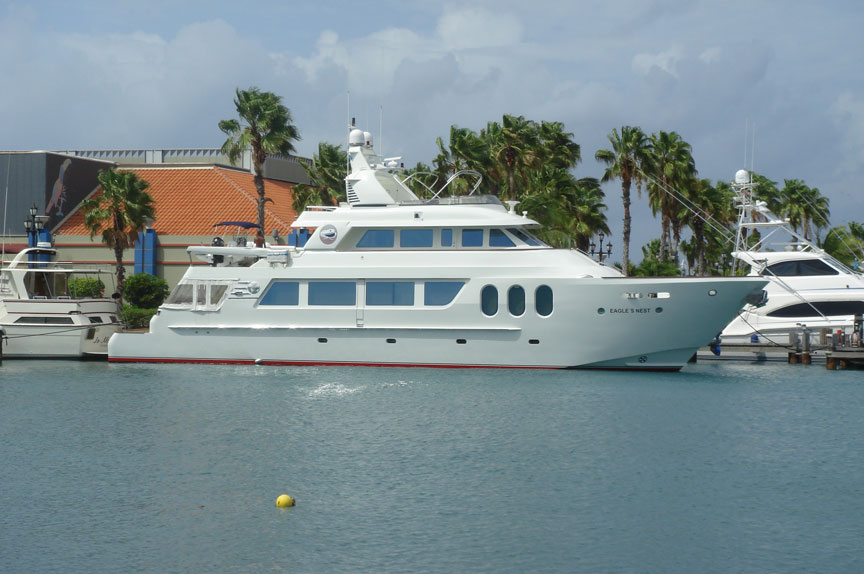
The boat above may or may not be your style, but I see guys fishing from them most every day. You can fish from shore as well. I have to do a post on this fellow who fly fishes in the flats on the northwest edge of the island. Not sure what he catches there. And, if you don’t really want to fish but just say that you do, you could go out on a boat like this one:

Yeah, that’s more of a motor yacht than a fishing boat. Still, you could make the case that you caught the big one but let it go because you’re a good sport.

Published in: on August 5, 2008 at 12:52 pm  Comments (1)  
Tags: , , , , , , ,

Aruba Snack, Part 1

There are literally hundreds of tiny snack shops scattered about the island of Aruba. For a guy who loves road food (actually all kinds of food except for seafood), this is good and bad. It’s good because whenever or wherever you have an urge to boost the cholesterol level you’re free to pull in and load up. It’s bad because the cholesterol level pegs in the red zone and the belt continues to get shorter. (Wish I had one of those extensions like they have on airplanes.)

 The Sabor “snack shack” is only a few minutes drive from my house. It happens to be on the main road which has me passing it most every time I head out. It also happens to be located immediately adjacent to a nice guy who does some fine aluminum gates and fences if you happen to need that kind of thing at your own place. Anyway, I wheel in here from time to time for the local cuisine which they call “criollo” but I’m not sure that it is anything like “creole.” They sell “pastechi” which are sort of like giant empanadas, little sandwiches made to order, and cold drinks. The lady working here has a smile for all of us, including this unshaven, sloppy-looking writer who speaks some modicum of Spanish and Papiamento.

You didn’t think I was going to skip a chance to enjoy an ICE-COLD Coca-Cola did you? Of course not! Feeling refreshed, I’m ready to head back to the pens and paper and crank out another couple or three thousand words on the current novel, Under A Blue Flag.

You may have noticed the title of this post involved the term, “Part 1.” Slow by slow, I’ll put up some more of my favorite joints like this. I have to warn you. They’re not for the culinarily timid. The food is hearty even if it is not good for your heart. Don’t forget: Prepay the cardiologist and SAVE BIG TIME!

And I just remembered the rum shops. I have to get those posts up, too.

Italica, Spain

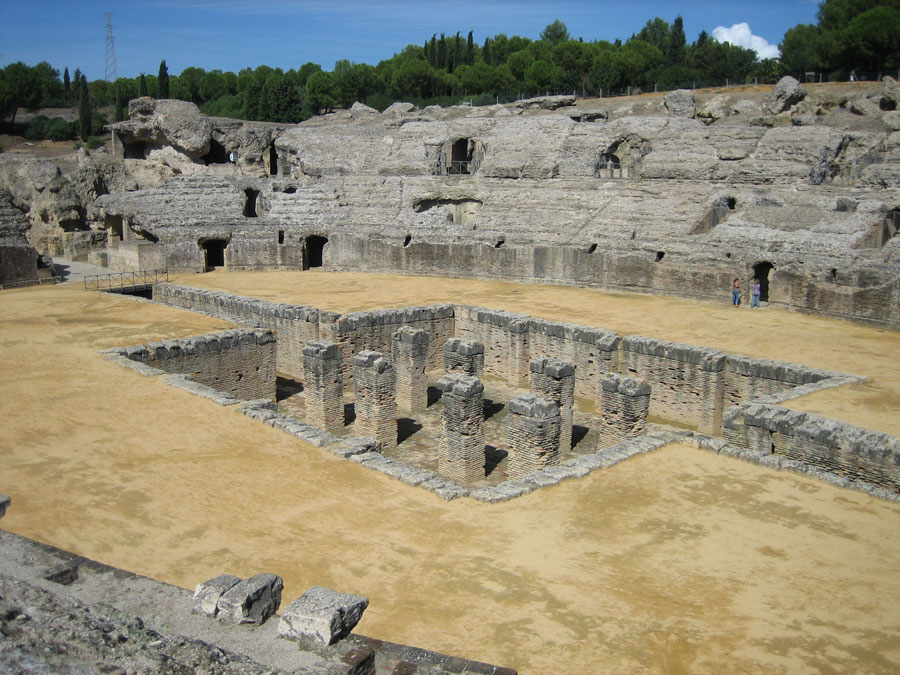
Not far from Sevilla, Spain, are the ruins of the Roman city Italica. The site remains under excavation as there is plenty more to discover. It is an amazing place to visit, especially when you consider that this place was a long journey from Rome during the days of the Empire. In this first photo, you’ll see a piece of the amphitheater.

One thing I enjoyed about this site was the freedom to walk about the ruins. It is possible to get very close and thereby see the workmanship and wear of the structures. We walked along the main boulevard of the town, which like all things Roman was laid out in a grid. Villas were set back from this thoroughfare and divided into various neighborhoods. Here’s a view of some standing columns that were part of an important home featuring a central fountain.

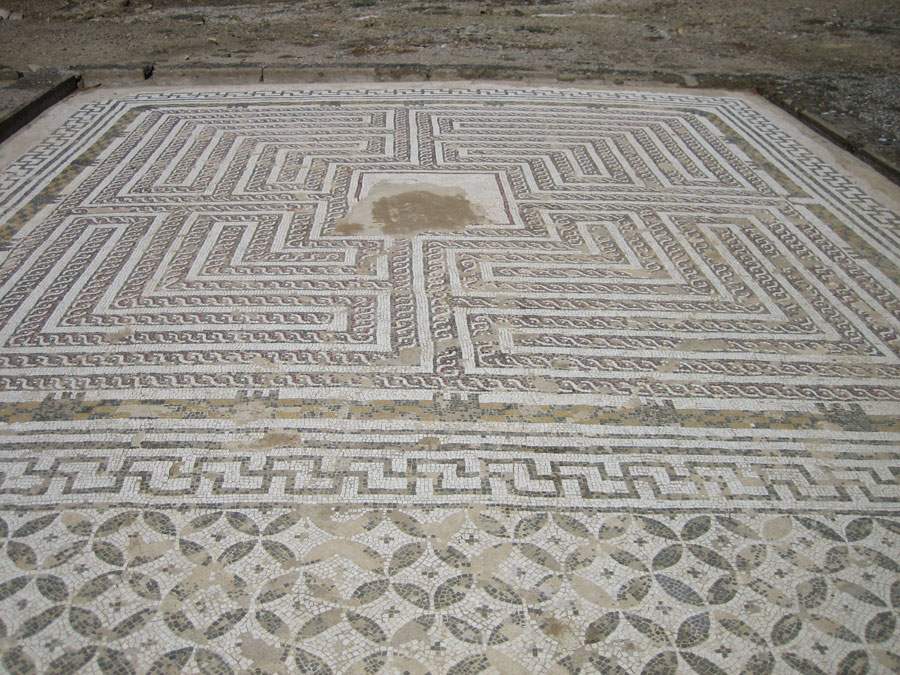
I should also mention that this town had a properly functioning water supply and sewer system, two things that would be lost to history for centuries before being restored. Of course, the residents decorated everything, including the floors, like this:

To think that mosaic was hidden beneath the dirt for a thousand years! Amazing. But it survived, as did many more like it. I highly recommend a visit to Italica. It’s only a short distance from Sevilla. There’s plenty of parking, clean bathroom facilities, and plenty to see and learn. It would also be a good idea to do some reading on the subject to get the most out of it. The map/brochure that is given to you as you enter is in multiple languages and very well done.

Finally, there is a little gas station a few hundred yards up the road from the entrance. There ICE-COLD Coca-Cola can be had. Refreshing, delicious, satisfying.

Published in: on August 3, 2008 at 1:34 pm  Leave a Comment  
Tags: , , , , , , , , , , ,