Valley Forge, Pennsylvania, USA

Valley Forge, Pennsylvania is hallowed ground. It was here that George Washington and his ragtag army toughed out a bitter winter. He rallied those troops despite the conditions and challenges that lay ahead. Today, there is a park where the troops formed their camp. A bicycle trail traces a path around the perimeter.

This building serves as offices for the nearby church. I’ve always liked it. The stonework is exceptional, the leaded glass windows stately. It’s located a bit close to the road. Still, if I could move it to another place, it would be a noble home. Behind it is a cemetery encased in mature, leafy trees. More hallowed ground.

Throughout the park, you’ll find replicas of the huts the Continental Army used as shelter. (You’ll also find plenty of deer. Be careful when driving through the area. The deer have a habit of jumping out at the last minute.) Here is a photo of the huts.
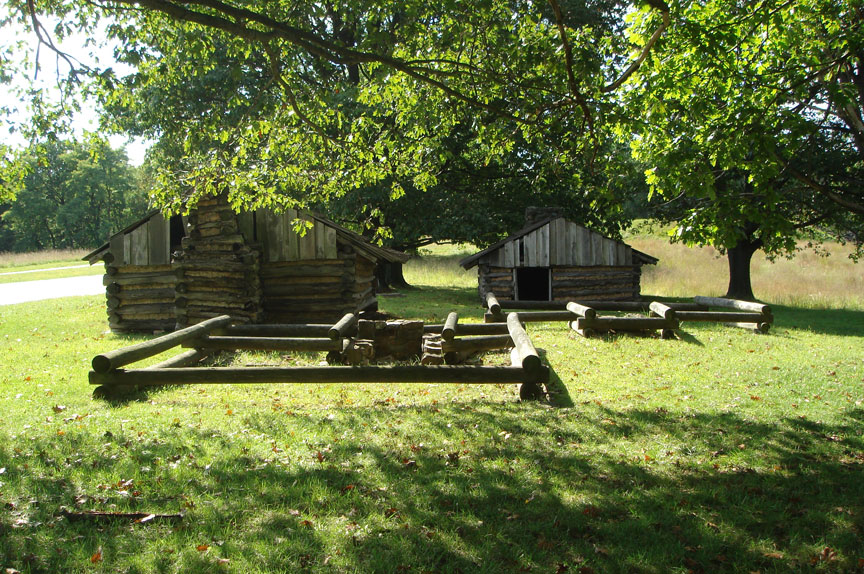
On this day, 7 years after the 9/11 attacks in New York, we should all be thankful for those who’ve made recent sacrifices as well as those who did more than 200 years ago in order to begin the United States of America. They risked their lives against the world’s superpower in 1776, suffered through winters like the one at Valley Forge, and ultimately prevailed. Are we willing to give it our all the way they did?

Published in: on September 11, 2008 at 10:27 am  Leave a Comment  
Tags: , , , , , , , ,

Plaza Mayor, Madrid

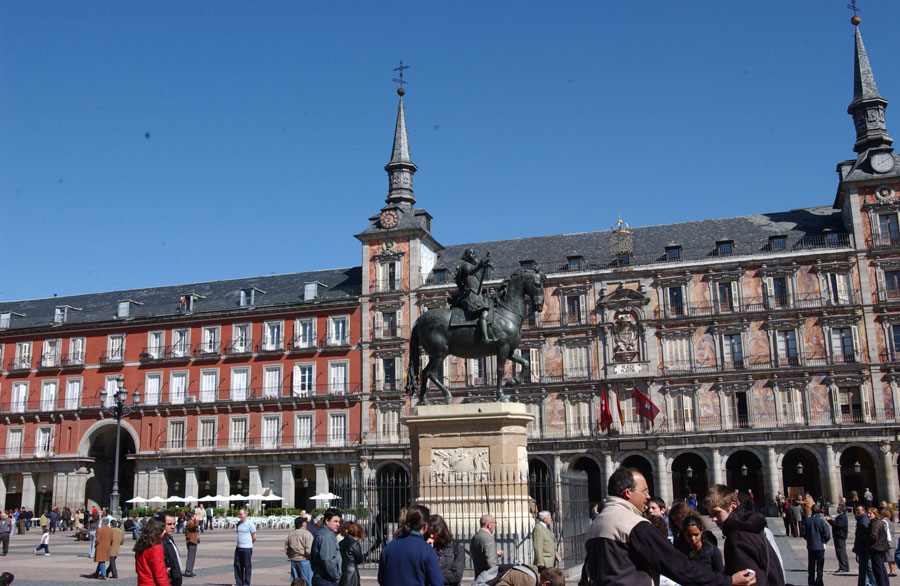
The Plaza Mayor in Madrid, Spain, is a fun place. The photo below is your basic tourist shot. No matter, it would take dozens of photos to document the area.

At street level, there are a wide variety of shops selling everything from old stamps, to hats, to post cards. There’s also a number of restaurants that put their tables in the plaza. Many of these are very good and should not be overlooked. Just a few streets away, you’ll find more restaurants and shops as this area is still the heart of the “old city.” On Sunday mornings, stamp and coin collectors set up their tables under the cloister around the edge of the plaza. I’ve seen some amazing old stamps, stock certificates, and coins on these days. That type of market gives a deeper glimpse into the culture of a place like Madrid.

Last but not least, take a look at that blue sky. It’s one of the simple, and yet stunningly beautiful, things about Spain.

Published in: on September 10, 2008 at 2:50 pm  Leave a Comment  
Tags: , , , , , ,

Old Tugboats Never Die

But they do sink! Sadly these two boats sank in a slip along the Schuylkill River in Philadelphia, Pennsylvania, USA.

They sat on the bottom for a while. Then a salvage crew hoisted them onto the pier using a massive floating crane. The Carol Wales is what’s known as a “railroad tug.” She was built by one of the railroads, probably in the 1930’s or 1940’s. The railroads used to have large marine departments. Railcars were loaded onto barges known as “car floats.” These car floats typically had three sets of tracks onto which the railcars where rolled and secured. Then the barges were towed across rivers and to a special type of bridge onto which the railcars could be unloaded and sent on their way. The Big Boy was a “navy hull,” meaning that it was built during World War II under a Defense Plant Contract. These tugs are sometimes referred to as DPC hulls.

That gash in the wheelhouse above was probably caused by one the cables strung under the tug by the salvage crew. It’s a shame for these old boats. They’re big and clumsy compared to their modern counterparts. However, they have proud lines and a long history. Trouble is, they’re obsolete.

They’re both single screw, having only one main engine and one propeller. Many ship owners want twin screw boats helping their vessels to the dock simply for the sake of reliability. This is especially true in the case of oil tankers.

That propeller on the left is about seven feet in diameter, which means the Carol Wales probably had an engine in the 1700 horsepower class. I worked with plenty of single screw boats and never had a problem. A good engineer and crew keeps things in reliable condition. And if you have an anchor, you drop the hook, fix what broke, and get on with the job. If not, well, chances are you’ll be in for plenty of misery that happens slowly enough that you can see it coming.

I’m glad to have taken these photographs. Both of these boats will be cut up for scrap iron in the next couple of weeks. Two more for the boneyard and a piece of history gone from the planet.

Published in: on September 6, 2008 at 11:24 am  Comments (4)  
Tags: , , , , , , ,

MacMillan Judge and Fort Zoutman

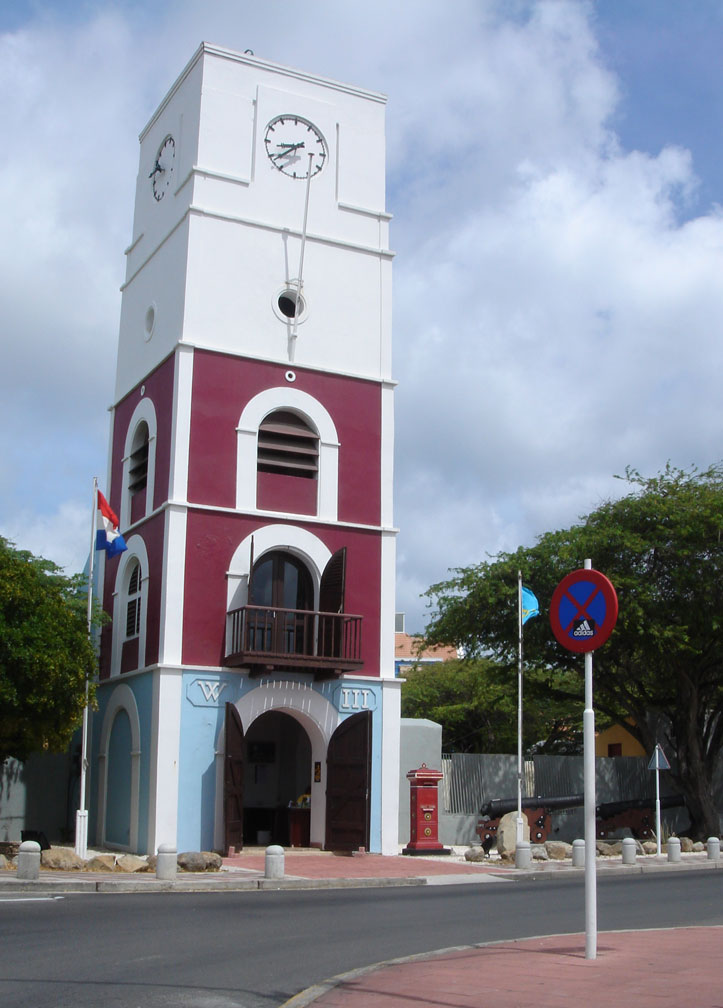
Going back through my story notes this morning, I stumbled on some scenes for the end of a novel I mentioned earlier, MacMillan Judge, Privateer. Without ruining the story, I can tell you that our man, Captain MacMillan Judge, ends up heading to that favorite island of mine, namely Aruba. (Don’t worry, this story will be a long time coming. It’s third in line right now.) Well, in Oranjestaad there is Fort Zoutman, which today is more or less dwarfed by nearby commercial structures. However, back in the day, it was enough to keep the island under control.

The photo to the right is of the Willem III tower. It served as a general lookout for the soldiers in the fort that sits below and behind it. Judge spots this tower as he cruises the coast in search of a decent anchorage. In case I forgot to mention it, MacMillan Judge, Privateer is set in 1815-1816. I’ve been brushing up on my history of this period, not only of Aruba, but also the Mediterranean area around southern Spain and the so-called Barbary Coast. This was a wild time in the history of the known world. The United States was a new country. Britain and France had been at war (yes, again) for quite a while. Spain, although not a superpower, still had some fangs. Through these tricky times MacMillan Judge and his crew of the privateer-built, topsail schooner Fletcher pick their way to fortune and glory. Actually that makes light of the serious themes in the story, but it sounded like the blurb you might find on the back of a sailing novel and I’m a firm believer in some excitement now and then.

It’s had to imagine a time when the canon pictured below was a key component to military domination.

Nonetheless, they did the job. In the course of the story, MacMillan Judge receives two long guns from Don Francisco, a Spanish aristocrat whose family has been harassed by the Barbary Pirates for generations. Those two long guns figure into MacMillan’s strategy as he beats back an attack by two corsairs. There I go again, telling too much of the story. Well, let’s leave it at that. For now.

Published in: on September 5, 2008 at 11:10 am  Leave a Comment  
Tags: , , , , , , , ,