Many locations in Sevilla, Spain appear like movie sets. Here’s an example:

They come pre-lit for the camera.
Many locations in Sevilla, Spain appear like movie sets. Here’s an example:
They come pre-lit for the camera.

Not far from Sevilla, Spain, are the ruins of the Roman city Italica. The site remains under excavation as there is plenty more to discover. It is an amazing place to visit, especially when you consider that this place was a long journey from Rome during the days of the Empire. In this first photo, you’ll see a piece of the amphitheater.
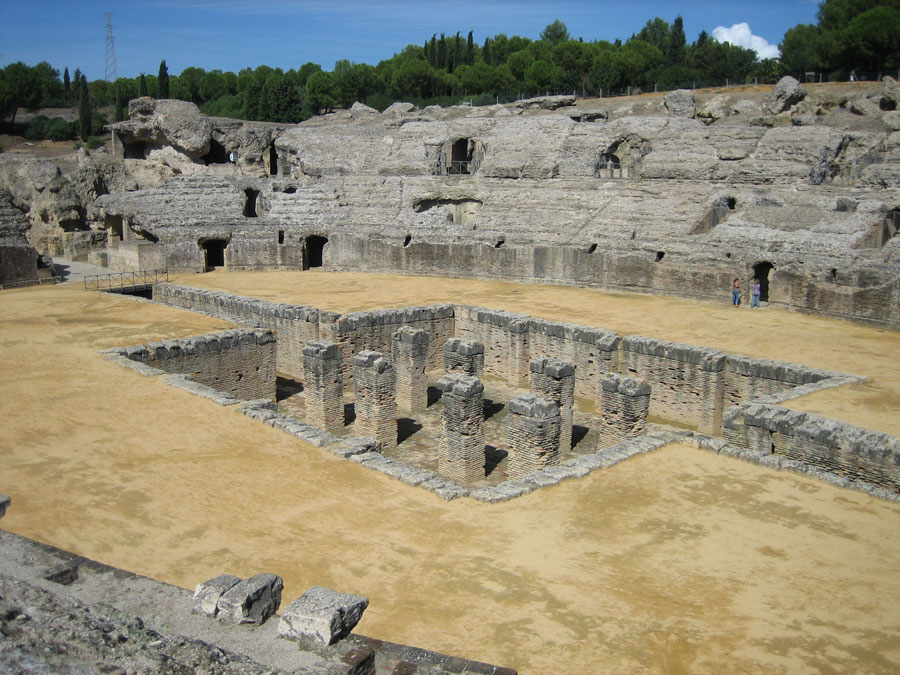
One thing I enjoyed about this site was the freedom to walk about the ruins. It is possible to get very close and thereby see the workmanship and wear of the structures. We walked along the main boulevard of the town, which like all things Roman was laid out in a grid. Villas were set back from this thoroughfare and divided into various neighborhoods. Here’s a view of some standing columns that were part of an important home featuring a central fountain.

I should also mention that this town had a properly functioning water supply and sewer system, two things that would be lost to history for centuries before being restored. Of course, the residents decorated everything, including the floors, like this:
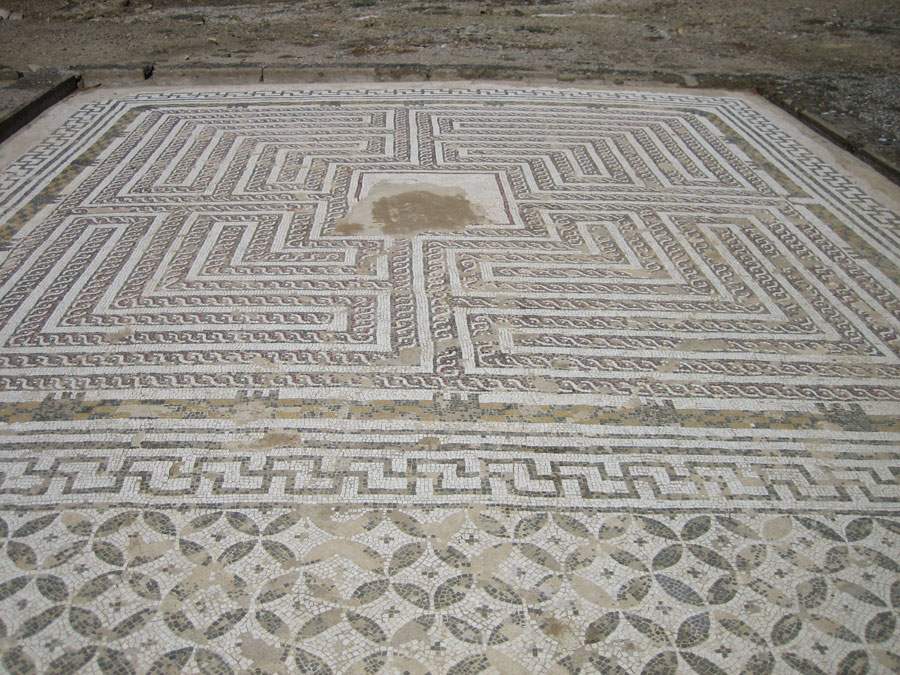
To think that mosaic was hidden beneath the dirt for a thousand years! Amazing. But it survived, as did many more like it. I highly recommend a visit to Italica. It’s only a short distance from Sevilla. There’s plenty of parking, clean bathroom facilities, and plenty to see and learn. It would also be a good idea to do some reading on the subject to get the most out of it. The map/brochure that is given to you as you enter is in multiple languages and very well done.
Finally, there is a little gas station a few hundred yards up the road from the entrance. There ICE-COLD Coca-Cola can be had. Refreshing, delicious, satisfying.
And now we go inside two different cathedrals, each with its own particular atmosphere. The first one is the Cathedral in Seville, Spain. Construction began in 1402. Here Columbus is entombed. From this city sailed the conquistadors to a world unkown to Europeans, and this is a look at the interior of their massive center of worship.

Icons and statues stare down from every ledge. The space is darkened by shadows cast by the massive columns, one of which is under repair as seen on the right side of this photo. The weight of this building presses down relentlessly. The windows are relatively small as is typical of the gothic style, offering little light and no escape.
A much newer cathedral can be found in Madrid. This is the Almudena Cathedral, begun in 1883 and completed in 1993. It has an entirely different atmosphere.

Thanks to more modern building techniques, the windows are much larger, illuminating the entire space more evenly. The eye is drawn upward along columns that seem lighter thanks to the brighter color. Here’s another look.

The windows of the celestory at the top of the frame shine gloriously with the same warm sunlight that brings visitors from darker climes to Spain.
Both of these locations exude their own sense of space, presenting the visitor with two unique experiences. So it is in a good story. What are your favorite spaces? What places leave a dramatic impression on you? Let me know.
In the course of writing a book, one of the challenges is to create the atmosphere in which the story unfolds. The setting could be the frozen tundra or the tropics but simply stating where a character is doesn’t do the job. There are elements that have to be added to give a sense of the place, a mood, a feeling in the readers mind. The greatest writers do this without the reader realizing it.
I’ve always enjoyed visiting old churches be they big or small. Of course a cathedral is the epitome of the form and I’ve visited them in England, France, Spain, and the United States. Talk about atmosphere, these places are loaded with it. For example, while in Seville, Spain, I spotted this delivery of candles.
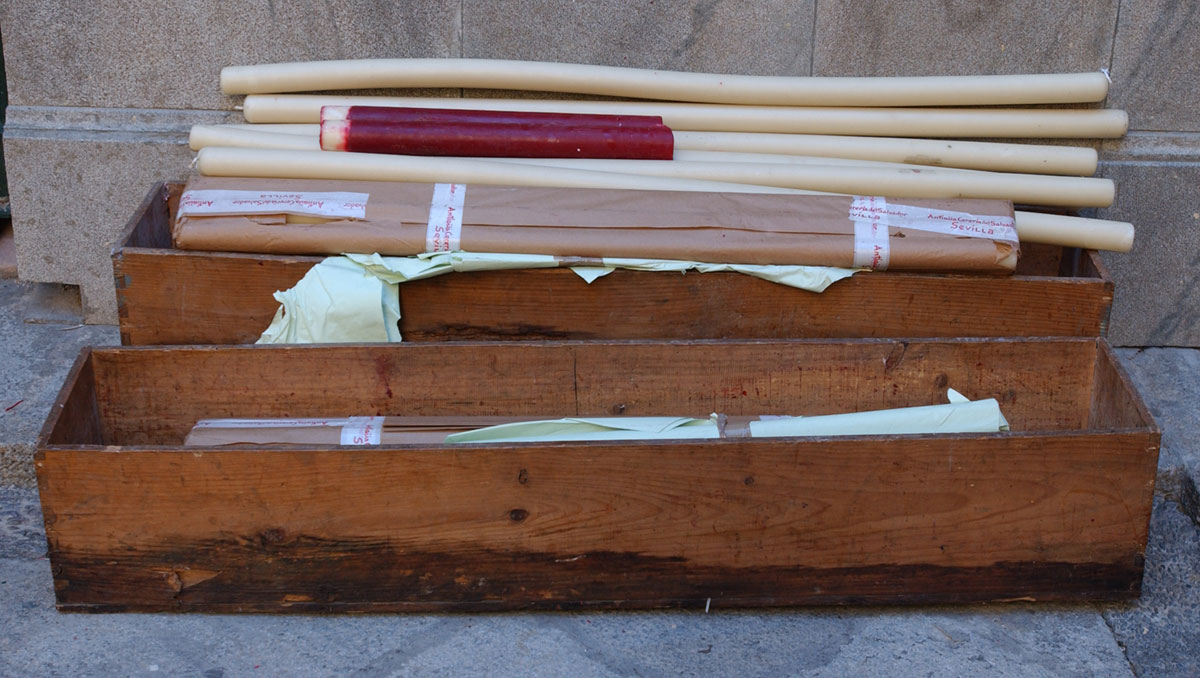
They weren’t going to the massive cathedral there, but rather to a much smaller church in another neighborhood. However, the size of these candles is impressive. Their light is more than the average taper. They will certainly cast shadows among the old stones, worn wooden pews, and gazing icons inside. The faint scent of burning wax, mixed with incense and old dust, will lurk in the sanctuary. Interiors like that are enough to make the goose-bumps pop. See Creating Atmosphere, Part 2 for a look at this first hand.
And that’s part of the fun of writing a story. The writer has the pleasure of creating the world. Of course, he also has to take responsibility for it and that can be a daunting challenge.
 The Bent Page
You must be logged in to post a comment.