Alarcón, Spain, features a handsome set of fortifications. The town itself perches atop a tower of rock that rises above a winding river, making it an ideal place to built a castle. Take a look at the long view:
 The main tower sits on the left side of the frame above. The watch tower to the right gives a great view into the next valley as wells as intersecting fire should someone have been stupid enough to approach from the area of that reservoir below. Note the walls that form a line about half way up the hill to the town. Panning slightly left, you’ll further see how isolated the town’s position is:
 In the foreground left, stands another watch tower that guards the access road leading toward the town’s main gate. The people who fortified this town were serious about their mission. The main fort is now a paradore, welcoming visitors who wish to spend the night and enjoy a nice meal. I didn’t have the opportunity to stay there or dine. Let’s take a look at that building from the other side:
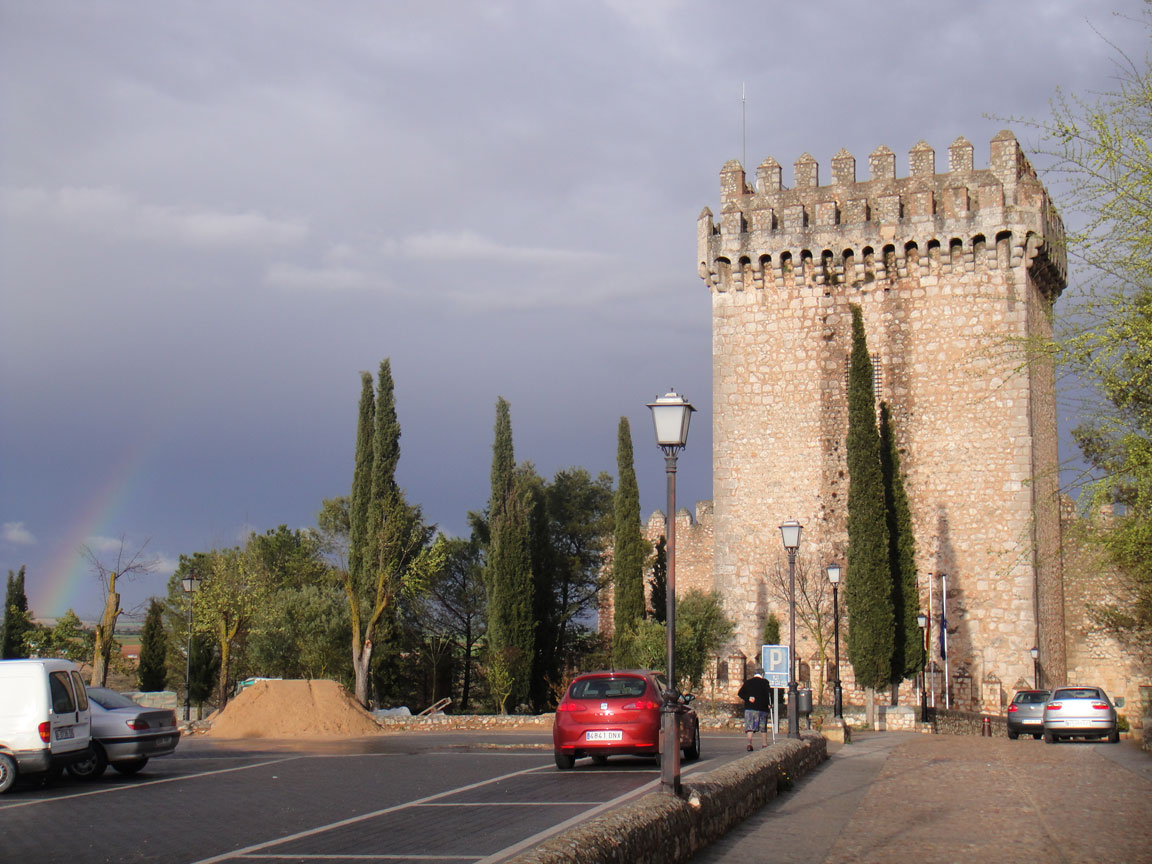 Those rain clouds passed while I enjoyed a nice lunch. More about the food later. Check out the rainbow on the left. It was a nice touch for the photo. Before leaving, take a closer look at the road and the town’s main gate:
 Alarcón isn’t the largest castle you’ll see in Spain. However, it does have all the features you come to expect from Spanish castle builders. Plus, you’re able to get up close to this piece of history.

 The Bent Page
You must be logged in to post a comment.