The Ring Beam

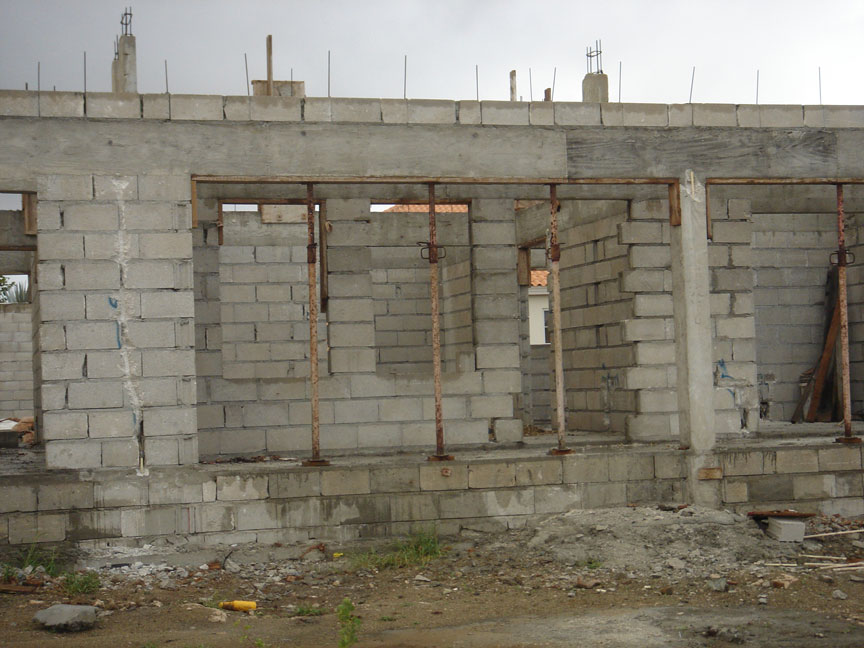
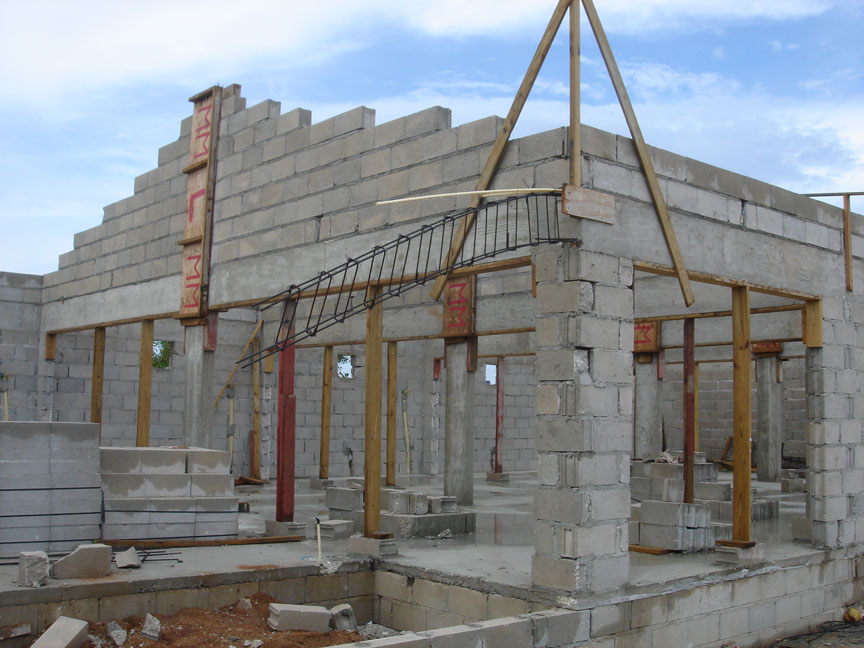
Continuing with my Island Practical series about home construction in Aruba, we’re now to the point where the “ring beam” is poured. The Aruban Department of Works has a standard for the dimensions of the beam and the reinforcing steel to be used in it. Again, make sure your plans comply with these regulations. Here’s a photo that shows the ring beam poured as well as some steel hanging out from one side.

It’s not a good idea to leave the steel hanging like that. Better to brace it and keep it in shape. You can see the various vertical braces holding up the poured sections throughout this structure. The ring beam serves to tie the walls and columns together into a single unit that is stronger than if they were separate. There is very little seismic activity (earthquakes) in Aruba, but every once in a while things get a little shake. The ring beam, hopefully, will keep things from tumbling. Here’s another look.

This time, metal jack stands have been used. I like those things, they’re strong, easily adjusted, and can be reused almost for forever. In this photo, you’ll also note the rebar sticking up from the beam. The roof joists can be tied down to the ring beam which reduces the lifting action of the wind as it swirls around the eaves. In a storm, this is a critical function. If not, your roof lifts off and you’re on your way to the Yellow Brick Road. Not good.

Next we’ll take a look at the roof itself.

Published in: on July 19, 2008 at 6:52 pm  Leave a Comment  
Tags: , , , , , , ,

Island Practical, Home Construction

This is post Number 100, and we’re clipping right along. Since I’m still in Aruba, I’ll stay with the theme of the island. Today and tomorrow’s posts will be mostly those about building a house and a few other practical issues here. Many people ask me about building and owning a house on the island. I’m hoping these next few posts will provide many answers as well as inspire a few questions.

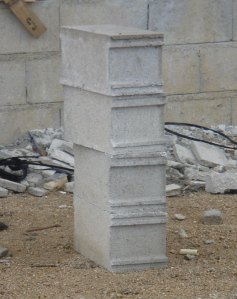
Here in Aruba, the building material of choice for most new homes is the concrete masonry unit, commonly referred to as the cement block. The ones shown below are solid, but the hollow core blocks are also manufactured on the island.
 For building foundations and walls in the United States, I would normally use hollow core blocks, employing the “dry stack” method. This method does not require as much skill as mortaring the joints. When the wall is stacked, lengths of reinforcing steel are inserted into the cores of the blocks and then concrete is poured in. When the concrete hardens the wall is a monolithic structure that is much stronger than one with mortared joints. Nonetheless, the blocks produced in Aruba and the people who work with them are not as familiar with this method. And so, we use solid blocks for the most part. They’re easier to cut and more forgiving as the mortar joint enables more space for leveling each course.

Thus, the foundation of a house in Aruba is typically laid out according to the wall plan. The footer traces the wall plan, usually about 20″ below grade. Then the first layers of blocks are built up over the footer to a foot or so above grade. It looks like this when finished.

Dirt or stone fills in the spaces between the walls. In the end these spaces will be covered with a poured concrete floor. Aruba has a standard for the footers and be sure to consult your local engineer before putting any concrete into the ground.

Once the foundations have hardened, you’re ready to get some walls up. At this point, you’re using all the common techniques found the world over when it comes to laying block and framing window and door spaces. It looks something like this.

Take a gander at those rebar cages on the left side of the frame. There’s going to be a poured column there, which is formed up conventionally, like this:
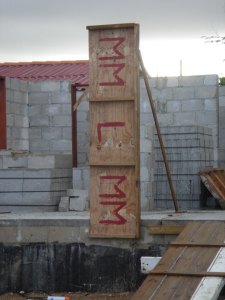
Note that the floor has been poured but a ramp stands where steps will be placed.  Take the forms off, and it should looks something like this.

 The rebar sticking out of the top will be tied in to the ring beam which will be part of the discussion in the next post.

Well, this has been a first look at home construction here in Aruba. If you’re thinking about building a new home, this is the most common method by which it will be built. The concrete blocks and form work give you plenty of options, allow for open spans (if engineered properly), and can last for many years with a minimum of maintenance. Maintenance is another subject for about 50 posts, but we’ll leave that to some other time. Not very exciting.

So far, so good.
Published in: on July 19, 2008 at 1:57 pm  Leave a Comment  
Tags: , , , , , , ,

Cunucu Houses, Part 2

Continuing with my photo essay of Cunucu houses on the island of Aruba, let’s take a look at a few more examples. This first one has some creative designs set in the walls.

May not be your favorite but you have to give them credit for being creative. Notice how these houses are sort of “low slung” in that the doorways and windows are set lower to the ground. This gives a clue to how old they are, probably at least 70 to 80 years. This next example shows how outbuildings become part of a homestead complex.

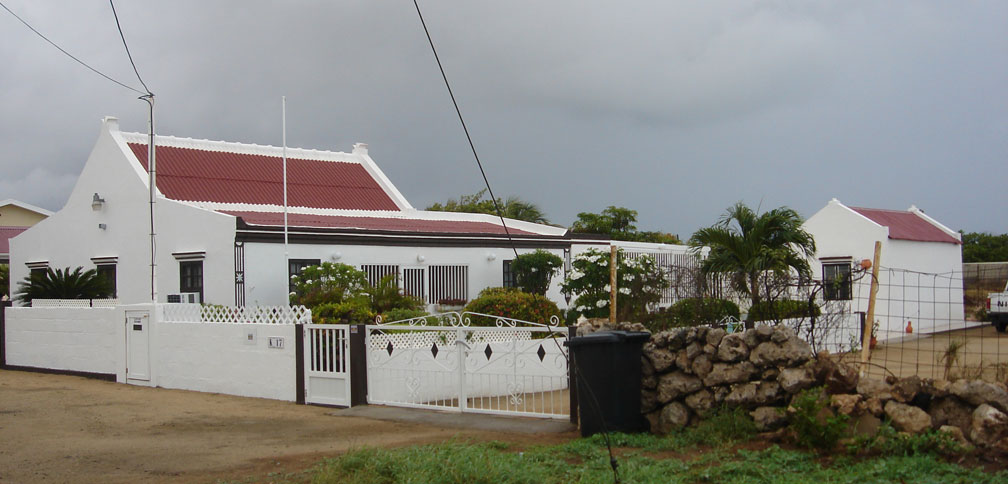
There is the driveway, the main house, the outlaw suite in back and a budding stone wall on the right. Nice progression here. A more compact version can be seen in this next photo.

The buildings remain connected. Then there is this one, which shows how the kitchen is kept as far from the living area as possible. I mentioned that in an earlier post and here’s a classic example.

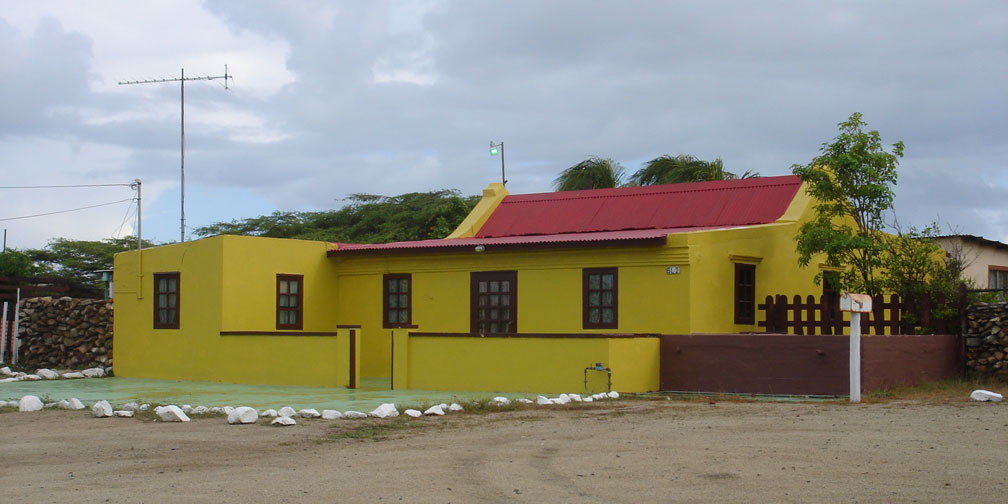
The chimney sticking up on the right is a sure sign of where the cooking is done. Then there’s this one, which happens to be fore sale, if you’re in the market.

They do like their colors in Aruba. I’ll be doing a photo essay on the colors of Aruba in a few weeks when I compile all the photos. There will also be more houses, including modern Cunucu houses which contain many of the elements we’ve seen in these photos. Before signing off, check out the detail along the corners of this last home. Many of the houses have geometric or animal designs formed into the concrete which is an added feature to distinguish one from the other.

Stay tuned for more.

Published in: on July 18, 2008 at 9:16 pm  Leave a Comment  
Tags: , , , , , ,

Flying Fishbone Restaurant, Aruba

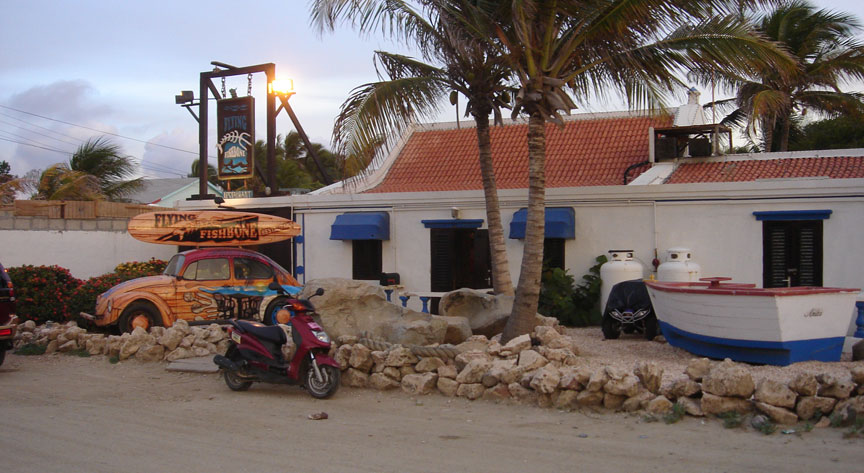
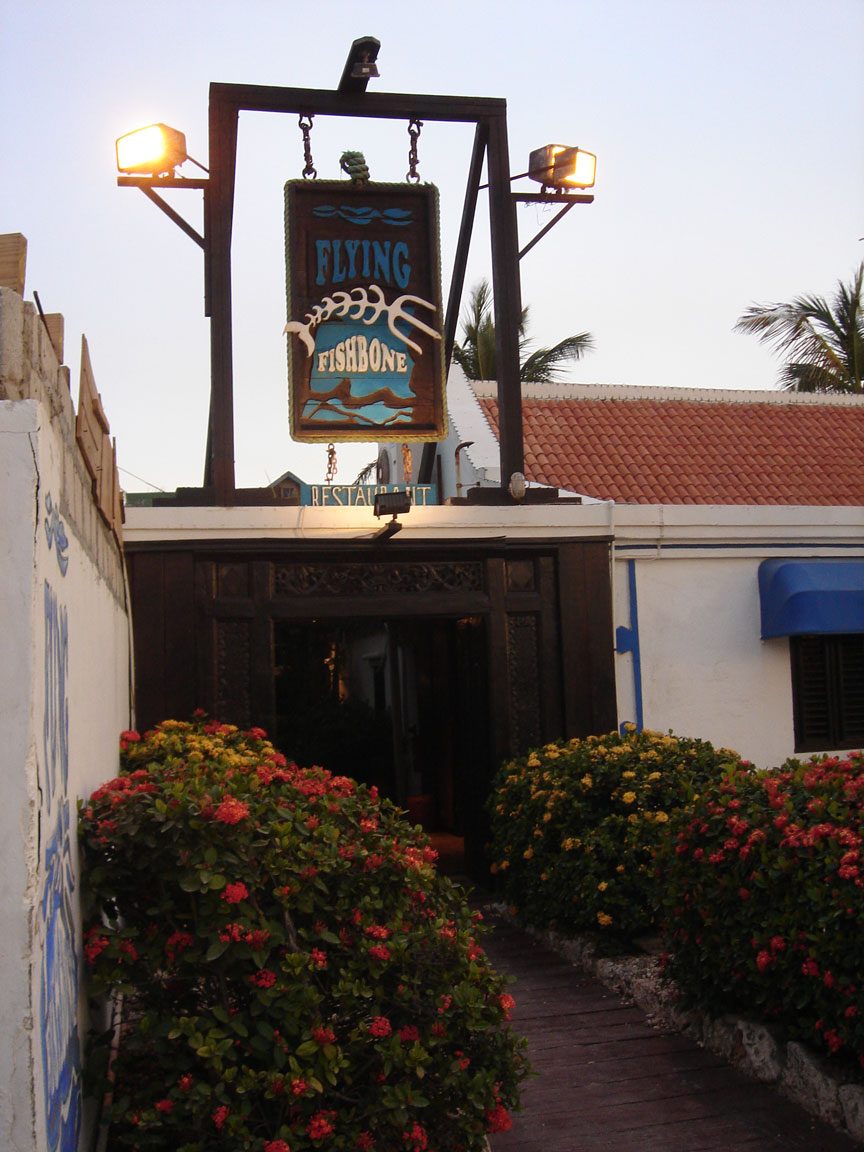
So many people have asked me about the Flying Fishbone Restaurant in Savaneta, Aruba, that I’m compelled to put this post up now, especially since I took some nice photos last evening. Here’s a shot of the outside of the place, which started out as an old Cunucu house situated directly on the water.

It is easy to find this restaurant. Simply drive south from the airport until you enter Savaneta, then turn right at the S. Chow grocery store. Continue straight for about 1/4 mile to where the road splits and turn left. Follow this road for about a mile and you’ll see a sign on the right that leads you off the paved road onto a dirt one and just a hundred yards on and you’re there. You’ll see plenty of cars. Here’s a closer look at the entrance.

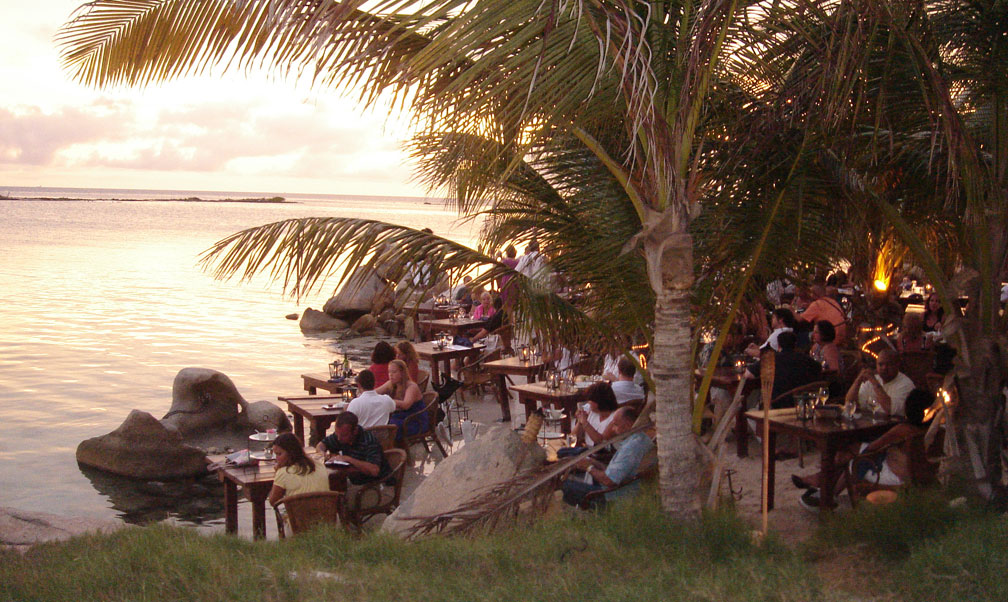
Everything on the menu here is good. The service is equally good. In other words, there is a reason this place is about the most popular on the island: QUALITY. Another reason is that you can have a table that is actually in the water, as in your feet are immersed in the warm Caribbean sea while you dine on all those great dishes. If you don’t believe me, take a look.

How’s that for seaside dining? And just in case you need one more reason to have a leisurely, romantic dinner, take a look at this, which is your view when Mother Nature cooperates.

 Hard to beat, eh?

Enjoy your dinner, and since I live just a few houses away, stop over for coffee or bourbon some time.


(Side note to some of my readers who have asked about the locations in my novel, An Island Away. Yes, most all of the locales in the book are real and as described. I did take a few liberties with one or two simply to make plot points possible. There was a scene that took place at Flying Fishbone in the original draft, but it was cut. Sorry. However, I am considering a scene for the sequel, Under A Blue Flag. We’ll see how it works out.)

Published in: on July 18, 2008 at 12:01 pm  Comments (1)  
Tags: , , , , , , , ,