Hamilton, Bermuda, 1911

It was Mark Twain who said, “You die and go to heaven, I’ll stay here in Bermuda.” He might have been on to something. Of course I love the island of Aruba, which is a more raucous place than the more dignified Bermuda. Still, I appreciate the difference and have enjoyed several visits to Bermuda in my travels. So it was that I found this old photograph of Hamilton in the archives at the Library of Congress, where regular readers of this blog know I scour up some good finds now and then.

This photo was taken in 1911. My how things have changed! You don’t see any cruise ships in the harbor. Plenty of small buildings, the scale of which seems appropriate to a place like Bermuda. I can’t be certain, however, I think I was in that church on left side of the frame. Back in my days of photography that used film, I made some images of the stained glass windows there.

This photo is also a time capsule of sorts. It shows us what was, which can then be compared to what is today. It might also give us a glimpse of the future or at least a sense of the trend of things to come. I hope people take the time to print their digital photographs. If for no other reason, someday someone will find them and be able to do what I’ve been doing with these photos from the Library of Congress: Take a look at the past. One of my fears is that all the digital photos we take will be stored (invisibly) on a chip or CD or some other media that will become inaccessible. As the computer industry changes, compatibility is always a problem.

The best thing to do is print the good ones, and a few of the not so good ones as well. Hey, you never know. Some guy may be writing a blog or a novel and use your pictures as source material. If you’re really lucky, they’ll end up in the Library of Congress.

Published in: on September 8, 2008 at 12:23 pm  Leave a Comment  
Tags: , , , , , , , , ,

Old Tugboats Never Die

But they do sink! Sadly these two boats sank in a slip along the Schuylkill River in Philadelphia, Pennsylvania, USA.

They sat on the bottom for a while. Then a salvage crew hoisted them onto the pier using a massive floating crane. The Carol Wales is what’s known as a “railroad tug.” She was built by one of the railroads, probably in the 1930’s or 1940’s. The railroads used to have large marine departments. Railcars were loaded onto barges known as “car floats.” These car floats typically had three sets of tracks onto which the railcars where rolled and secured. Then the barges were towed across rivers and to a special type of bridge onto which the railcars could be unloaded and sent on their way. The Big Boy was a “navy hull,” meaning that it was built during World War II under a Defense Plant Contract. These tugs are sometimes referred to as DPC hulls.

That gash in the wheelhouse above was probably caused by one the cables strung under the tug by the salvage crew. It’s a shame for these old boats. They’re big and clumsy compared to their modern counterparts. However, they have proud lines and a long history. Trouble is, they’re obsolete.

They’re both single screw, having only one main engine and one propeller. Many ship owners want twin screw boats helping their vessels to the dock simply for the sake of reliability. This is especially true in the case of oil tankers.

That propeller on the left is about seven feet in diameter, which means the Carol Wales probably had an engine in the 1700 horsepower class. I worked with plenty of single screw boats and never had a problem. A good engineer and crew keeps things in reliable condition. And if you have an anchor, you drop the hook, fix what broke, and get on with the job. If not, well, chances are you’ll be in for plenty of misery that happens slowly enough that you can see it coming.

I’m glad to have taken these photographs. Both of these boats will be cut up for scrap iron in the next couple of weeks. Two more for the boneyard and a piece of history gone from the planet.

Published in: on September 6, 2008 at 11:24 am  Comments (4)  
Tags: , , , , , , ,

One Happy Port, Aruba

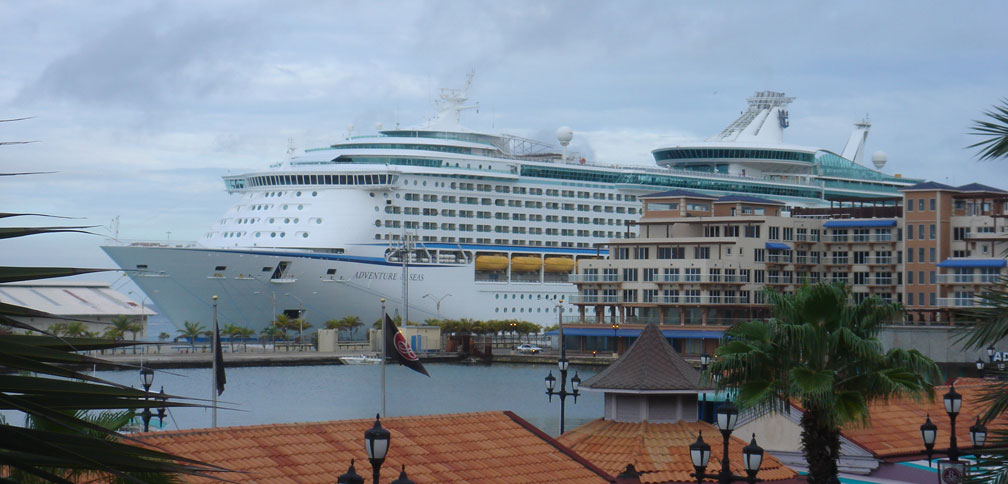
A few days ago, the cruise ship, Adventure of the Seas, called at Oranjestaad, Aruba. I took a few photos for the blog here, which may help answer some questions about cruise ship calls at the island. First, take a look at that magnificent ship which was just tied to the dock a few minutes before this pictures was taken.

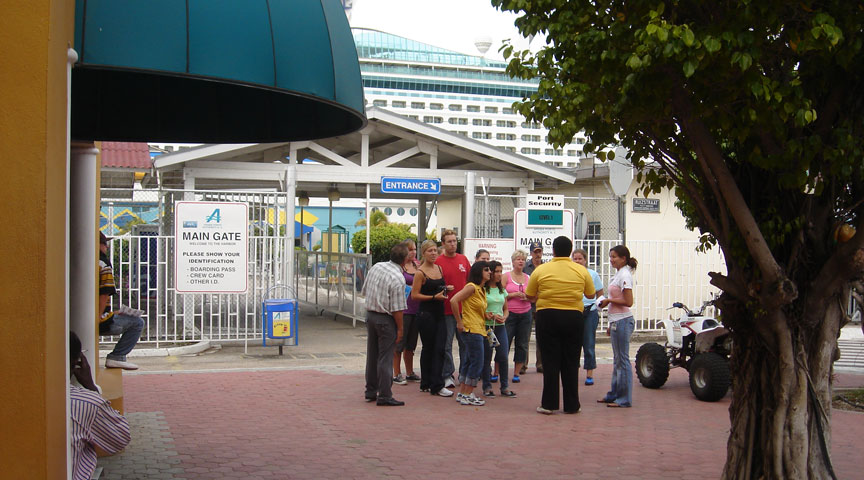
Upon leaving the ship, you’ll pass through a reception building and then through a gate. Some tours may supply buses inside the port area; other tour leaders and sellers are waiting beyond the gate as you see here.

Veteran cruisers will know about booking your on-island excursions in advance. If not, however, there are people around who offer everything from a jeep safari, to kayaking, to a day at the beach. Here’s a look at a few of the colorful buses that will take you to your day of fun.

Not sure about this bus, but it has the right name.

And then there is this luxury coach operated by De Palm Tours. They transfer people from the terminal to their own island where all kinds of water activities are available.

Whatever your choice, you’re bound to have a great time here. It may be a visit to the ostrich farm, an island-wide tour, or a horseback trek. If shopping it what you enjoy, stay tuned. My next post will take a look at the shops available right in the downtown area, only a short walk from the ship.

Sinking of the Red Oak

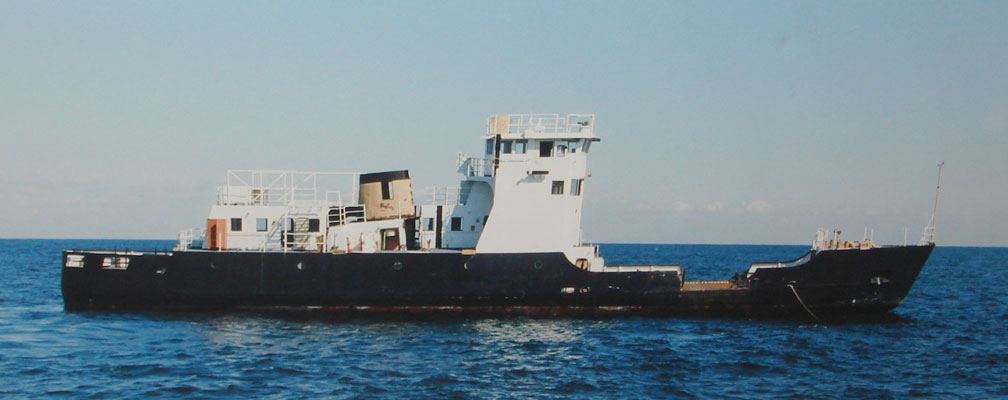
The Red Oak was a United States Coast Guard buoy tender. As mentioned in previous posts, I used to build artificial reefs by sinking ships and other materials off the coast of New Jersey and Delaware, USA. The Red Oak was stripped of all re-usable equipment, including her engines, generators, and other machinery. All fuel, oil, and floatables were also removed. In the end, she was a steel hulk that looked like this:

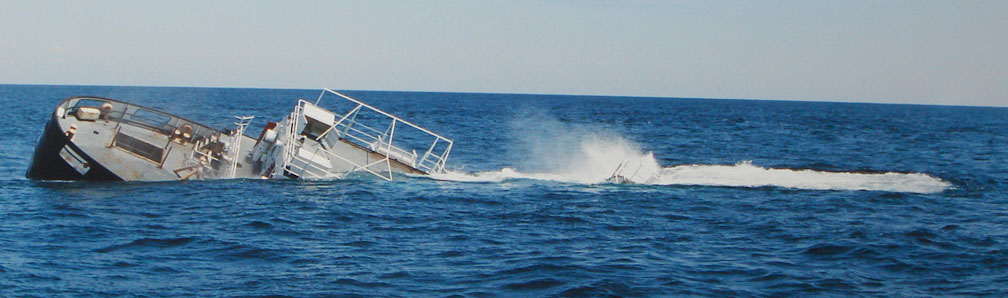
We towed her from Baltimore to a spot just off Cape May, New Jersey. Once anchored, I went below and cut several holes at the waterline using a standard cutting torch. Water lapped into these holes and to accelerate the process, I removed two covers from the stern tubes that were well below the waterline. It took about half an hour until the hull heeled and took solid water over the deck like this:

It was strange how this vessel sank. The holes were in the stern, but it went down bow first. There was less space forward and thus less water was required for the area to lose buoyancy. However, the stern was definitely heavier and should have pulled itself down first. No matter, soon the scene looked like this:

I’ve heard that the wreck is an excellent dive and fishing spot. Given that it is close to Cape May, I’m not surprised. There are any number of good charter operators who take people fishing from the various marinas most every day the weather is good enough. The artificial reef program in the United States has done wonders for the sport fishing community and the environment. It is an effort that deserves continued support. Please enjoy our marine resources responsibly.

Now, if I could only get my friends in Aruba to do this. Aruba has ideal conditions to sink wrecks for both diving and marine habitat enhancement. One more thing I have to work on there.

Published in: on July 9, 2008 at 3:52 am  Leave a Comment  
Tags: , , , , , , , ,