Cape May, New Jersey, USA

This is only the second time that I’ve seen the Cape May Lighthouse from shore. Of course, I saw it numerous times from the water.

The lighthouse is actually located in Cape May Point, NJ. This is a great place if you’re into bird watching, quiet living, and enjoy the salt air. The lighthouse itself is open for tours. You can climb to the top of it as well as walk around the balcony just below the light. The view is fantastic. You can see into the Delaware Bay, out into the Atlantic Ocean, and over the beaches that fringe the end of New Jersey’s coastline.

It’s always a good idea to come here early as the crowds build throughout the day, especially when the weather is as nice as it was when I took this photo. Here’s a look at the beach at Cape May Point.

You can see it wasn’t crowded. People had just started to stake out their patch of sand. The airplanes were towing banners, advertising everything from restaurant specials to Atlantic City casinos. Cape May itself is filled with Victorian-style homes. I took this photo of two modest places, but there are many more that are as big as these two put together and more brightly painted than a carnival ride.

Still, I think these represent a pleasant scale that is both practical and inviting. Readers of this blog know that I’m partial to Spanish Colonial Architecture. However, I enjoyed a morning stroll through Cape May, taking in the variety of Victorian homes. The residents here take good care of their property. The sidewalks and streets are immaculate. If you want to do some shopping or antique hunting, there’s a pedestrian mall in the center of town that looks like this:
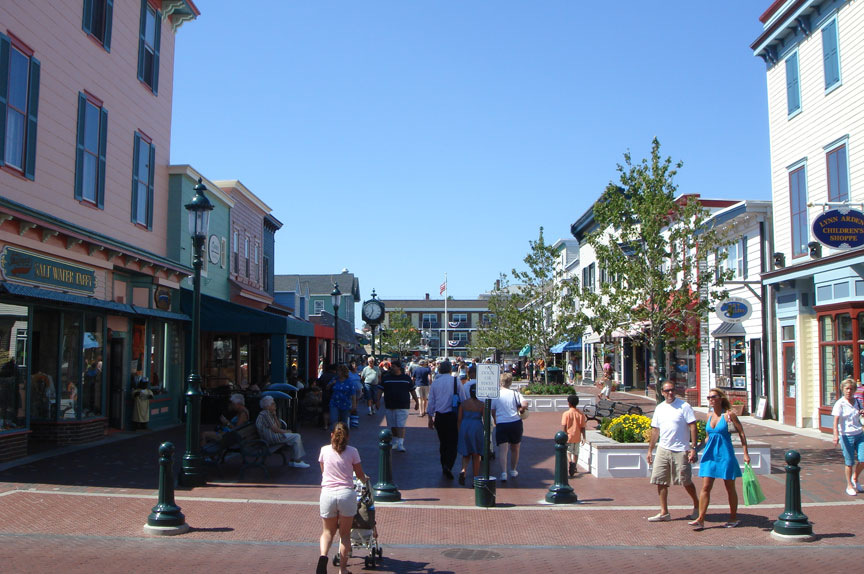
We found a place for lunch here that was quite good. Of course, an ice-cold Coca-Cola was had for dessert before more walking around town. Cape May deserves its reputation as a low-key, friendly destination. The beach can get crowded but all good beaches do. There are plenty of good restaurants, quaint bed and breakfast establishments if you want to stay a few days, and lots of quite streets to welcome you. (I’d like to work Cape May into a story some day, just haven’t figured out exactly how.)

Published in: on September 1, 2008 at 11:56 am  Leave a Comment  
Tags: , , , , , , ,

Island Power, Inverters

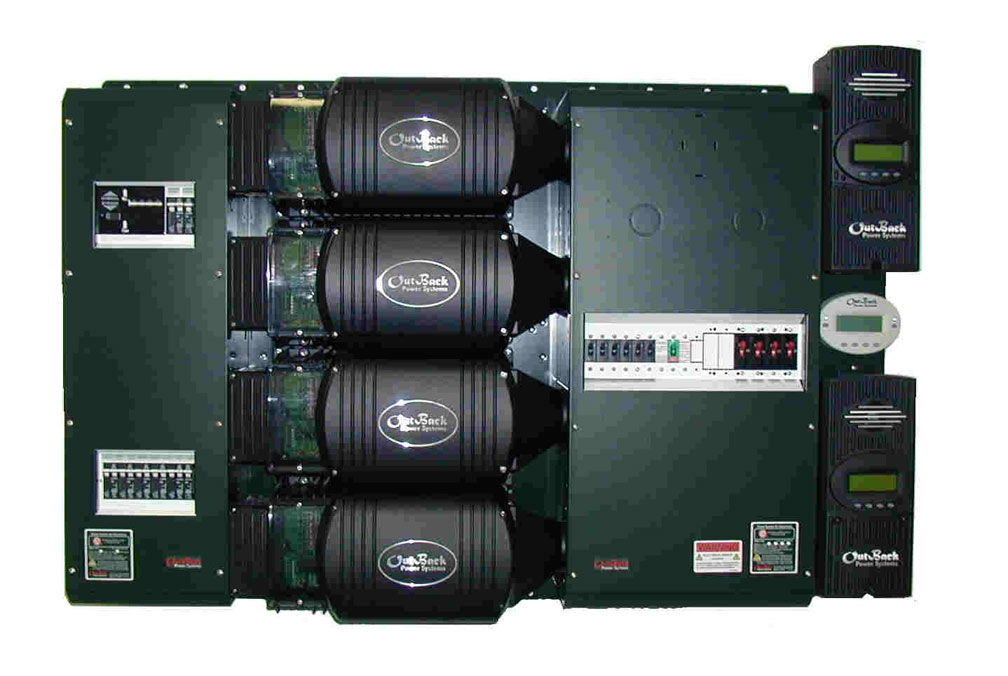
The DC/AC inverter is the heart of any off-grid power system with electricity produced by solar and wind. Most small wind turbines and solar panels produce direct current (DC) electricity. However, the electricity you use in your home is alternating current (AC). We won’t bog down here with the details of that. Suffice it to say that you need to convert the DC to AC. The device that does this is called an inverter. The inverter draws power from the wind turbine and solar panels as well as from the batteries in the system. It then delivers it to the system in clean, regulated, AC form. Here’s a look a stack of four inverters as part of a system built by Outback Power.

Those four magic block boxes, one on top of each other, are the inverters. Each one of those takes 48 volt DC current and converts it to 120 volt AC current. The output of each one is combined in the adjacent boxes so that you can have both 120 and 240 volts. This system, with its four inverters produces a maximum of 10,000 watts of steady power. It can handle a surge load for a brief period of up to 14,000 watts.

10,000 watts is enough to power my entire house in Aruba, including those two power-hungry air conditioners. I rarely run them at the same time. Nonetheless, I’ve over-sized the system to handle the demand. Over-sizing is the key to happiness with off-grid systems (and pick-up trucks). It is always cheaper to build a larger system at the beginning than to upgrade later.

Lately, these systems have been growing in popularity. Companies like Outback have made them easier to set up, more efficient, and less maintenance intensive. Similarly, contractors have used them in “plug and play” systems that are easy for homeowners to understand. I can’t wait to have mine working and putting the money back into my own pocket instead of paying a utility company.

Published in: on August 31, 2008 at 10:45 am  Leave a Comment  
Tags: , , , , , , ,

Owls in Aruba

Given that Aruba is a desert island, the wildlife is limited as compared to more tropical locations. However, there are quite a few interesting birds to  be seen, including these burrowing owls. You have to look at this photo very carefully to spot the owl on the rock in the center of the photo.

The owls are very skittish. I took this photo from about 100′ away, which is why the resolution is poor. If you get much closer, they fly away. Notice the burrow beneath the rock in the lower left of the picture. That’s where they nest. I’m always extremely careful not to disturb the next or the owls themselves. There aren’t many of these guys left on the island. The good news is that conservation efforts are helping.

Published in: on August 30, 2008 at 11:33 am  Leave a Comment  
Tags: , , , , , , , ,

Stop and Go, Oranjestaad

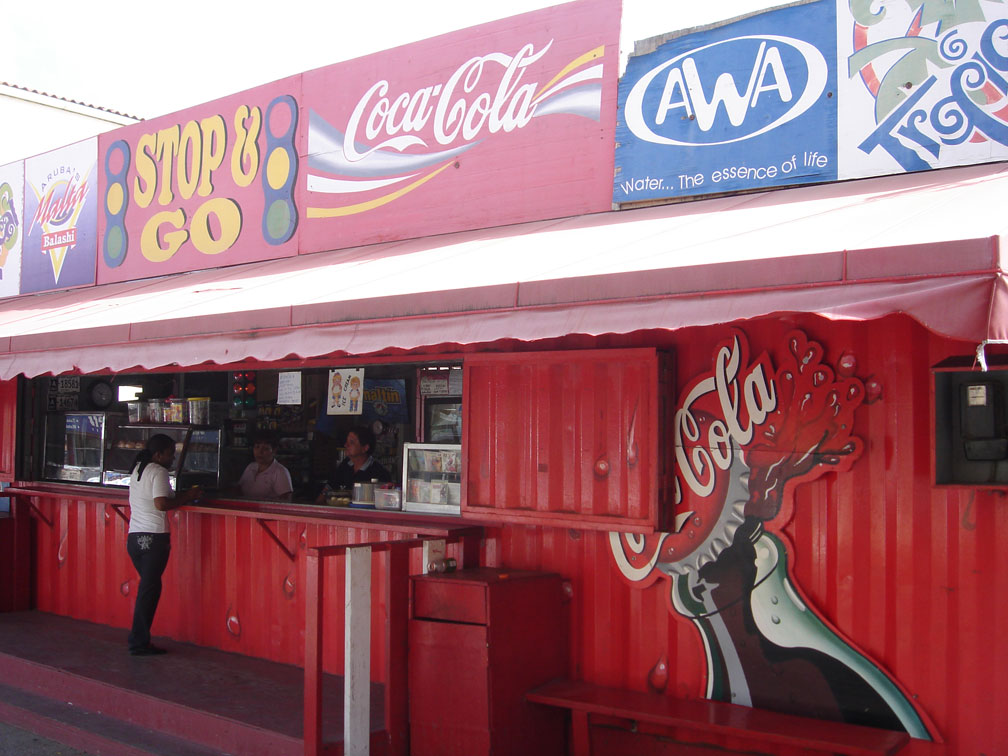
It’s been a while since I wrote a post about Coca-Cola. Therefore, take a look at the Stop & Go snack stand located in Oranjestaad, Aruba.

This place was built using a steel shipping container that normally would be carrying cargo back and forth between someplace else and Aruba. Now it is a great place to stop in for an ice-cold Coca-Cola. They sell other soft drinks, pastechi, as well as other little snacks. It is located behind the Renaissance Mall in downtown Oranjestaad, across the street from Chez Matilde. You can’t miss it.

From time to time, I borrow a table at the various places inside the mall and do some writing there. People passing through serve as inspiration for characters. Then, after I’ve cranked out about two thousand words, I’ll head out to the Stop & Go for a refresco as my Spanish-speaking friends would say. In the heat of the Aruba afternoon, an ice-cold Coca-Cola is just the thing to refresh and renew.

Published in: on August 29, 2008 at 12:13 pm  Leave a Comment  
Tags: , , , , , ,