Survival!

My earliest exposure to stories of survival was probably Robinson Crusoe. I never planned on writing tales like that, but as fate would have it, I’ve written several. There’s a scene in An Island Away in which Captain Nathan Beck is adrift in the Caribbean for nearly a week. He ultimately comes ashore in Savaneta, Aruba. Another one is in MacMillan Judge, Privateer and will be published in the future. Young Mr. Judge lands in Spain.

In the modern age, it’s hard to imagine being shipwrecked on a desert island, or lost at sea, or abandoned in a jungle somewhere. But it does happen. There was the tragic case of the scuba divers left behind, as well as incidents of plane crashes where a survivor managed to find his way out. I took the opportunity to watch a few episodes of the television programs on this subject. There are a couple of guys who are survival specialists who do everything from build a fire in the rain forrest to ice fish in the arctic. It’s quite impressive and a testament to human ingenuity that they can use their opposable thumbs and brains to come up with food and shelter.

Of course, the real solution is to avoid disaster in the first place. As the old saying goes: prior preparation prevents poor performance. It seems that some people go aboard boats, airplanes, or simply walk into the woods with neither the equipment nor skills to deal with what awaits them. This is simply idiotic. I’m not sure why people volunteer for misery. They apparently can’t get enough. Of course, the resources of the nation are then mobilized to rescue them. I’m short on sympathy in this case, especially when the rescuers have to risk their lives to save someone who did something moronic in the first place. The cost? Forget about it.

Anyway, like I said in an earlier post, fiction is a place where things can be pondered without anyone getting hurt. The real world on the other hand will inevitably teach the lesson you didn’t plan on learning. Be careful out there.

Published in: on September 24, 2008 at 1:33 pm  Leave a Comment  
Tags: , , , , , , ,

MacMillan Judge and Fort Zoutman

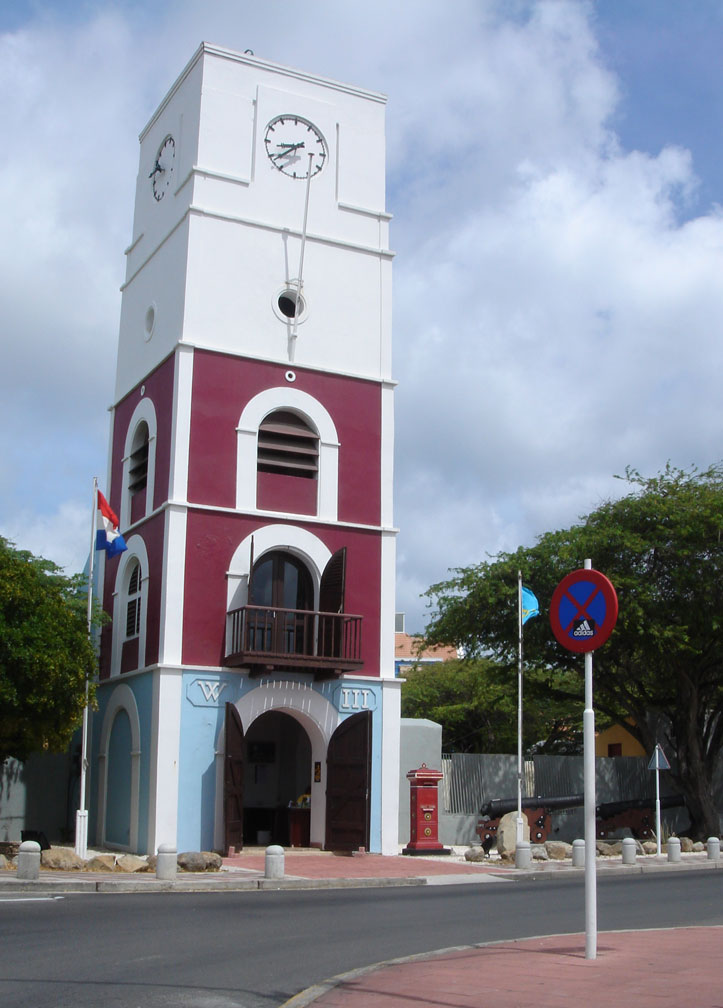
Going back through my story notes this morning, I stumbled on some scenes for the end of a novel I mentioned earlier, MacMillan Judge, Privateer. Without ruining the story, I can tell you that our man, Captain MacMillan Judge, ends up heading to that favorite island of mine, namely Aruba. (Don’t worry, this story will be a long time coming. It’s third in line right now.) Well, in Oranjestaad there is Fort Zoutman, which today is more or less dwarfed by nearby commercial structures. However, back in the day, it was enough to keep the island under control.

The photo to the right is of the Willem III tower. It served as a general lookout for the soldiers in the fort that sits below and behind it. Judge spots this tower as he cruises the coast in search of a decent anchorage. In case I forgot to mention it, MacMillan Judge, Privateer is set in 1815-1816. I’ve been brushing up on my history of this period, not only of Aruba, but also the Mediterranean area around southern Spain and the so-called Barbary Coast. This was a wild time in the history of the known world. The United States was a new country. Britain and France had been at war (yes, again) for quite a while. Spain, although not a superpower, still had some fangs. Through these tricky times MacMillan Judge and his crew of the privateer-built, topsail schooner Fletcher pick their way to fortune and glory. Actually that makes light of the serious themes in the story, but it sounded like the blurb you might find on the back of a sailing novel and I’m a firm believer in some excitement now and then.

It’s had to imagine a time when the canon pictured below was a key component to military domination.

Nonetheless, they did the job. In the course of the story, MacMillan Judge receives two long guns from Don Francisco, a Spanish aristocrat whose family has been harassed by the Barbary Pirates for generations. Those two long guns figure into MacMillan’s strategy as he beats back an attack by two corsairs. There I go again, telling too much of the story. Well, let’s leave it at that. For now.

Published in: on September 5, 2008 at 11:10 am  Leave a Comment  
Tags: , , , , , , , ,

Signpost in the Sand

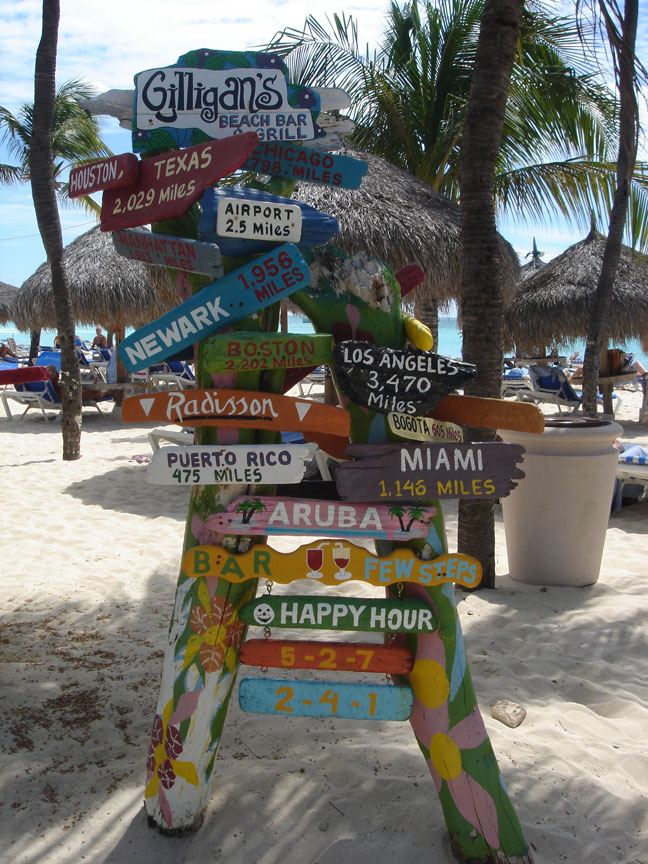
This signpost stands on the edge of Palm Beach, Aruba, on the promenade by the Radisson Hotel. Check out all those places and distances. Maybe your home city is on there.

This post actually reminded me of the one that was frequently seen in episodes of MASH. I used to watch that show years ago. I remember the last episode and the one where the colonel died. They were poignant to say the least. These days I don’t watch much television so I don’t know if there is a comparable show on. For one thing, I despise these make-believe reality shows. Once in a while I’ll view pieces of the ones on Discovery like Deadliest Catch or Ice Road Truckers. Still, too much is over-dramatized. Please, there’s enough drama in the real world. You want to impress me, make me laugh. That’s a tough assignment.

Back to the signpost. It’d be nice if there were such things in life to point you in the right direction. Maybe there are. I can remember people giving me very good advice along the way (not that I always listened or heeded it). There are things like graduation ceremonies, promotions, demotions, epiphanies, and revelations. These are signposts of a certain kind. They mark a beginning or an end, deny or permit passage on to the next stage of life.

Perhaps the key is not so much to be looking for the sign, but rather to interpret it correctly when you find it. Believe it or not, there’s plenty of wisdom out there to be had. It comes in all forms from the Bible to your grandfather’s remarks. The question is, what do you do with it? What is important and what isn’t? That’s a more difficult assignment than the first one. And the trouble is, life keeps moving while you’re standing there contemplating your next move. There’s no “pause” button, no “rewind,” and certainly no “undo” function. Or maybe there is. After all, people reinvent themselves all the time. It takes courage and willpower to go down the right or wrong road and then make another turn without knowing exactly what the destination will be. The only thing that’s for certain is that it will be different. Whatever the case, it’s better than standing at the curb while the world passes by.

Published in: on September 4, 2008 at 10:52 am  Leave a Comment  
Tags: , , , , , , , ,

Ruins, Part 2

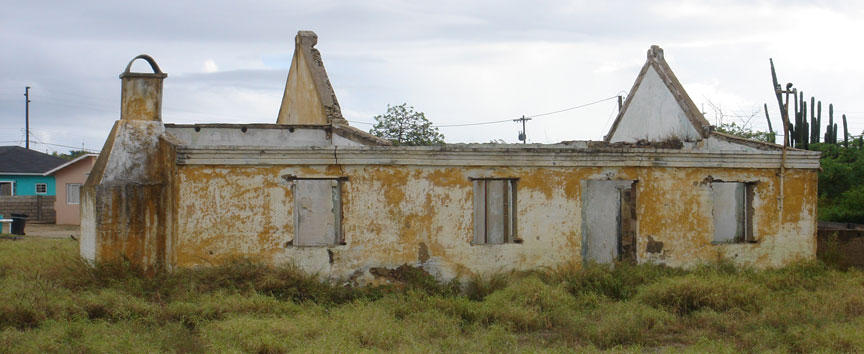
I’m working on a scene for my next novel, Under A Blue Flag, that takes place in this ruined house.

Ruins are great places for dramatic scenes. They’re abandoned, forgotten places where a character can meet his destiny or decide what it will be. If you remember some of those other posts I put up about atmosphere, you’ll know that ruins are also great for that purpose. They’re moody, full of history, reminiscent of the past, and sometimes pessimistic about the future.

The abandoned cunucu house shown in the photo above is actually in an area on the island of Aruba known as Paradera. My characters end up here after a series of wrong turns. I don’t want to say too much more out of fear of revealing too much. Under A Blue Flag ties in directly to its predecessor, An Island Away. Nonetheless, I’m writing the sequel to be a stand alone volume so that it is not necessary (but it would be a good idea) to read the first book.

Published in: on September 3, 2008 at 6:58 am  Comments (1)  
Tags: , , , , , , , ,