Compare and Contrast, Spain

One of the fascinating aspects of Spain is the contrasting styles of architecture (among other things). In my travels, I’ve noted the amalgamation and integration of styles in the various significant buildings. I’ve selected two old photographs (taken between 1860 and 1880) which demonstrate this reality. The first is a shot taken at the Mezquita in Cordoba.

This old photo illustrates the “mudejar” arch, which was built by the Moors who controlled Spain for a time. After the unification of Spain by Ferdinand and Isabel, the mosque in Cordoba became a cathedral. Nonetheless, much of the original structure remained. In fact, when visiting the Mezquita, you’ll see that it appears as if a cathedral was inserted into the mosque. These arches stretch out in all directions giving an infinite feel to the space. On the other hand, if you travel to Toledo’s cathedral, you’ll see an example of high gothic construction like this:
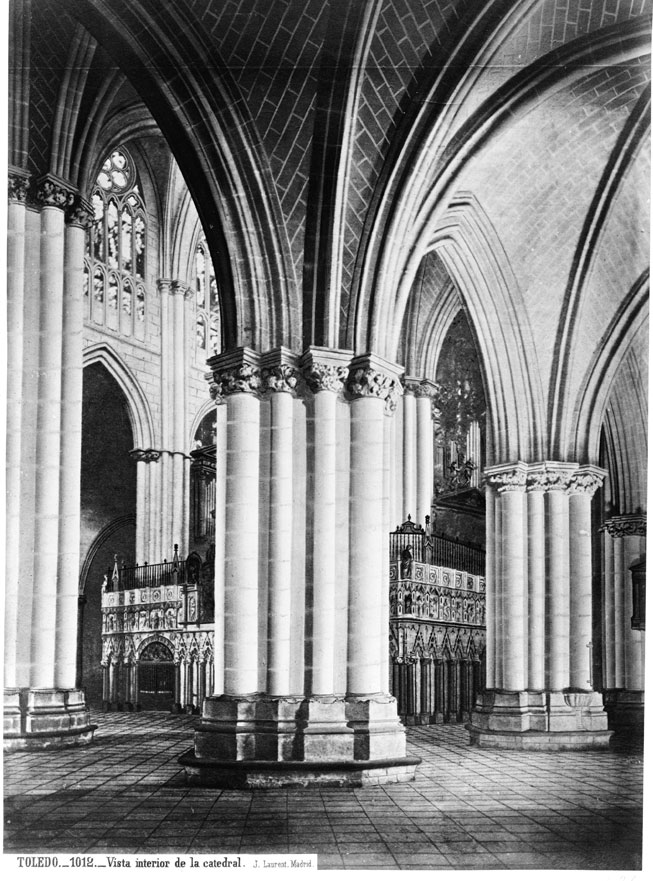
Here you see the massive columns, vaulted cielings, and pointed windows that are hallmarks of the style. Both of these cathedrals are used for religious services to this day, which testifies to the endurance of the Spanish in their faith. It also stands as a testament to the builders of these structures. There are exhibits which show the techniques employed, which while primitive by today’s standards, were state of the art at the time. A fascinating case contains several cut blocks bearing the initials and personal marks of the masons who shaped them. These letters speak for them, as if to say, “I was here. I helped to build this.”

A note about photography when traveling… these days I tote my little digital camera with me just about everywhere. I take a few shots here and there. However, I find those glossy books designed for tourists to contain some of the best photography of typical sites like cathedrals, palaces, cityscapes and so on. I purchase them frequently because the photography within is much better than the results that could be achieved in the short time of a typical visit. Don’t hesitate to buy them. They’re cheap compared to what it costs to get such great photos.

Published in: on September 22, 2008 at 3:58 pm  Leave a Comment  
Tags: , , , , , , , , ,

Modern Apartments, Aruba

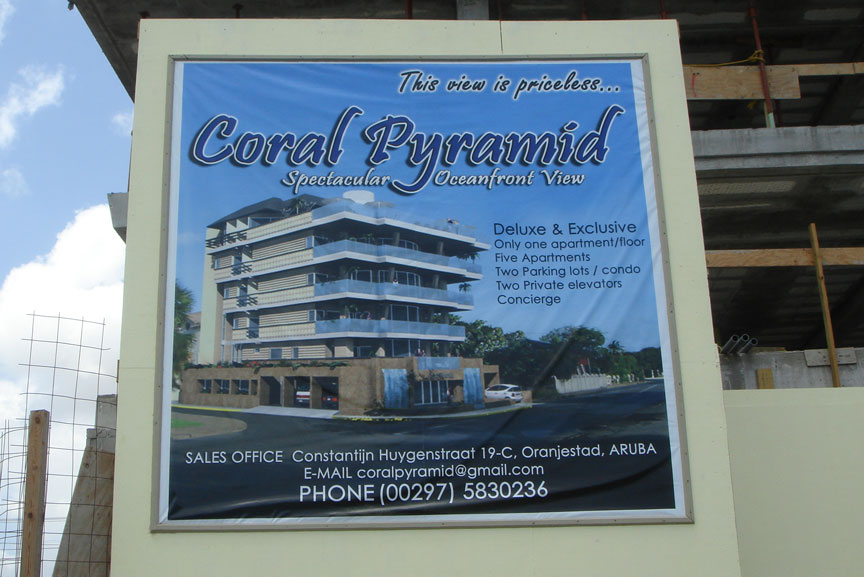
This post shows a modern apartment building that is under construction in Oranjestaad, Aruba. In other posts, I showed cunucu houses, ruins, and things of that nature. It’s only right to show something a bit out of the ordinary. This structure is built directly across the street from the Caribbean Sea. There isn’t really a beach there, but at some points you could clamber down to the water.

The sign above gives you an idea of the finished product. There is to be one apartment per floor, with parking at ground level, two spots per apartment. Some people don’t like this sort of thing cropping up on the island. They think it is out of character or too large. I don’t have no opinion with regards to that. Progress is inevitable. Without progress, you’ll have decline. It is impossible to remain in a constant state. Here’s a look at the conceptual drawings of each apartment.

One way or another, those five apartments will be occupied. The location isn’t bad. It’s on the far side of town in relation to the new shopping mall and many new restaurants. However, that may appeal to someone who wants to live there as opposed to vacation on the island. It is also more accessible to the airport, a benefit to a local business person with off-island dealings.

Whatever your preference, the good thing about Aruba is that there are plenty of options.

Published in: on August 19, 2008 at 10:28 am  Leave a Comment  
Tags: , , , , , , , ,

Rooi Koochi Residence, Aruba

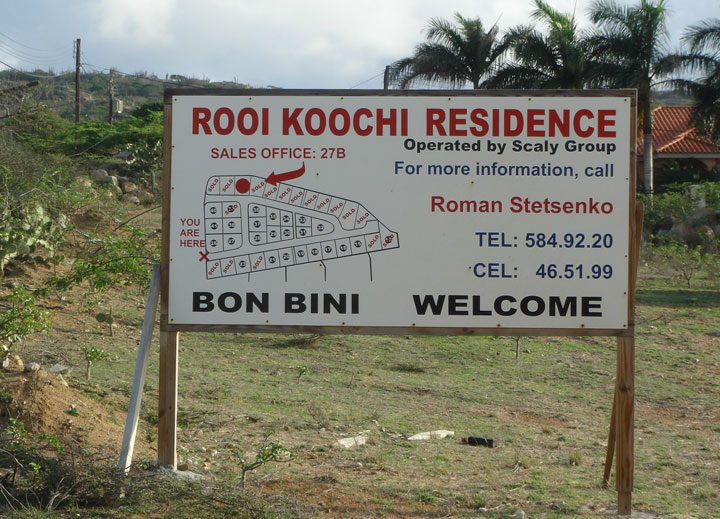
Some regular readers of this blog have asked me to photograph a housing development in Aruba that is more integrated with the island, as opposed to the large timeshare and condo projects. There is a small housing development called Rooi Koochi Residence, which is located about eight miles south of the airport, just past the town of Savaneta. This project is inland. However, from some of the homes on the upper side, it is possible to see down to the ocean.

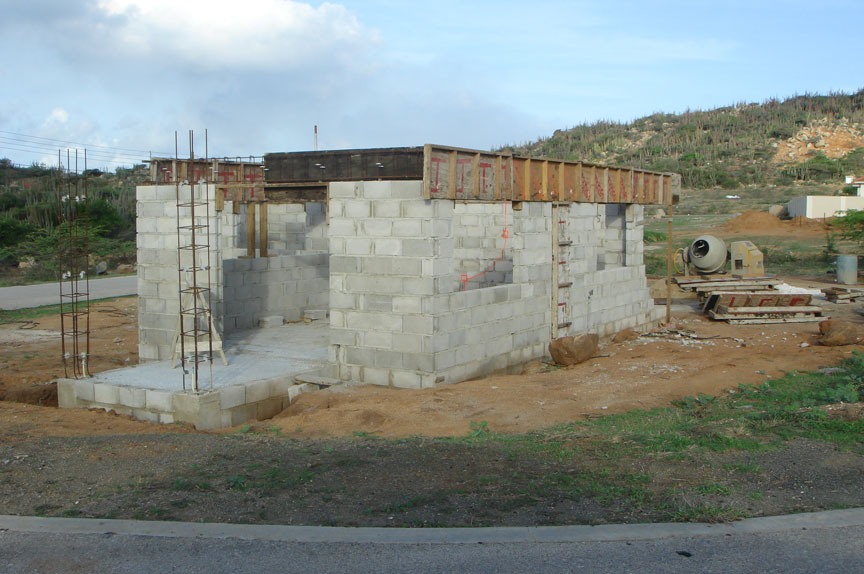
The homes that are being constructed here are of good quality, at least as far as I can tell. Here is a photo of one under construction.

They’re getting ready to pour the ring beam and the front columns that I mentioned in previous posts regarding construction. Let me say here, I do not know the developers of this project, nor do I have any ownership interest in it. I have simply photographed it and placed these pictures on the blog to show a project that I believe is not only typical, but of good quality. The homes along the upper ridge of this development have been there for at least 4 years that I know and are lived in by people who keep them in very good condition. Here’s a look at one of them.

And then, looking down the cross street, you’ll see a home that was only finished about six months ago and beyond it is the ocean.

Whatever your choice for housing in Aruba, always use qualified professionals to help. Talk to as many people as you can, ask every question you can think of, and don’t be afraid to keep looking for what you truly want. There are many nice homes in a wide range of prices. These days there are plenty of real estate agents, most all of them with good reputations. Take your time. Paradise will be here.

Desert Island Water

Aruba’s drinking water is produced by a desalinization plant co-located with the electricity plant in an area known as Balashi. Since Aruba is a desert island, this facility became a necessity once the population grew beyond a certain point. You’ll still see old Cunucu houses with a rooftop collection system that gathered rain water and stored it in a cistern. There are also a few brackish wells left, but used only for small scale irrigation. Thus, water is a precious resource in this environment, and metered and invoiced accordingly. The drinking water in Aruba is completely pure and delicious thanks to the way it is produced. There is absolutely no need to buy bottled drinking water here. That which comes from the tap is fine.

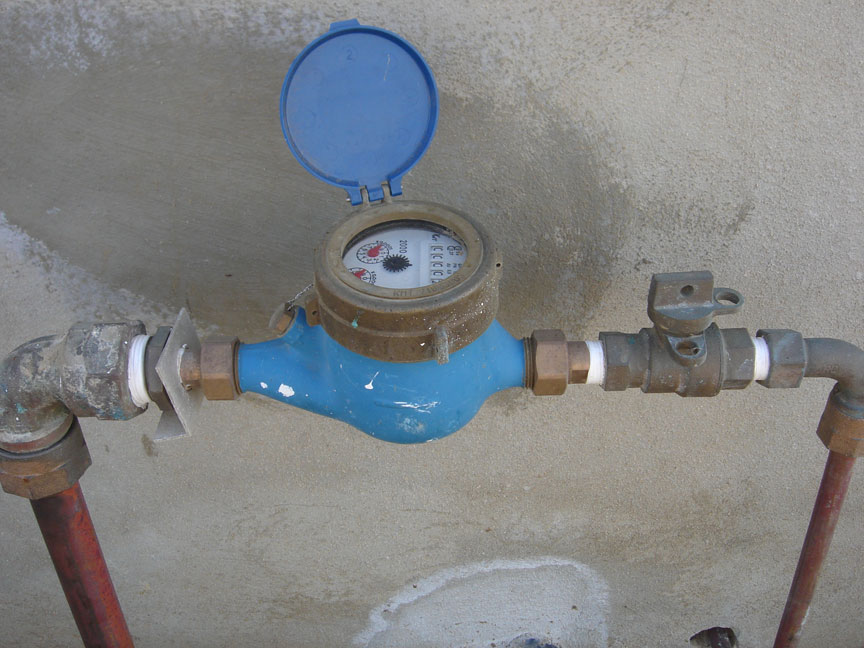
Here’s a photo of a domestic water meter, the one at my home.

Exciting stuff, eh? It can be if you’re not careful. Notice the valve located on the right side. It features a hasp-like function so that you can place a lock on it in the “closed” position. Whenever I leave the island, I lock this meter in the closed position. It’s not that I’m worried about someone stealing the water. It prevents an unexpected leak from spinning the meter for days on end until my pal checks the house or I return. This happened to another friend of mine and he was stuck with a water bill in excess of US$3,000.

So, a word to the wise. If you own a home in Aruba, or are considering it, don’t forget small but important things like this. Inspect the plumbing systems from the meter all the way to the drains and septic. It’s not thrilling stuff like the wind surfing, bar hopping, and shopping, but it will put a damper on your good times if you’re not careful.

Okay, in the next post we’ll take a look at the bathroom I rebuilt, which is a little more interesting than the old water meter.

Published in: on July 26, 2008 at 11:19 am  Leave a Comment  
Tags: , , , , , ,