Italica, Spain

Not far from Sevilla, Spain, are the ruins of the Roman city Italica. The site remains under excavation as there is plenty more to discover. It is an amazing place to visit, especially when you consider that this place was a long journey from Rome during the days of the Empire. In this first photo, you’ll see a piece of the amphitheater.
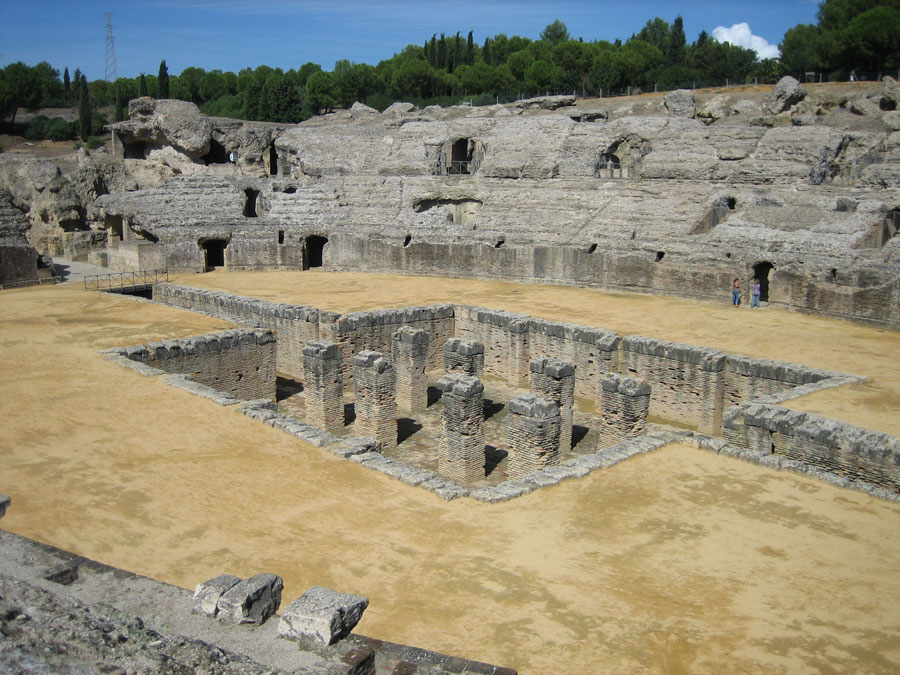
One thing I enjoyed about this site was the freedom to walk about the ruins. It is possible to get very close and thereby see the workmanship and wear of the structures. We walked along the main boulevard of the town, which like all things Roman was laid out in a grid. Villas were set back from this thoroughfare and divided into various neighborhoods. Here’s a view of some standing columns that were part of an important home featuring a central fountain.

I should also mention that this town had a properly functioning water supply and sewer system, two things that would be lost to history for centuries before being restored. Of course, the residents decorated everything, including the floors, like this:
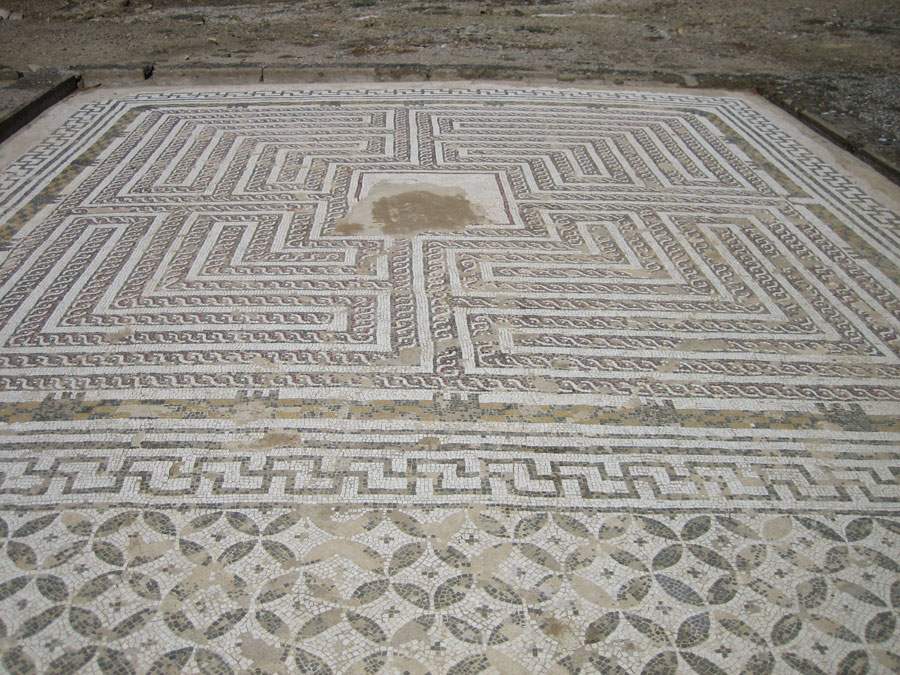
To think that mosaic was hidden beneath the dirt for a thousand years! Amazing. But it survived, as did many more like it. I highly recommend a visit to Italica. It’s only a short distance from Sevilla. There’s plenty of parking, clean bathroom facilities, and plenty to see and learn. It would also be a good idea to do some reading on the subject to get the most out of it. The map/brochure that is given to you as you enter is in multiple languages and very well done.

Finally, there is a little gas station a few hundred yards up the road from the entrance. There ICE-COLD Coca-Cola can be had. Refreshing, delicious, satisfying.

Published in: on August 3, 2008 at 1:34 pm  Leave a Comment  
Tags: , , , , , , , , , , ,

Ruins, Part 1

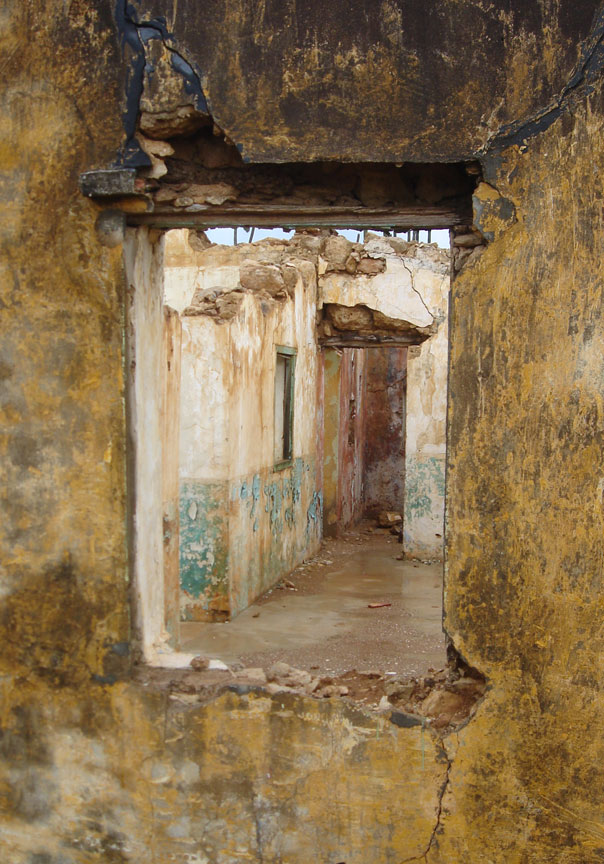
Ever wonder… what happened to the people who abandoned a house you’ve seen? Here in Aruba, I come across the ruins of old homes from time to time. Judging by the style of construction, they are at least 80 to 100 years old. And given the condition they’re in, they must have been forgotten for at least 30 years. Here is one particular example.

This old cunucu house has suffered it’s share of abuse. The roof is gone. The east wall is pitching outward. Even the wall of the cistern has a crumbling corner. Of course the windows have disappeared. But if you peek in, you’ll see remnants of life inside. Take a look through the wall.

There are shades of paint on those walls. The lower portion featured a different color than the upper, indicating someone had a sense of style. Further on, in the distance is yet another color. Seeing these details leaves me wondering what happened to the people who lived here. They invested their lives into this house, chose the colors, ate their meals, slept under its roof. And yet, at some point, they left, never to return, never to leave the place in care of someone else.

It’s easy to think that hard times befell the former residents, or perhaps a tragedy. However, it’s also possible they inherited a fortune and left for some grand residence in another part of the world. Or, maybe they found somewhere new to live, one which provided them with so much more that their beginnings became irrelevant.

Either way, it is fascinating to think that someone would simply walk away from a perfectly serviceable dwelling, leaving the elements of nature to ultimately reclaim it. I have more photos like this and a few stories to tell about them. Keep checking for updates.

Published in: on July 29, 2008 at 12:06 pm  Comments (4)  
Tags: , , , , , , , , , ,

What A Letter!

Here is a photo of a framed letter that hangs in Charlie’s Bar, San Nicolaas, Aruba. This letter is one of the most amazing documents I’ve seen over the years. Tells you just how memorable a place can be. Enlarge the photo by clicking on it, and discover what this man has to say.

Imagine being a sixteen-year-old merchant mariner, ending up in a place like Aruba several times during wartime. Amazing. This is the stuff great stories are made of and is one of the reasons why I like San Nicolaas, specifically, and Aruba in general. It is a crossroads. A small place, but also an important one at times, as it was in the Second World War.

And the weather is pretty nice, too.

Published in: on July 25, 2008 at 10:58 am  Comments (1)  
Tags: , , , , , , , , ,

Spanish Tile

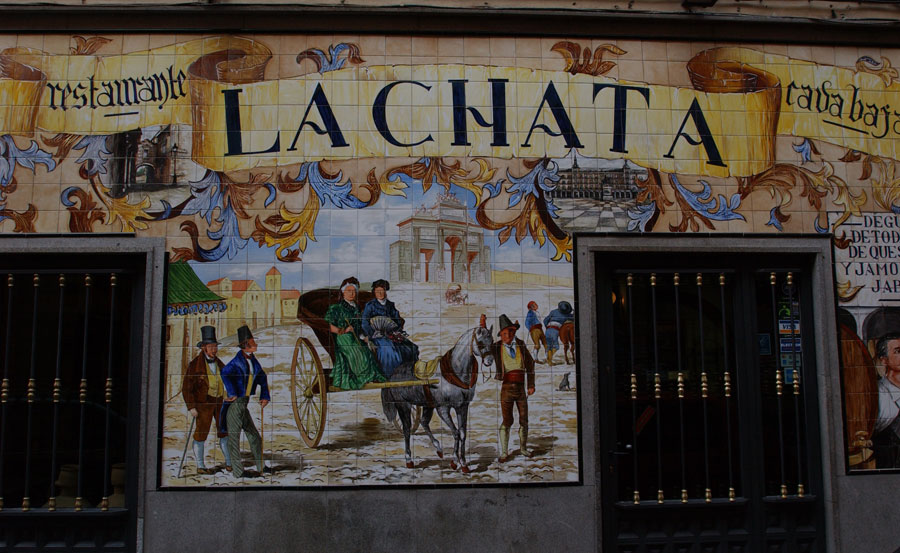
The name of this post should really be Spanish Tile, Part 1. There are so many fantastic examples of Spanish tile both in Spain and around the world that someone could easily earn a doctorate in the subject. I pulled a few examples from my photos taken within the country, basically representative examples of a few of the most traditional forms. Let’s start with this one, the mural at a restaurant.

I like the picture of the travelers on the little coach with the two guys following. Just out of the frame is another explanation about the place, in case the image doesn’t do the job. Murals like this are all over Spain. They liven up the street without the garishness of neon signs. Let’s take a look at another one.

Here you have a much more impressionistic piece of tile work. The glamour lady invites you in from the street. Subtle. Nice. And not bad advertising either. A more traditional front might look like the following:

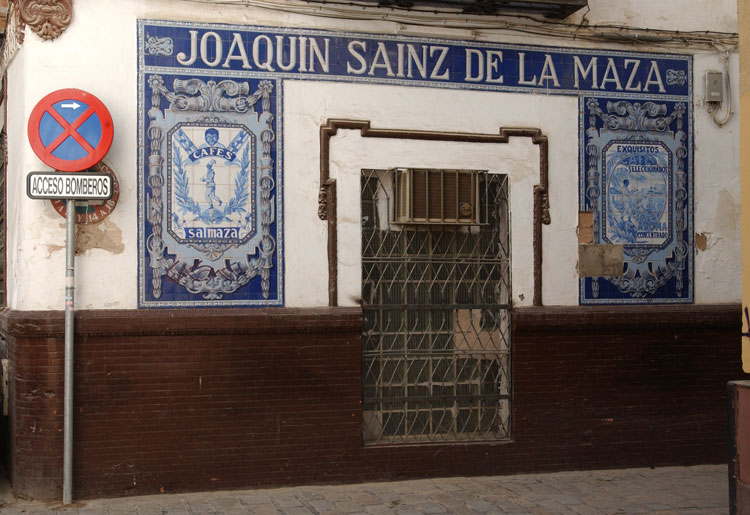
The place above is looking a little worse for the wear. A few tiles are missing but the name lives on above the door. The monochrome scheme works well, though, and I would venture to say the person who created those tiles did quite a bit of work back in the day.

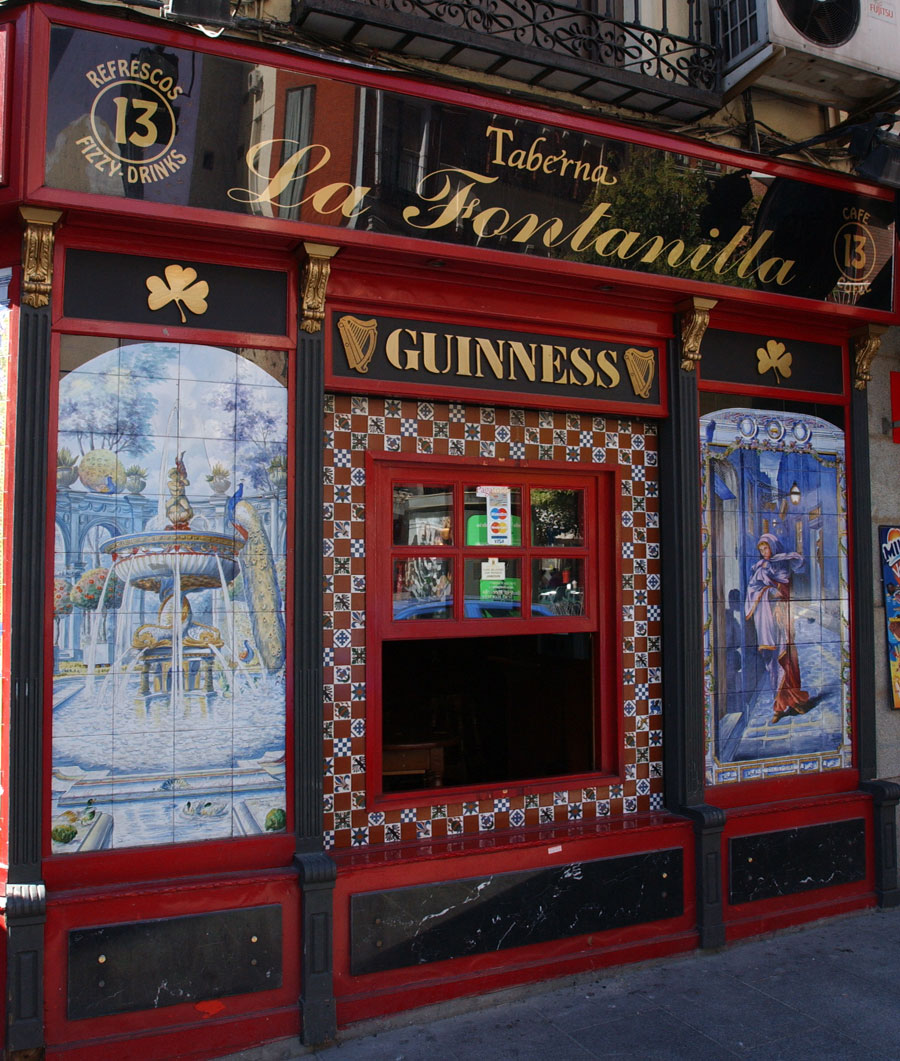
To my surprise, I found numerous Irish Pubs in Spain. This place, La Fontanilla, may use the term “taberna” but they aren’t shy about announcing the fact that Guinness is served inside. The fountain mural on the left is quite clear as to meaning. The woman on the right, is a bit confusing to me. Are they suggesting there are rooms to rent for weary women travelers? I’m not sure. Sometimes, you’ll see famous works of art recreated in tiles like this. I’ve seen works by el Greco, Picasso, and others recreated in tile and mounted on the outside of buildings in various places around Spain.

This is one of the great things about visiting Spain. There are millions of little discoveries like this, things that make the country eternally interesting and beautiful.

Published in: on July 17, 2008 at 11:23 am  Leave a Comment  
Tags: , , , , , , , ,