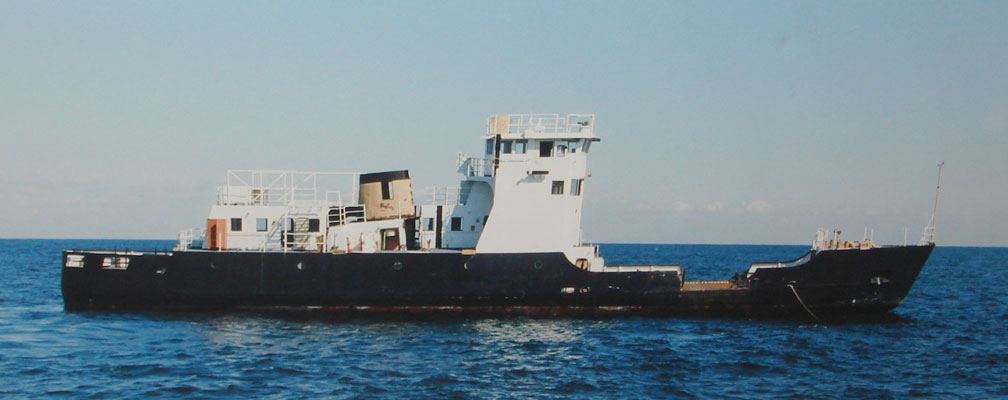
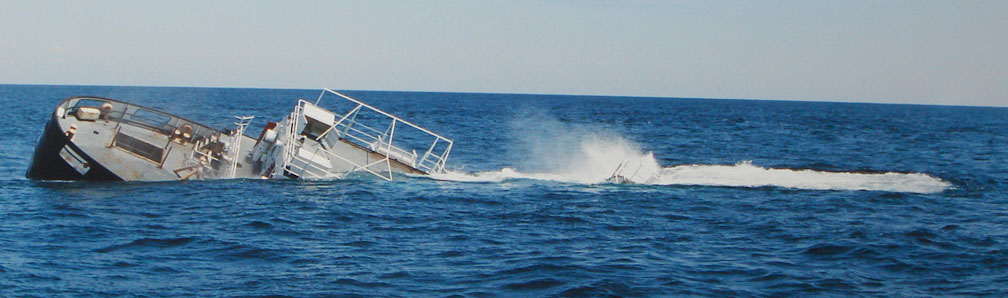
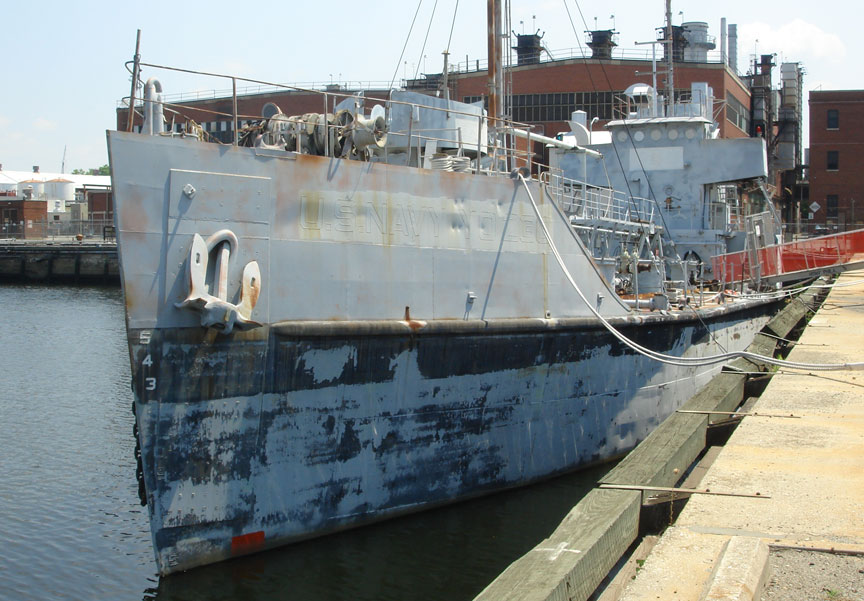
For the ships in the back basin at what remains of the Philadelphia Navy Yard, the days are numbered. These vessels are on the inactive list and subject to sale, scrapping, or another fate, that of an artificial reef. Before I became a novelist full time, I used to sink ships to build artificial reefs. Yes, it’s a long story from there to here. Anyway, I sank several small tankers like the one pictured below.

This little tanker is what the navy used to call a “yard oiler.” It carried fuel of various types to top off ships or other floating equipment. They were mostly built in 1944 and saw limited service until the end of World War II. In the end, they landed in places like this, moving no further than up and down with the tide. I sank three of these off the coast of New Jersey. They became great dive and fishing sites. However, it was a sad sight, watching them sink. Anyone who has lived and worked aboard a sea-going vessel knows that you become attached to your boat. You learn its foibles, the noises it makes, the noises it doesn’t make, and just where you fit in among its bulkheads. Thus, when you know all hope is lost and it’s destined for the bottom, you can’t help but feel a sadness others might not appreciate. Imagine your house, your job, your car, and all the times you’ve spent there, everything… disappearing in a matter of minutes, never to be seen again, except by the fish and the occasional scuba diver. There’s no rebuilding, as in the case of a hurricane or a tornado that knocked your house down. This was your boat, the specific one you knew. Gone.
Nonetheless, the fish need houses, too, and if the vessel is destined for nothing better than the scrappers, better it finds a home among the creatures of the sea.
And here is the demise of an old yard oiler, off the coast of Manasquan Inlet, New Jersey, USA. The first photo below shows the ship at anchor. I’ve just opened a series of valves and removed plates in the hull to let water in.
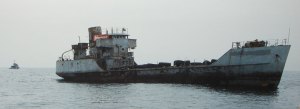
A local beer distributer helped pay for the cost of sinking this ship. Thus, the Budweiser sign. In the next photo the ship is well on its way to the bottom.

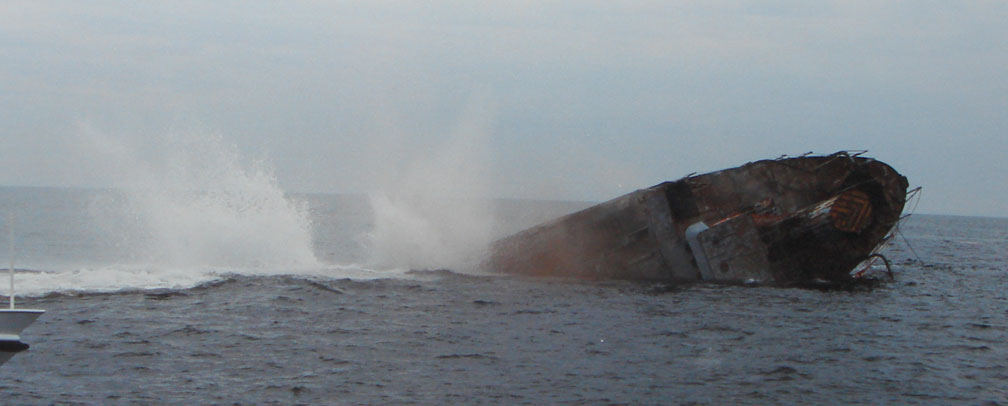
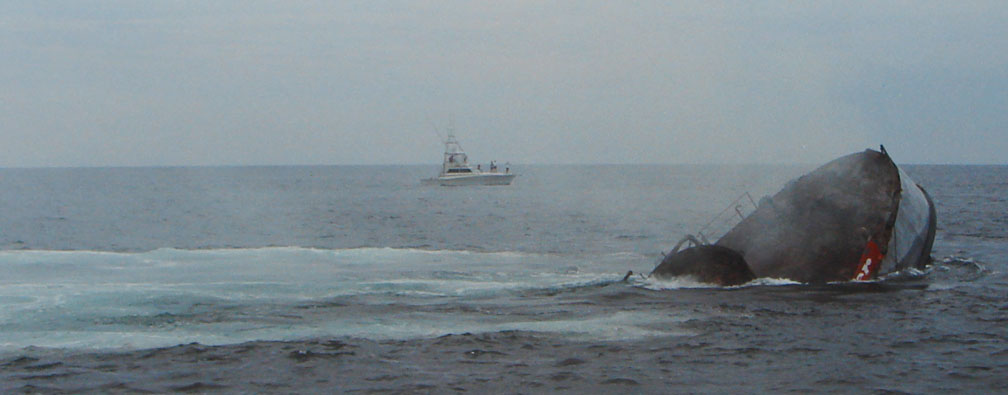
It rolled to the port side and took a nose dive toward Davy Jones’ locker. Finally, it’s all but under the surface, belching air as water finds its way into every space.
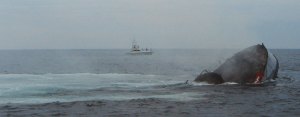
In the back of the last photo, you can see a fishing boat. Once the ship settled onto the bottom, he cruised over, logging the exact position on his GPS so that he can come back and reap the benefit. The States of New Jersey and Delaware promote reef construction as much as possible. It helps the environment and provides a renewable fishing resource for sport fisherman. These wrecks last about fifty to eighty years.
Still, it’s sad to put a good ship down. I’ll post one more separately, a former US Coast Guard buoy tender named the Red Oak.



 The Bent Page
You must be logged in to post a comment.