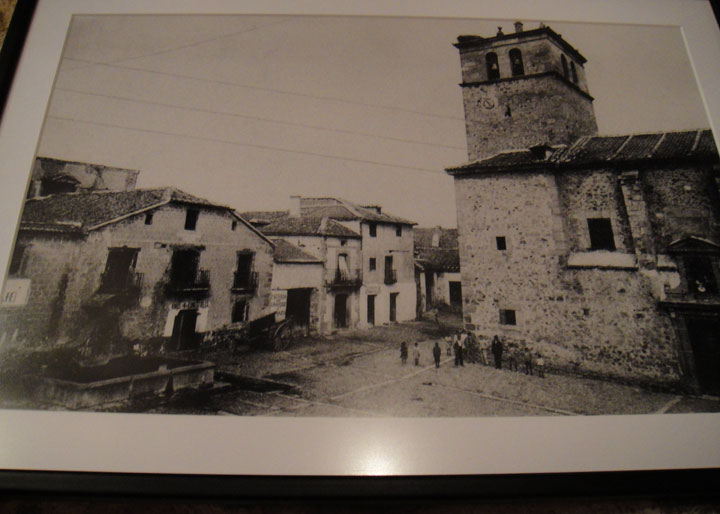
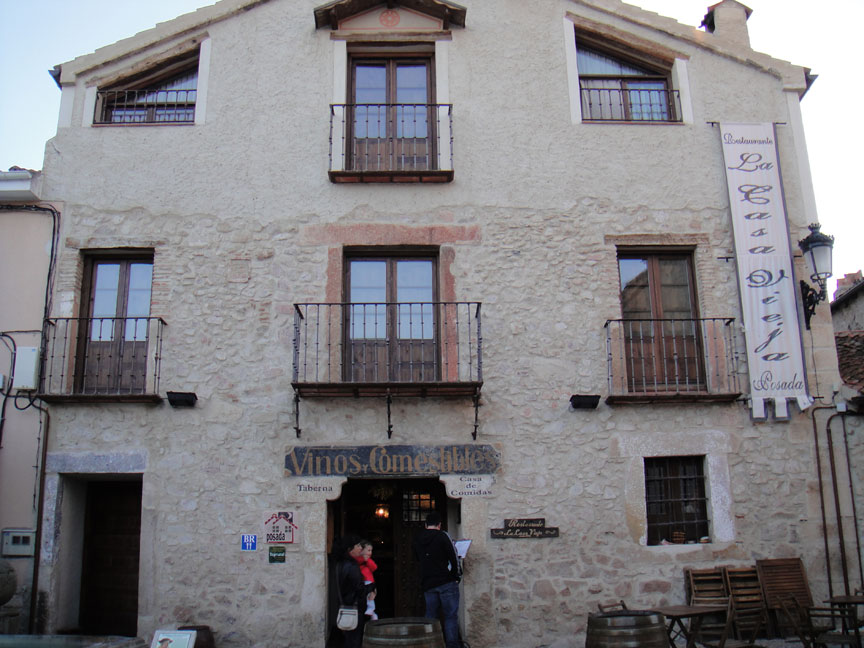
Posada Casa Vieja, located in Turégano (not far from Segovia) stands on an old village square that will take you back centuries. The photo below hangs on the wall in the dining room, along with several others taken during the early days of photography through the 1920’s or so.
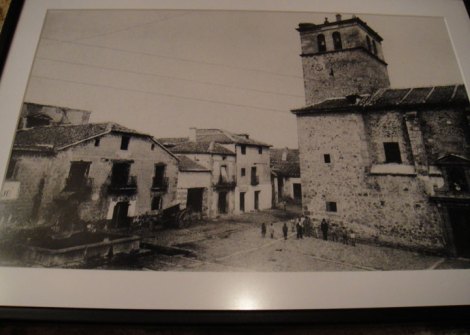 The posada itself is the building on the left with the three balconied windows on the upper level. Not much has changed in the past couple of hundred years as you can see from the next photo.
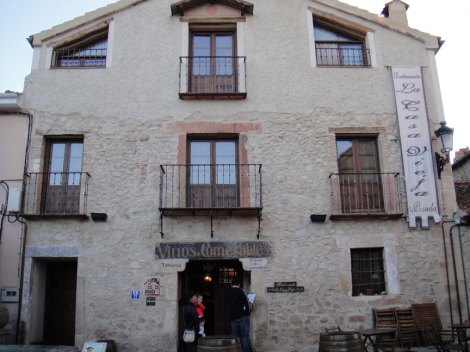 We happened upon this place in search of a good supper. (Sadly, supper the night before was awful and I needed culinary redemption to preserve my faith in Spanish cooking.) I saw local families loitering near this place and decided to pop in and see what was on offer. Upon entering the building you’re in the taberna, which is a welcoming spot for drinks and small fare.
 The fellow behind the bar is the owner (third generation at this point) and he works hard keeping his customers happy, as does his waitstaff who left no need unfulfilled. So, we take a seat in the dining room where those photos are hanging.
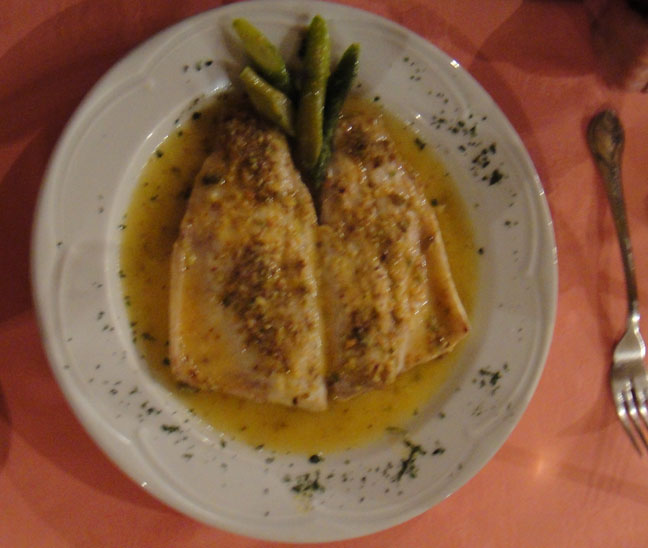
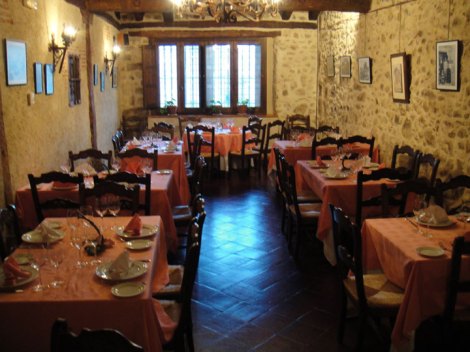 After ordering, I scope out the photos which show village life back in the day in black and white glory. Things were not easy back then but the people have risen to the challenge. Then the food arrives. After a couple of salads, a sea bass filet comes.
 Sorry about the shaky photography. There was wine, too. Then a bit or roast baby pig.
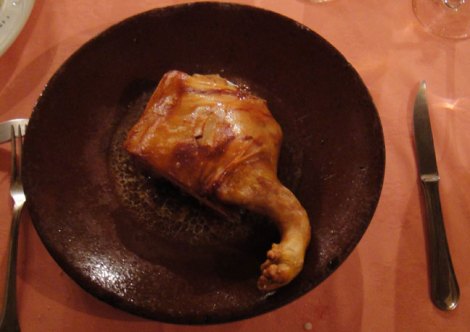 That dish is famous in this part of Spain. Don’t pass it up. Tasty, crispy, very good! After the meal, I learned my waitress was originally from Poland but now living in Spain with her husband and baby on the way. The owner and I also had a nice chat about my other favorite restaurant in Aruba, Casa Vieja, which is a Colombian joint. He laughed at that and my rudimentary Spanish. Then we were on our way for a good night’s sleep before trekking on through the hills and dales of España the next day.
 There are authentic pieces mixed with newer versions. And here are the real coins of realm.
 And a few more just for contrast.
 That was real money, plunked down for goods and services when the Western Hemisphere was not yet known by Europeans. Roman ruins, gothic cathedrals, modern art, great food, just a few of the many reasons I enjoy visiting Spain.






 The Bent Page
You must be logged in to post a comment.