Beginning at the End

I keep a collection of short stories titled, A Rusting Sea. These were born (many years back) out of my frustration with not finishing a novel. I thought I would be satisfied creatively by completing a shorter work, sitting back, and thinking, “Well, there it is, the whole thing.” This worked for about six months, during which time I wrote eight stories varying in length from about 10 to 80 pages. Strangely enough, the ending of each story came to me first. I had the end in mind, then tripped back to the beginning and plotted a course to that destination.

Thus, Captain Quincy’s Near Death Experience (which was the second one I wrote) comes to mind just now because I’m here on the island of Aruba. Captain Quincy, a lifelong mariner, decides he’s had enough of retirement and wants to depart this earth before he becomes a decrepit old codger. He spends a couple of days doling out his considerable wealth and through this convention you learn the history of his life. Of course, his cat distracts him throughout this process, ultimately causing Quincy to head back to sea one more time. And here’s how the story ends…
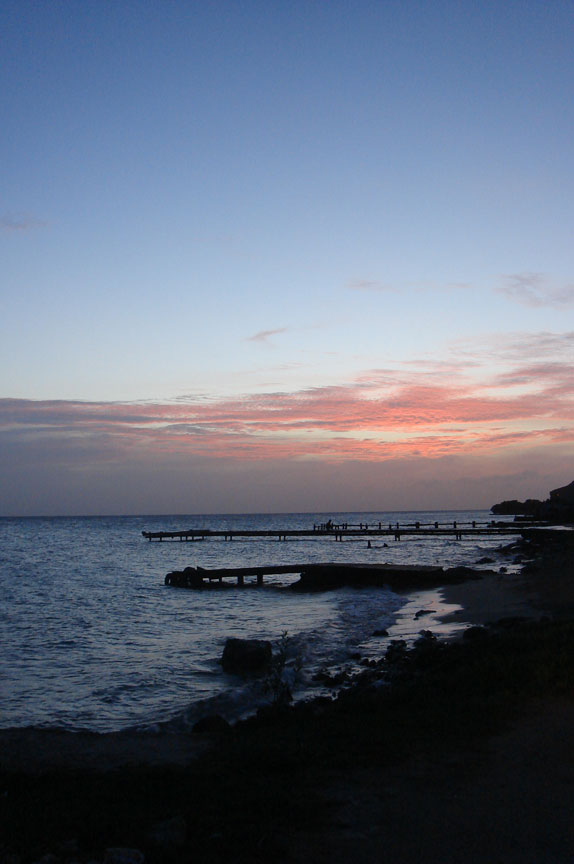
…So Captain Quincy and his cat, Gimlet, hustled down the track on their way to the port.

Attorney Mickleson, that is the son of the Mickleson who defended Quincy in the Turkish courts, found Captain Quincy’s letters and log books on the desk where they had been left. This was some months later, after Mickleson tried more than thirty different times to reach the captain. He went to the house with a police escort to open the door. The door was not locked, and nothing in the house was disturbed. Nothing indicated foul play. The police determined Captain Quincy had gone missing of his own accord despite the odd circumstances. Mickleson sent the letters off to their intended recipients and used the remaining money to maintain Quincy’s home in the off chance he returned.

No one heard from Quincy again. No one claims to know what happened to him. Mickleson ultimately settled the estate, took a reasonable fee, and contributed the balance to a range of charities.

However, on the island of Aruba, in the village of Saveneta, fitted tightly in the dirt beneath a Divi tree, stands a small headstone. The stone reads, “Gimlet,” and beneath the name, “A small world, big enough for me.”

END.

IT WAS that last paragraph that came to me one day while I was looking out the window of a rental bungalow here in Aruba. The rest of the story came later. Would you like to read the rest? Let me know.

Published in: on July 30, 2008 at 12:13 pm  Comments (1)  
Tags: , , , , , , , , , ,

Ruins, Part 1

Ever wonder… what happened to the people who abandoned a house you’ve seen? Here in Aruba, I come across the ruins of old homes from time to time. Judging by the style of construction, they are at least 80 to 100 years old. And given the condition they’re in, they must have been forgotten for at least 30 years. Here is one particular example.

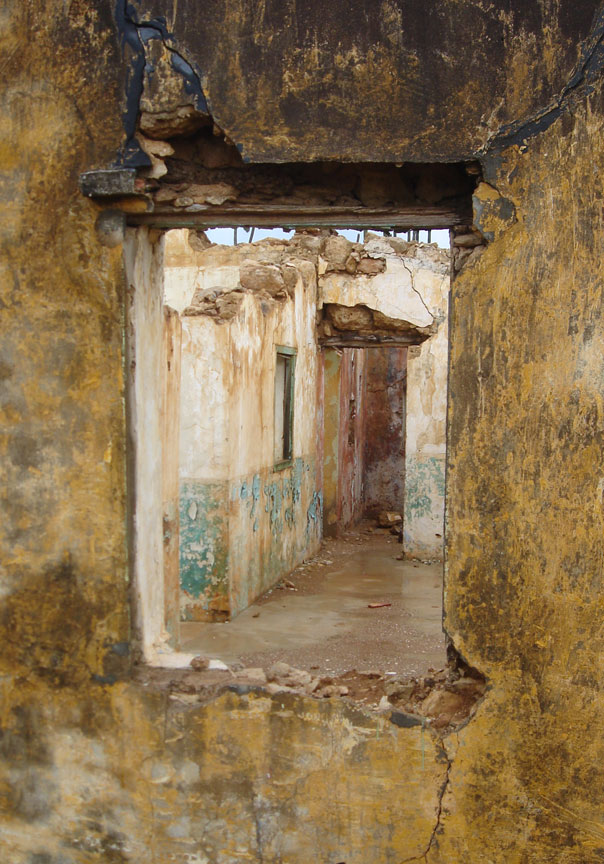
This old cunucu house has suffered it’s share of abuse. The roof is gone. The east wall is pitching outward. Even the wall of the cistern has a crumbling corner. Of course the windows have disappeared. But if you peek in, you’ll see remnants of life inside. Take a look through the wall.

There are shades of paint on those walls. The lower portion featured a different color than the upper, indicating someone had a sense of style. Further on, in the distance is yet another color. Seeing these details leaves me wondering what happened to the people who lived here. They invested their lives into this house, chose the colors, ate their meals, slept under its roof. And yet, at some point, they left, never to return, never to leave the place in care of someone else.

It’s easy to think that hard times befell the former residents, or perhaps a tragedy. However, it’s also possible they inherited a fortune and left for some grand residence in another part of the world. Or, maybe they found somewhere new to live, one which provided them with so much more that their beginnings became irrelevant.

Either way, it is fascinating to think that someone would simply walk away from a perfectly serviceable dwelling, leaving the elements of nature to ultimately reclaim it. I have more photos like this and a few stories to tell about them. Keep checking for updates.

Published in: on July 29, 2008 at 12:06 pm  Comments (4)  
Tags: , , , , , , , , , ,

Renaissance Hotel, Aruba

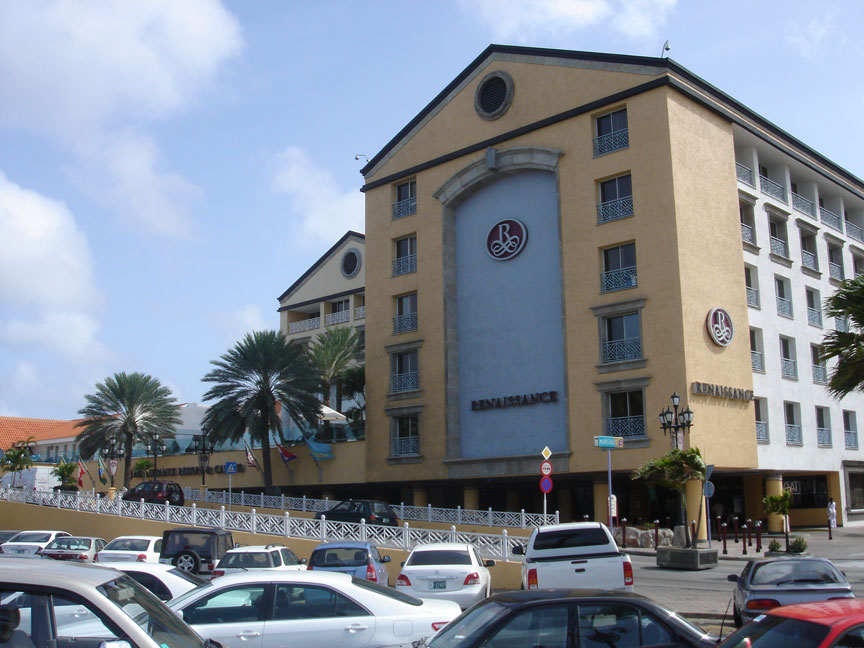
In previous posts, we looked at a high-rise on Palm Beach, a low-rise on Eagle Beach, and now we’re going to have a glimpse of the Renaissance Hotel, which is located in downtown Oranjestaad, Aruba. The hotel fronts the main road which runs the length of the island.

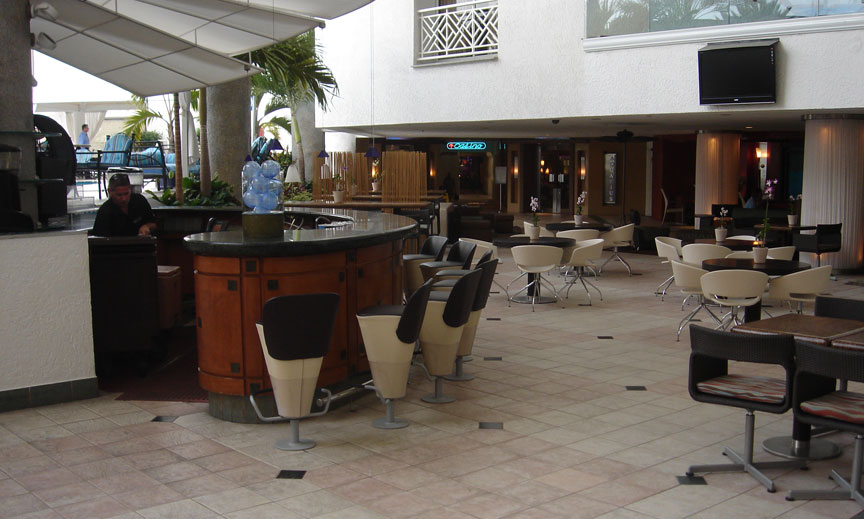
On the opposite side of the road is a handsome marina where you can charter a fishing boat or go on a submarine ride to see the undersea life up close. I’ll show that in a separate post on those subjects. Here is the bar and lobby area.

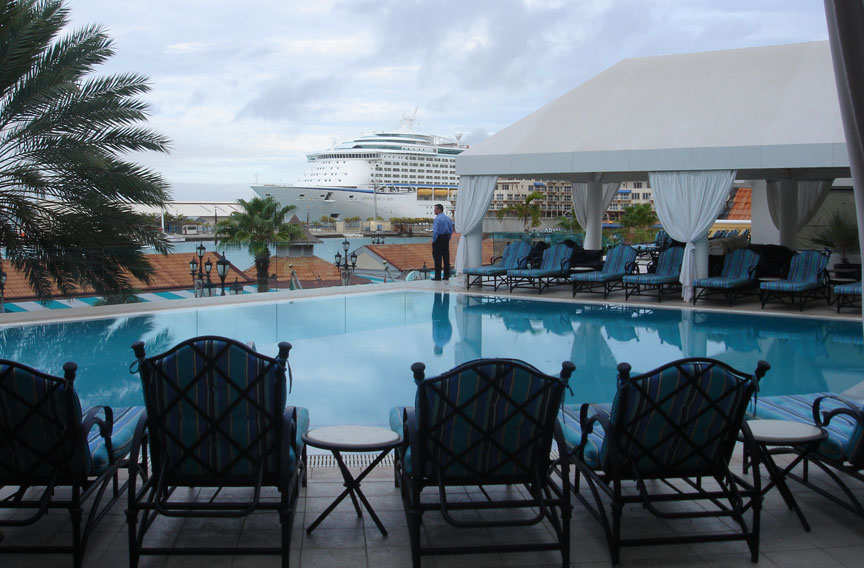
I should note here that this area is a full level above the street. When you take a few steps up from here, you’ll come to the pool which has a spectacular view of the marina, out to sea, as well as the street below. Have a look for yourself.

That fellow over there is standing at a glass wall so don’t worry. No doubt he’s having a gander at the Adventure of the Seas in the distance. At night, this is a great place to watch the coming and going of both the cruise and cargo ships. This pool is very nice and worth a second photo.

The tent in the rear of the shot is used for events such as weddings, retirement parties, and so forth.

So, now I’ve posted about the various types of hotels that can be found in this part of the island. I’ll be adding some more, names you may recognize from the international brands as well as one-of-a-kind establishments. As this blog continues to grow, I’ll also add guest houses, and small joints where I used to stay before I had a house here. Hopefully, you’ll get an idea of the variety and quality that can be had here in Aruba.

Published in: on July 22, 2008 at 12:27 pm  Leave a Comment  
Tags: , , , , , , ,

Cunucu Houses, Part 2

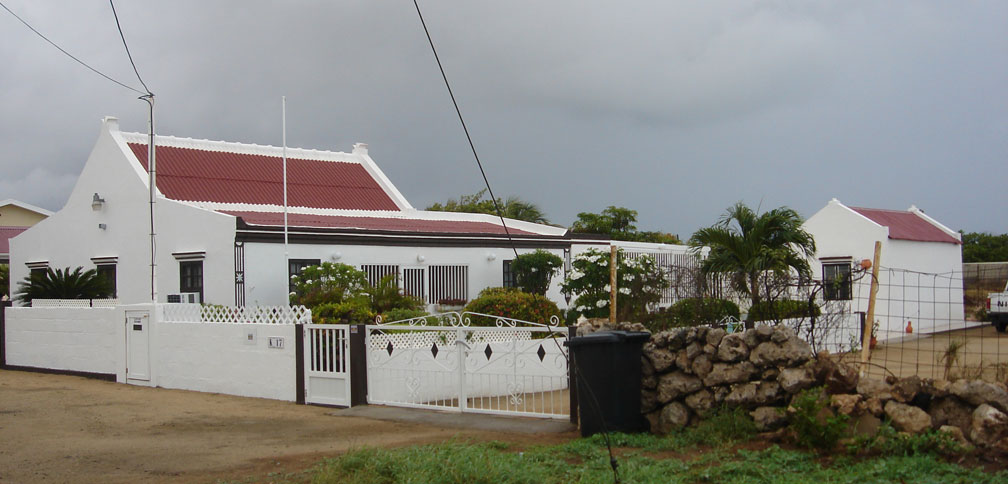
Continuing with my photo essay of Cunucu houses on the island of Aruba, let’s take a look at a few more examples. This first one has some creative designs set in the walls.

May not be your favorite but you have to give them credit for being creative. Notice how these houses are sort of “low slung” in that the doorways and windows are set lower to the ground. This gives a clue to how old they are, probably at least 70 to 80 years. This next example shows how outbuildings become part of a homestead complex.

There is the driveway, the main house, the outlaw suite in back and a budding stone wall on the right. Nice progression here. A more compact version can be seen in this next photo.

The buildings remain connected. Then there is this one, which shows how the kitchen is kept as far from the living area as possible. I mentioned that in an earlier post and here’s a classic example.

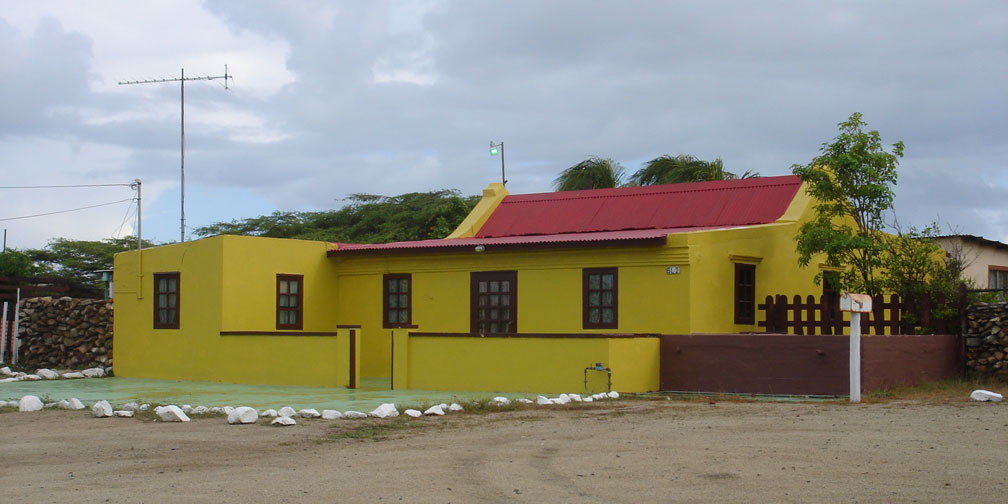
The chimney sticking up on the right is a sure sign of where the cooking is done. Then there’s this one, which happens to be fore sale, if you’re in the market.

They do like their colors in Aruba. I’ll be doing a photo essay on the colors of Aruba in a few weeks when I compile all the photos. There will also be more houses, including modern Cunucu houses which contain many of the elements we’ve seen in these photos. Before signing off, check out the detail along the corners of this last home. Many of the houses have geometric or animal designs formed into the concrete which is an added feature to distinguish one from the other.

Stay tuned for more.

Published in: on July 18, 2008 at 9:16 pm  Leave a Comment  
Tags: , , , , , ,