Harry the Iguana lives at the Paradera Park Apartments, located as you would expect in the Paradera neighborhood on the island of Aruba. Debby de Weerd, the manager at PPA took this photo of him.
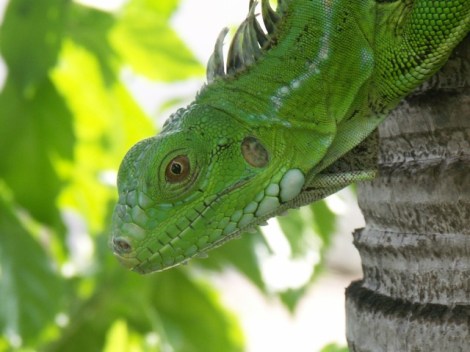 Brilliant photograph of Harry, eh? There are tons of Iguanas on this island, most of them not very large. However, from time to time, you come across one that is three feet long. Just one of the many types of wildlife, like those owls I posted about a while ago, that can be found here.
More important, if you’re looking for a different place to stay for your island retreat, give the Paradera Park Apartments a try. They are located inland, away from the crowds of the high-rise area. Yet, the beaches, restaurants, and sights are only a short drive away. The rates are more reasonable, which allows for a longer stay on the same budget. Furthermore, you’ll meet interesting people who like to get off the beaten path, explore, and experience a culture from the inside out. This year, I had the good fortune of meeting Judith, who introduced me to her friend Will, and so on and so on and so on. This is an aspect of Aruba that makes it the cross-cultural mecca that it is, thanks to places like the Paradera Park Apartments.
So, if you see Harry, say, “Bon dia,” and if you’d like check out the Paradera Park Apartments, give this link a try: http://www.paraderapark-aruba.com/. It’s a good place to start your travel planning.
Bon dia from Aruba.

 The man in the foreground is working on a submarine at the Electric Boat Works in Connecticut during World War II. Here are some statistics that should perk you up: During the Second World War, American workers built 5,777 merchant ships, 1,556 naval vessels, and 299,293 aircraft. This was accomplished without computers, without cellphones, and by people who for the most part had not finished high school.
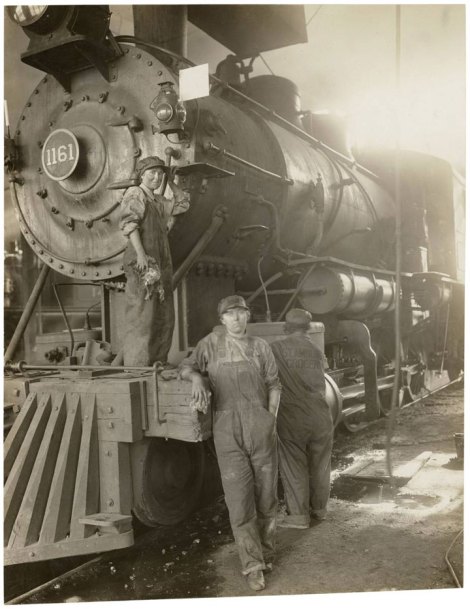 According to the National Archives, these women are working on this steam locomotive somewhere in Montana, circa 1919. Now, certainly Montana and the year 1919 were not the easiest of places and times. Forget socio-economic conditions, just imagine working against the natural environment and those beasts affectionately known as steam locomotives. Some of the tools used to repair and maintain this equipment were larger than the arms and legs on these women and they were made of steel. Thus, it must have taken two or three women to perform these jobs. And yet, they got the job done, and made the Nation a better place for their children in doing so. Today’s locomotive shops sport hydraulic lifts, computer diagnostic tools, and climate control, not to mention an array of safety measures designed specifically to protect life and limb. The women above had to persevere without such niceties.
 That look on his face tells us all we need to know. Mr. Hammer does not like to be disturbed, and who can blame him? He’s got the run of the Savaneta neighborhood. There’s plenty of places for him to stretch out in the sun. Lots of lizards and other small creatures to chase (and dare I say, feast upon?). Plus, he lives on the other side of the wall, in a place all his own. He won’t let you get close without a hiss or growl, so it’s best to leave him to his own devices and move on. I think he’s forgotten that he lives on One Happy Island.
 The Bent Page
You must be logged in to post a comment.