Local Lunch, Spain

Several posts ago, I mentioned the usual fare I enjoyed while traveling through Spain. You might also remember my post about the town of Biar, where I had a good hike. Well, I also met a couple of cats and ate a tasty lunch. Dead center in the middle of that town is a hostal type of place with a bar/restaurant downstairs. From your table you look out at the town plaza which is complete with church and fountain. We entered here looking for a bite to eat and the bartender made some good recommendations. Take a look.

On the left above you have a puff pasty with carmelized onions and mushrooms. Light and delicious that was. On the right, you have pork medallions in a heavy sauce with red peppercorns. Filling and powerful. The bartender was spot on with his suggestions and I thank him publicly for them. And here’s a view of the place.

Just what you’d expect to find in small town Spain. Too bad I can’t remember the name. No worries. It’s easy enough to find.

Published in: on June 22, 2010 at 10:17 am  Leave a Comment  
Tags: , , , , , ,

Coca Castle, Spain

Coca Castle stands out from the other castles I saw during this visit to Spain because it is made almost entirely of brick. The others were cut stone. Coca, however, towers above the town and surrounding plain, showing its red brick to all comers. Currently there is a forestry school located within the castle, putting it to good use now that its military purpose is obsolete. You’ll also find artifacts at various locations as you pass through the interior of the structure. Have a look at the video.

Those dry moats are imposing, aren’t they? The town of Coca is adjacent to the castle. Here you’ll find an opportunity for some light refreshment before continuing your journey.

Published in: on June 21, 2010 at 2:09 am  Leave a Comment  
Tags: , , , , , ,

Alcazar de la Reina

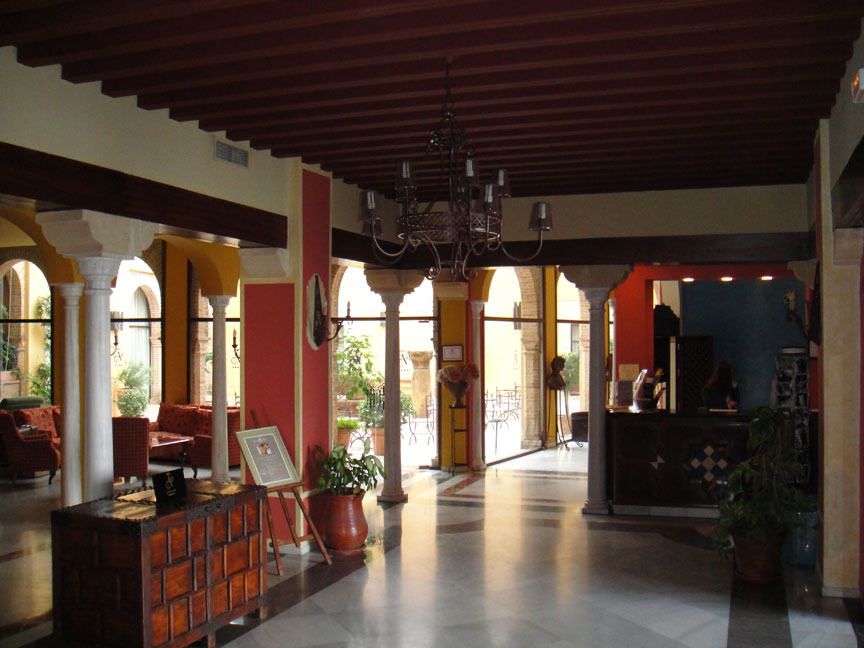
Hotel Alcazar de la Reina is located in Carmona, Spain. This sprawling facility abounds in common areas which make it a strong candidate for wedding parties, reunions, or family outings. From the moment you enter the lobby you’ll notice the open spaces as you can see here.
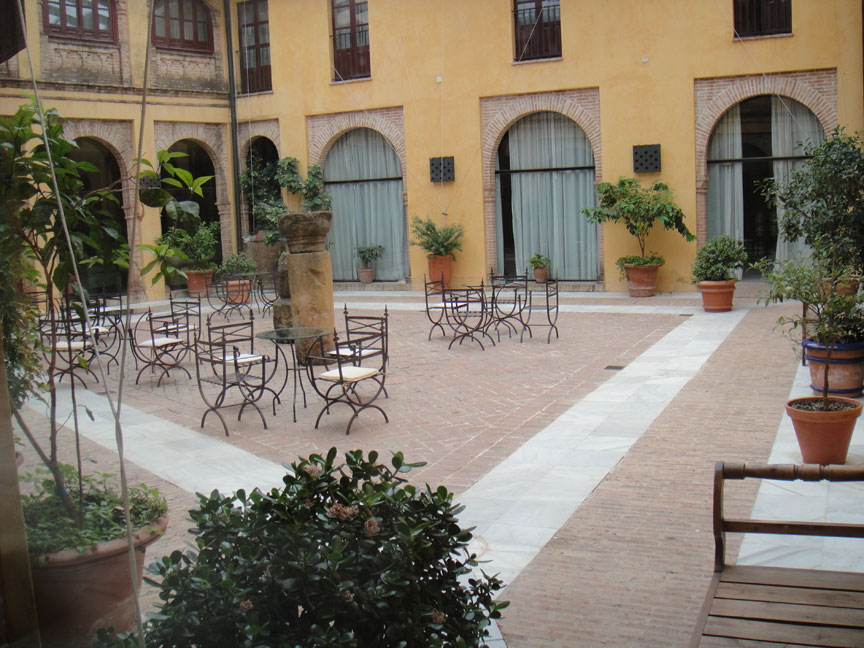
The interior areas are separated from the exterior ones by columns and glass walls, which accentuates the largeness. There is a patio, seen here:
And a large swimming pool only a few steps away.
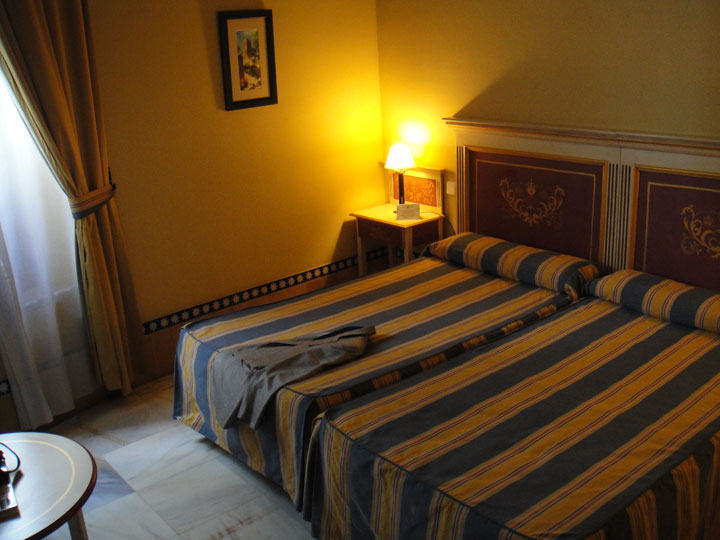
Both of these were transformed for weddings while we were there. Lots of work but also spectacular results. You’ll find the rooms comfortable with the usual fittings as you would expect in a place at this price point.
I appreciated the desk and fridge because I needed to do some work on the netbook and prefer my Coca-Cola ice-cold.
Another plus for Alcazar de la Reina is the underground parking garage. Be warned, only a smaller car will fit in the spaces, but that’s typically what you’ll be driving. There is also outdoor parking directly across the street from the main entrance. Service here is a bit formal from what I’m used to, but very consistent with this type of establishment. And let’s not forget the onsite restaurant and Irish pub. More on that in another post.

Medieval Methods, Construction

This photo essay takes a look at some medieval construction methods that I noted in Spain. These methods are still used in various places, at least in terms of post and beam methodology. For example, take a look at the first photo here.

You see the timbers running horizontally and vertically, forming a framework which is then filled in with brick and/or plaster. I would guess that initially it was more like woven areas of lighter wood plastered inside and out. The brick is much heavier, although so long as it starts from the bottom up, can be as solid as anything else, as seen in the next photo of a building on the corner.

Actually, what remains of the building. In this part of town, people were busy restoring these buildings. I suspect some might not make it as they looked rather unsturdy. One fellow went the distance as you can see here.

Turned out a rather nice place to stay, didn’t he?
There’s more to sightseeing than museums and monuments. Things like those shown above are a sort of living history. The marks on those timbers were left by craftsmen hundreds of years ago. Best of all you can get up close to gain a better understanding of how things were and might be again. Furthermore, if you get there at the right time, you might be able to speak with people who still know how to do things that way. First hand knowledge is always the most reliable. Fascinating, too.

Published in: on June 19, 2010 at 11:21 pm  Leave a Comment  
Tags: , , , , ,