From the start of this post, let me ask for forgiveness from my Spanish speaking friends. I don’t remember the correct terminology for the food I enjoyed in Spain. Thus, I’ll use English words and let the pictures show the dishes.
In general, I found the usual fare to be usually good. That is to say regular meals, nothing fancy or expensive, were generally tasty and well presented. For example, at the Molino de Santillan, where we stayed for a night, we ordered supper from the menu of the day. For appetizers we started with a field green salad as seen in the next photo.

Note the vivid freshness of the contents above. The other appetizer is a pair of fried eggs with fried bread crumbs. This was unusual for me as I normally eat eggs for breakfast. The flavor couldn’t be beat because they used sausage or something mixed in with the breadcrumbs for extra flavor. Take a look.
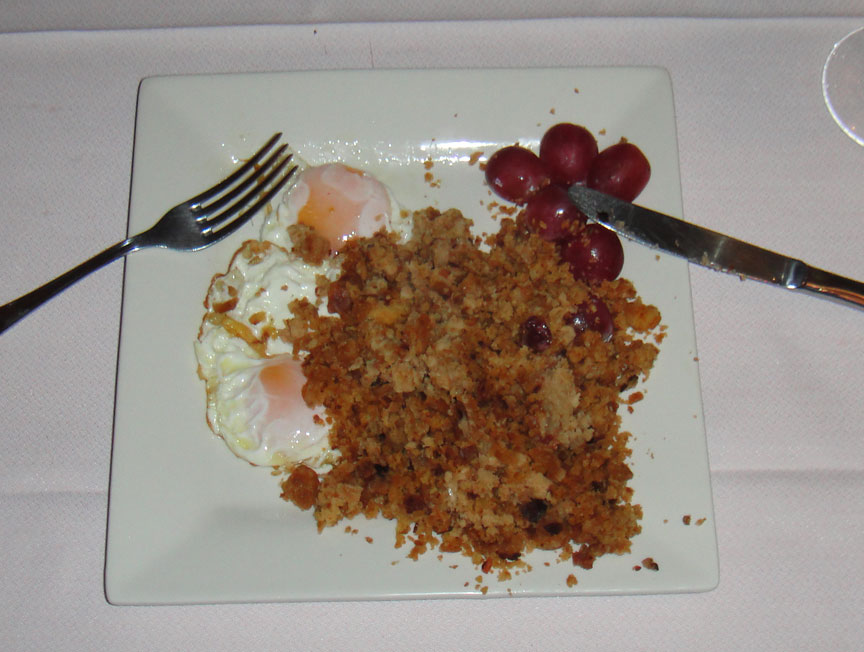
Those grapes were a nice touch, too, adding a bit of sweetness to the plate. For the main course we both ordered the pork medallions with potatoes. As I said, a regular dish which is shown below.

Let me say that it was filling and fortifying, two things you need when your days are filled with activity. But it doesn’t end there. Molino de Santillan offered a breakfast spread that I found in most of the small hotels where I stayed. There’s meats and cheeses, coffee and juice, fruit and cereal. Take a look.

All in all, this is what you can expect when gallivanting about Spain, staying in small hotels, and eating accordingly. Don’t miss any meals!
Usual Fare, Usually Good

Ronda’s Bridges, Spain
Ronda, Spain, was among my top three places to visit during my recent journey to that country. The town is famous for its bridges. The Puente Nuevo was begun in 1751 and completed in 1793. There are two other bridges lower in the gorge that are much older. The following video gives an overview of these sights from several different angles.
Don’t limit yourself to a quick look at the bridges. Ronda also has a number of churches worth seeing as well as a famous bull ring, smart shopping streets, and great restaurants. I’ll have more on these in future posts.
Hotel Cortijo La Alberca
Hotel Rural Cortijo La Alberca is located in Níjar, Spain. I describe it as handsomely comfortable because this place abounds in details. It is very well thought out in terms of the interior design of the rooms and other features on the grounds including the patios and swimming pool. My stay here was in April, so it was not warm enough to use the pool, but the water feature made the place that much more appealing. The location is at the very edge of town, deep in a gorge in the mountains as you can see in this photo.
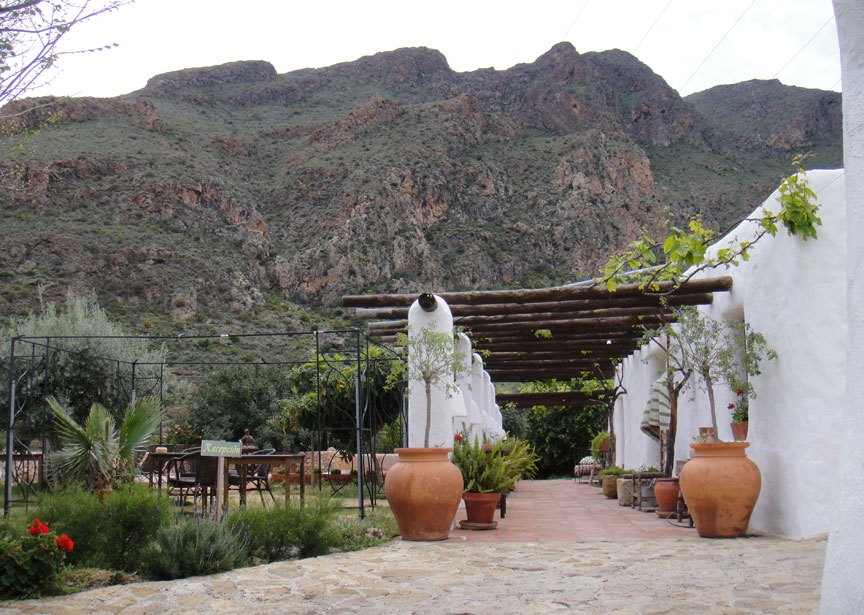
That gives you a perspective on where you are as in how close to nature. Moving along, you’ll note the swimming pool next.
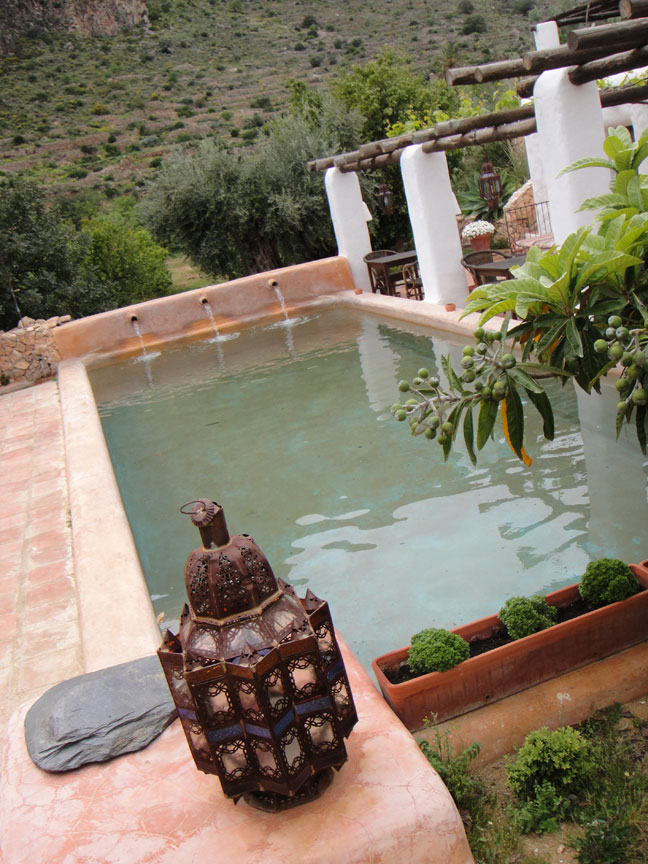
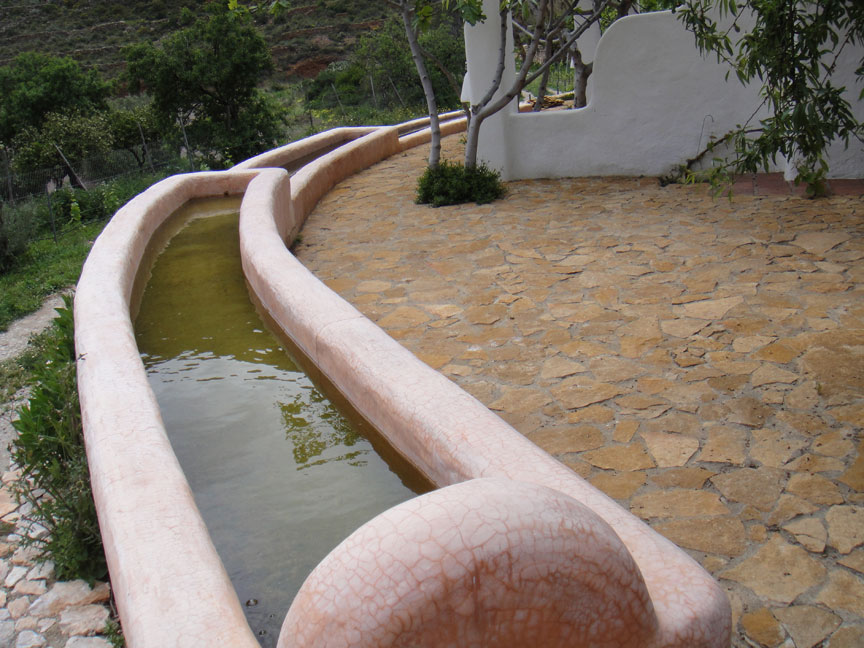
One of many, the iron lamp casts subtle light in the evening. The water feature continues from the pool in a narrow trough that carries the flow down past the rooms providing a touch of white noise that is very pleasant.
The rooms are grouped in a couple of buildings with patios that front the doors. Here’s the one where I stayed.

Great place for a gathering with friends, maybe a glass of wine with your significant other, or just yourself and a book. Inside you’ll find a comfortable bed when its time to finally get to sleep.

Of course you prefer a bathroom with class and this one fits the bill with the custom walk-in shower, ceramic tile counter, and lovely handmade sink.

That photo gives a good impression of the details I mentioned at the outset of this post. When choosing a hotel in Spain, or elsewhere, I always search for those with a personal touch as opposed to the corporate low-bidder design specials. Back to La Alberca. If you had a corporate outing or were traveling with a group, you’ll find the rooms close yet separate as they are in a couple different buildings, which gives everyone a chance to be together yet escape for a bit of privacy. The next photo shows one of the buildings.
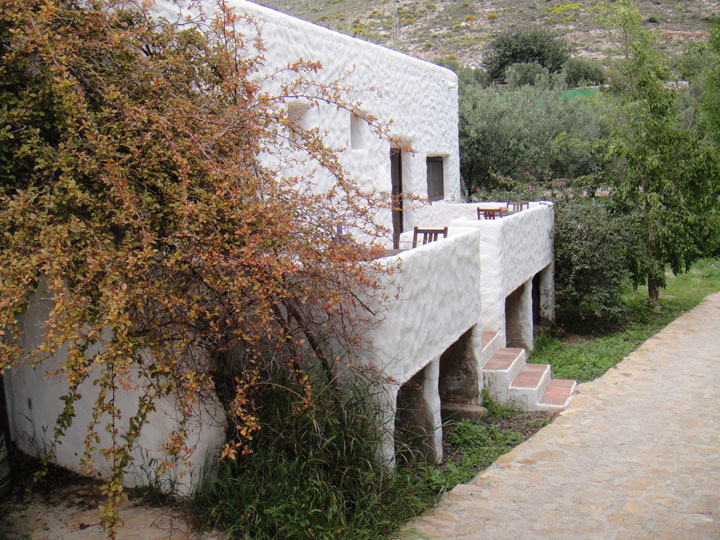
Finally, you don’t have to worry about losing the key.
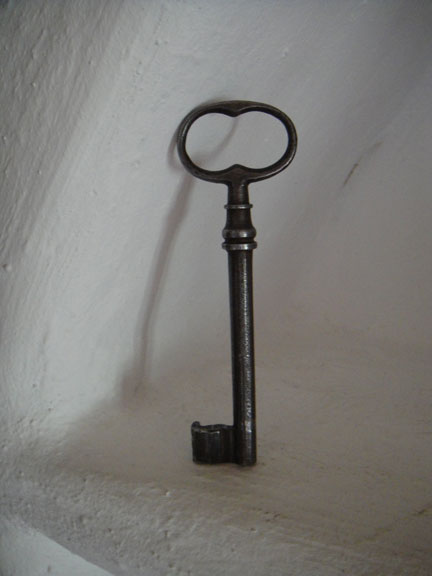
That hunk of wrought iron is about 8 inches long and weighs a pound. Like I said, this place has a unique character with plenty of handsome details.
36 Yalta Boulevard
36 Yalta Boulevard is the address of the Ministry of State Security in Olen Steinhauer’s fictional eastern European country and the title of the third book in his series that takes place there. His lead character, a brooding, relentless operative, Brano Sev, sets out on what may or may not be a set up that costs him his life or at least a couple dozen years in the gulag.
The plot has Brano working for the man who recruited him to the service at the end of the Second World War and/or invisible hands behind the scenes. Brano is never quite sure but his faith in his superior is absolute, even when he’s accused of murder, abused in prison, and has the opportunity to defect. This is where Steinhauer shines. A run of the mill espionage novel would have this guy crack and dash off with a pretty girl, a fancy car, and all the trappings of western decadence. Not Brano Sev. He’s loyal, if not always to the powers that be, to the concept into which he was born.
His willing ignorance of machinations above his rank is Brano’s greatest fault, that and his failure to accept that others, including his mother and another expatriate, might actually care for him. These elements serve to bolster a story that reveals a side of the cold war mostly ignored by popular novelists.
I recommend this book for patient readers interested in exploring a place where things are never quite good, just less bad at times. Therein lies the appeal, seeing the other side through the eyes of a native.
 The Bent Page
You must be logged in to post a comment.